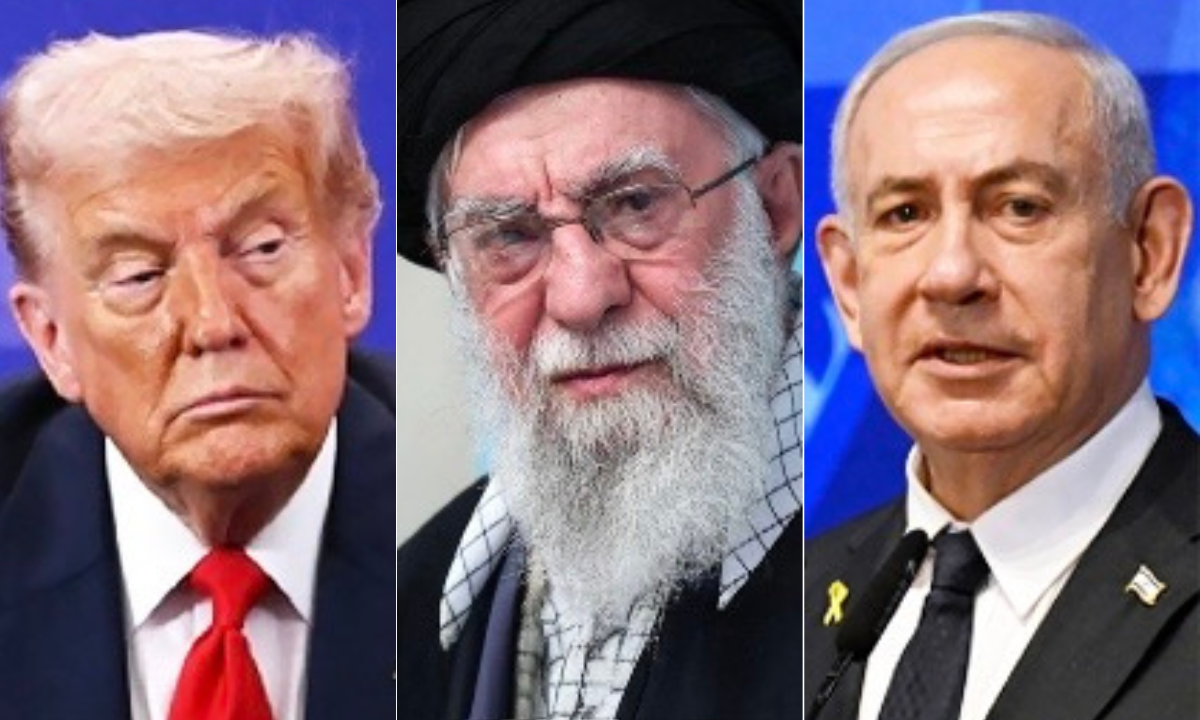
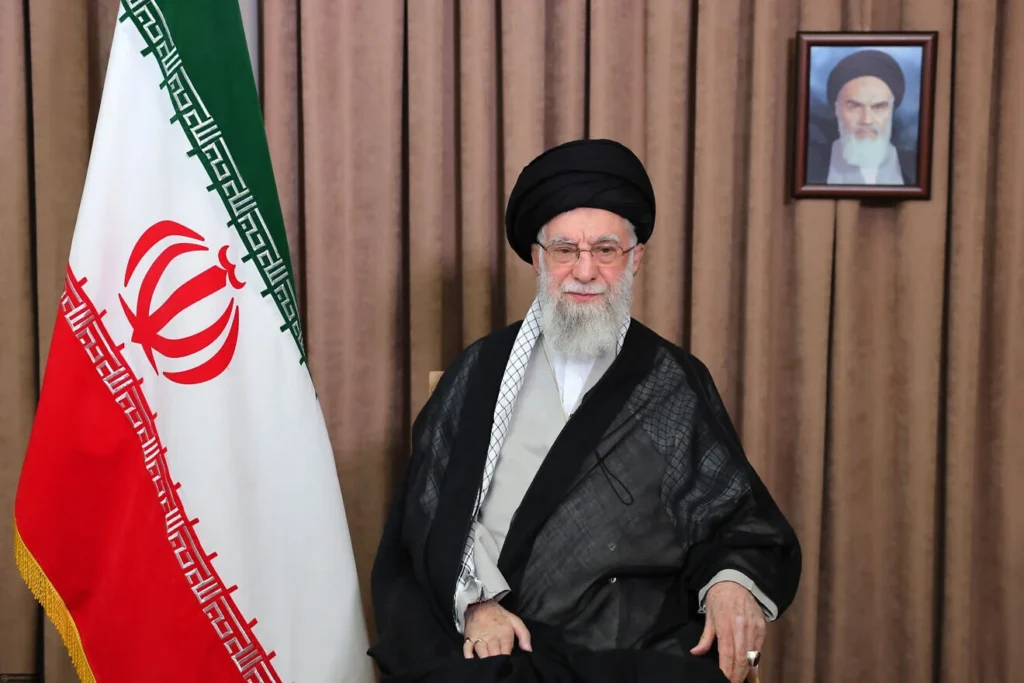
US President Donald Trump and Israeli Prime Minister Benjamin Netanyahu declared on Saturday that Iran’s Supreme Leader, Ayatollah Ali Khamenei, was dead following an unprecedented joint military operation carried out by the United States and Israel against Iran.
“Khamenei, one of the most evil people in History, is dead,” Trump wrote on his Truth Social platform.
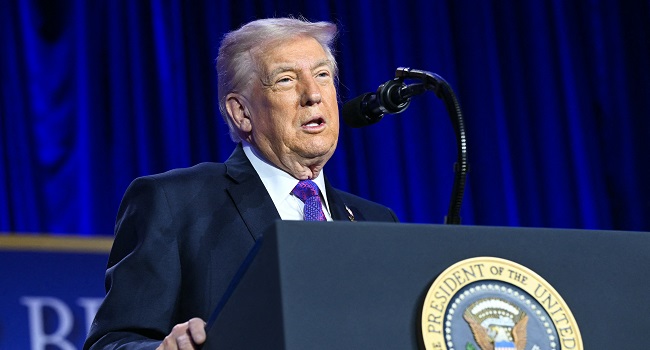
The announcement followed large-scale airstrikes that triggered immediate retaliation from Tehran, which launched a barrage of missiles across the Middle East, sending civilians scrambling for safety in multiple countries.
Iranian authorities urged residents to evacuate Tehran, a city of roughly 10 million people. The Iranian Red Crescent reported that at least 201 people were killed in the strikes, with more than 700 others wounded.
The Iranian judiciary said a strike on a school in southern Iran resulted in 108 deaths, although AFP was unable to independently verify the casualty figure or the details surrounding the incident.
The United Arab Emirates confirmed one civilian fatality and reported damage from Iranian missiles in Dubai and Abu Dhabi. Explosions from Tehran’s retaliatory fire and interception systems were also heard over Israel, Saudi Arabia, Bahrain, Qatar, Jordan, and Kuwait.
“This morning, in a powerful surprise strike, the compound of the tyrant Ali Khamenei was destroyed in the heart of Tehran… and there are many signs that this tyrant is no longer alive,” Netanyahu said in a televised address.
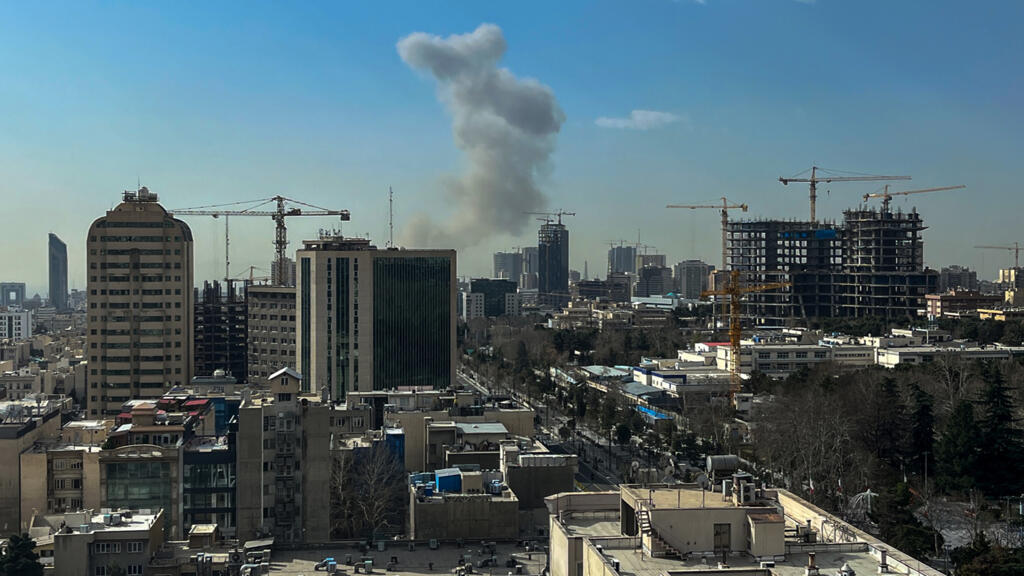
Witnesses in Tehran reported hearing cheers in some areas following reports of Khamenei’s death. Thick black smoke was seen rising from the Pasteur district, where the Supreme Leader’s residence is located. Israel’s Channel 12 reported that 30 bombs were dropped on the compound.
Earlier, Iran’s Foreign Minister Abbas Araghchi had told NBC News that Khamenei was alive “as far as I know,” adding that “all high-ranking officials are alive.” Foreign ministry spokesman Esmail Baqaei also told the BBC he was “not in a situation to confirm anything,” but stressed that “the whole system, the whole nation is focused on defending (our) national integrity.”
Despite the claims of Khamenei’s death, both sides signalled that the conflict was escalating. Netanyahu said “thousands” of additional targets would be struck in the coming days. He stated, “This morning we eliminated senior figures in the ayatollahs’ regime — commanders in the Revolutionary Guards and senior officials in the nuclear programme –, and we will continue.”
Ali Larijani, head of Iran’s Supreme National Security Council, vowed retaliation, declaring, “The brave soldiers and the great nation of Iran will teach an unforgettable lesson to the international oppressors.”
Tehran residents had been engaged in normal activities when the strikes began. Security forces rapidly deployed across the city, businesses shut down, and streets emptied as people sought shelter, according to an AFP journalist.
“I saw with my own eyes two Tomahawk missiles flying horizontally toward targets,” a Tehran office worker told AFP before internet and communication services were disrupted.
The Red Crescent confirmed that 24 out of Iran’s 31 provinces were impacted by the attacks.
In Israel, public spaces were largely deserted as residents moved into bomb shelters while interception systems countered incoming Iranian missiles. Emergency services reported two injuries.
Iran’s Revolutionary Guards announced via maritime communications that the Strait of Hormuz had been closed, according to European naval monitoring sources and Iranian media, raising concerns about global oil supply routes.

The escalation followed mounting tensions over Iran’s nuclear and missile programmes. Trump stated that Washington’s objective was “eliminating imminent threats,” while Netanyahu described the operation as necessary to remove an “existential threat.”
“We are going to destroy their missiles and raze their missile industry to the ground,” Trump said. He also addressed Iranians directly, stating that the “hour of your freedom is at hand,” urging them to “take over your government.”
The offensive represents the largest US military action of its kind since the 2003 invasion of Iraq.
Israel’s army chief, Lieutenant General Eyal Zamir, said the campaign was unfolding “at a completely different scale” compared to the 12-day conflict with Iran in June. A military statement characterised the assault as “an extensive attack” and described it as the largest air raid in the history of the Israeli Air Force.
Iran’s Revolutionary Guards responded by claiming their “missiles and drones have struck the headquarters of the US Navy’s Fifth Fleet in Bahrain and other American bases in Qatar and the United Arab Emirates, as well as military and security centres in the heart of the occupied territories (Israel).”
In response to the growing hostilities, Iran, Iraq, Kuwait, Syria, the UAE, and Israel partially or fully closed their airspace, and numerous airlines cancelled flights to the region.
Residents in Doha, Abu Dhabi, and Manama reported multiple explosions linked to Iranian missile launches and defensive interceptions. In Qatar, panic spread after a missile reportedly fell into a residential area, igniting a fireball upon impact. In Abu Dhabi, witnesses described dozens of projectiles streaking across the sky.
In Manama, authorities evacuated residents from the Juffair district, home to the US Navy’s Fifth Fleet.
“When we heard the sounds, we cried out of fear,” said Jana Hassan, a 15-year-old student who was nearby. “I will never forget the sound of those loud blasts.”
Two witnesses told AFP they saw smoke rising from The Palm in Dubai, with officials confirming four injuries.
Oman’s foreign ministry, which has previously mediated US-Iran negotiations, called “on all parties to immediately cease military operations” and urged the UN Security Council to impose a ceasefire.
What you should know
The reported death of Iran’s Supreme Leader marks a potentially historic turning point in Middle East geopolitics, though conflicting statements from Iranian officials leave uncertainty.
The joint US-Israel strikes represent one of the most extensive military operations against Iran in decades, triggering missile retaliation across the Gulf and airspace closures in multiple countries.
With high civilian casualties reported and threats of further escalation from both sides, the situation remains volatile, raising global concerns over regional stability, oil supply disruptions, and the possibility of a prolonged multi-nation conflict.