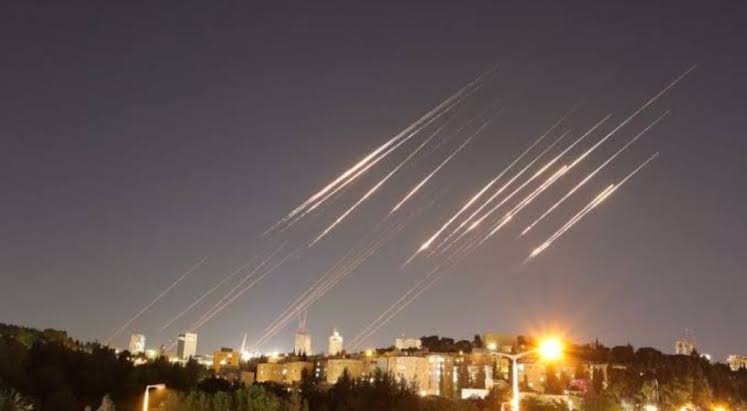
Iran launched a fresh barrage of missiles and drones on Sunday, targeting US military installations across the Gulf and sites in Israel, according to state media, in retaliation for the killing of Supreme Leader Ayatollah Ali Khamenei.
Iranian state television reported that 27 US bases in the region were struck, alongside Israel’s military headquarters and a defence industries complex in Tel Aviv.
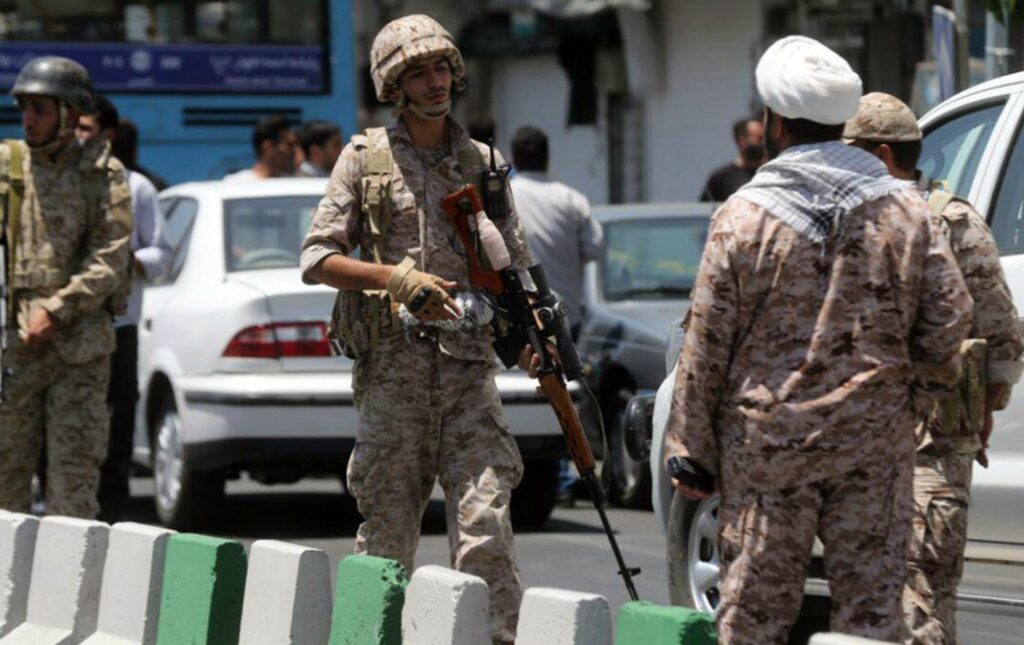
In a statement broadcast nationally, Iran’s army said its air force had “successfully bombed US bases in the countries of the Persian Gulf and in the Kurdistan region of Iraq over several phases of operations.”
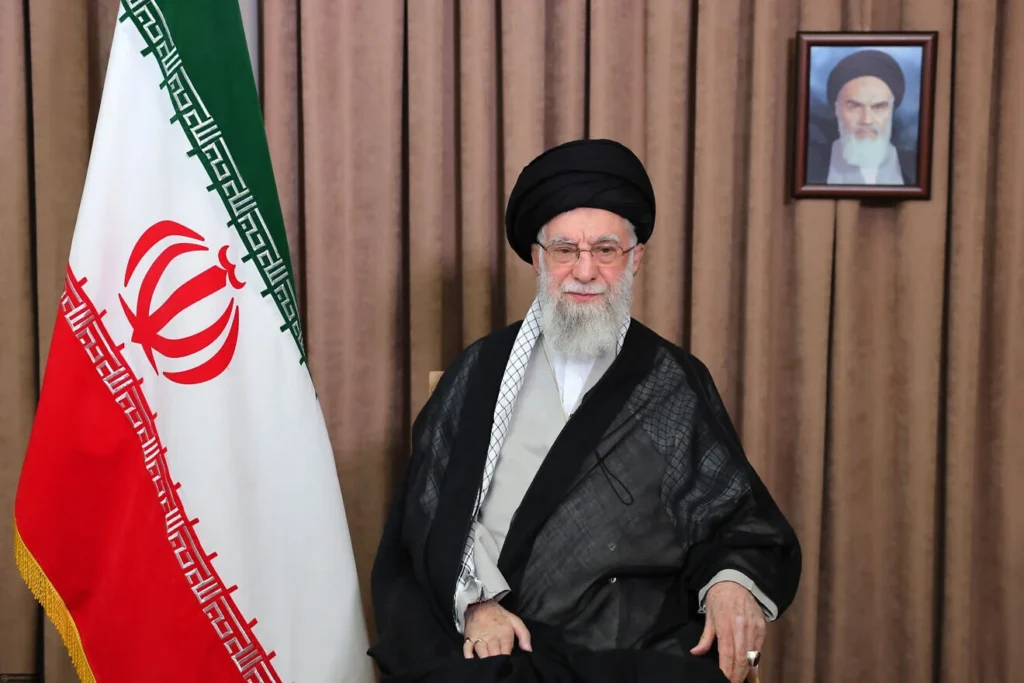
Khamenei, who had led Iran since 1989 and long positioned himself as a fierce critic of Western powers, was killed in the opening phase of a massive joint US-Israeli assault. Iranian state television confirmed his death early Sunday, hours after US President Donald Trump announced that the 86-year-old cleric had been killed, describing him as “one of the most evil people in History.”
The Revolutionary Guards vowed what they called the “most ferocious” military response ever carried out against Israel and US assets in the region. Gulf states were already grappling with damage from earlier retaliatory strikes when fresh explosions were reported in Doha, Dubai, and Manama. Air raid sirens sounded across central Israel as the military said it was responding to incoming Iranian missiles.
Trump warned that any further retaliation from Tehran would trigger an overwhelming response “never been seen before.” He reiterated that strikes would continue until the collapse of the Islamic Republic and called on Iranian security forces to stand down.
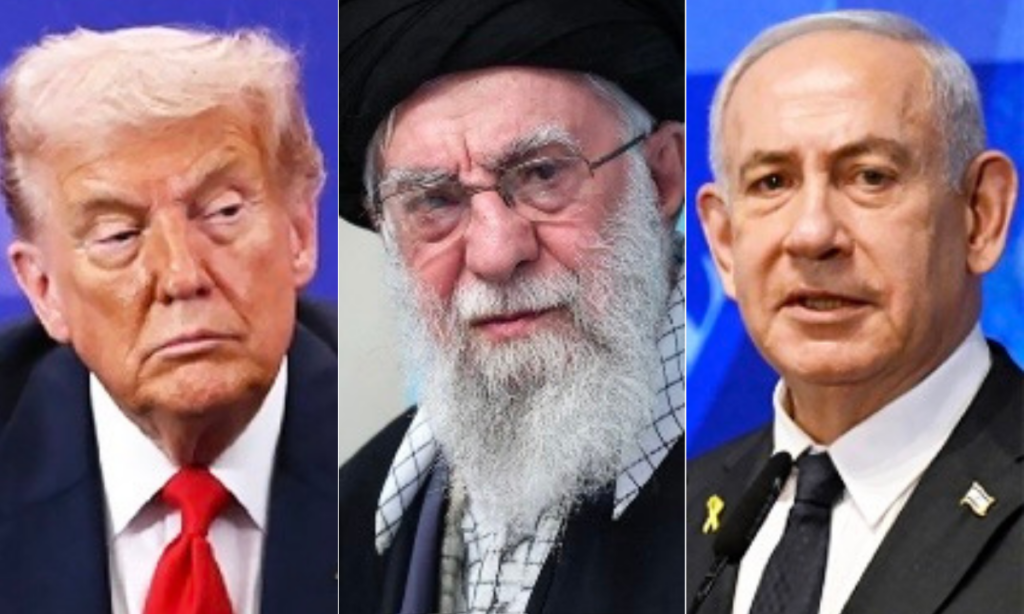
“This is the single greatest chance for the Iranian people to take back their Country,” Trump said in a statement.
Israeli Prime Minister Benjamin Netanyahu echoed the message, urging Iranians to “join forces, to overthrow the regime and to secure your future.”
In Tehran, reactions appeared divided. Witnesses reported cheers in some areas after initial Israeli claims of Khamenei’s death, while later thousands gathered in Enghelab Square dressed in black, waving national flags and chanting slogans against the United States, according to AFP journalists.
‘Unforgettable Lesson’
Iran’s Red Crescent said earlier strikes had killed 201 people and wounded hundreds more.
The judiciary confirmed the deaths of senior figures including Ali Shamkhani, a close adviser to Khamenei, and General Mohammad Pakpour of the Revolutionary Guards.
Ali Larijani, head of Iran’s Supreme National Security Council, pledged resistance. “The brave soldiers and the great nation of Iran will teach an unforgettable lesson to the international oppressors,” he said.
Parliament Speaker Mohammad Bagher Ghalibaf declared that Washington and Tel Aviv had “crossed our red lines” and would face consequences.
Initial Iranian retaliation had already caused casualties, with reports of two deaths in Abu Dhabi and one in Tel Aviv before the latest wave of strikes.
Question on Succession
With Khamenei’s death confirmed, speculation intensified over Iran’s political future. As only the second supreme leader since the 1979 Islamic Revolution led by Ayatollah Ruhollah Khomeini, Khamenei’s passing leaves a major leadership vacuum.
State television reported that President Masoud Pezeshkian and two other senior officials would oversee a transitional period.
Reza Pahlavi, son of Iran’s last monarch who was deposed during the revolution, said any successor emerging from within the current system would lack legitimacy. He described Khamenei’s death as marking the effective end of the Islamic Republic and called for a transition toward secular democracy. However, he does not command unified support among opposition groups.
Analysts have suggested that the Revolutionary Guards, deeply embedded in Iran’s political and economic structure, could consolidate further power during the transition.
Strikes Across Iran and the Gulf
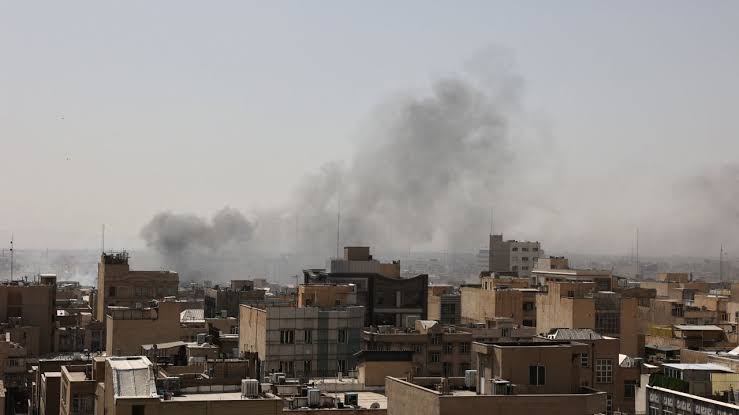
The Iranian judiciary reported that one strike on a school in southern Iran killed 108 people, though independent verification remained unavailable.
In Israel, streets emptied as residents sought refuge in bomb shelters while defence systems intercepted incoming missiles. Emergency services said a woman was killed in the Tel Aviv area during an earlier round of strikes, with around 20 others injured.
Smoke was seen rising overnight from US military facilities in the United Arab Emirates and Bahrain, home to the US Navy’s Fifth Fleet. In Abu Dhabi, two people were reported killed, while Dubai’s Palm island saw flames and smoke with four injured.
Iran’s Revolutionary Guards also announced the closure of the Strait of Hormuz, a crucial oil transit route, though it remained unclear whether enforcement was underway.
Unprecedented Scale
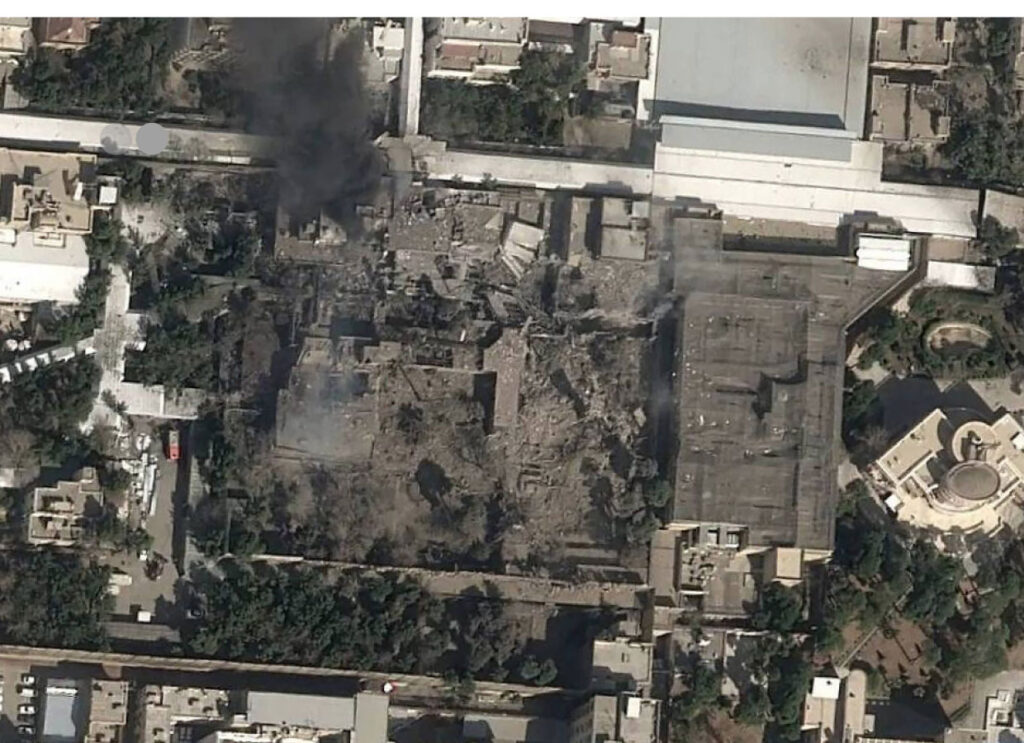
Residents of Tehran had been carrying on with daily routines when the initial US-Israel operation began. Security forces quickly moved into the streets, businesses shut down, and communications were disrupted.
“I saw with my own eyes two Tomahawk missiles flying horizontally toward targets,” a Tehran office worker said before internet services were cut.
The assault marked the largest US military action apparently aimed at destabilising a foreign government since the 2003 invasion of Iraq.
Israel’s army chief, Lieutenant General Eyal Zamir, said the campaign was unfolding “at a completely different scale” compared with the 12-day conflict between Israel and Iran in June.
Airspace closures followed swiftly. Iran, Iraq, Kuwait, Syria, the UAE, and Israel suspended civilian flights, and numerous international airlines cancelled routes to the Middle East.
Diplomatic efforts appeared stalled. Trump’s envoys had recently met Iranian officials in Geneva, and Oman had reported a potential breakthrough on uranium stockpiling just days before the strikes. Following the escalation, Oman called for an immediate ceasefire, while Iran appealed to the UN Security Council during an emergency session.
What you should know
Iran’s confirmation of Ayatollah Ali Khamenei’s death marks a historic turning point with major implications for regional stability and global energy markets.
The retaliatory strikes targeting US bases and Israeli infrastructure signal a widening conflict that now involves multiple Gulf states. Leadership succession in Tehran remains uncertain, with transitional arrangements announced but long-term power dynamics unclear.
Airspace closures, oil route concerns, and escalating rhetoric from Washington and Tel Aviv increase the risk of a prolonged and potentially broader regional confrontation.