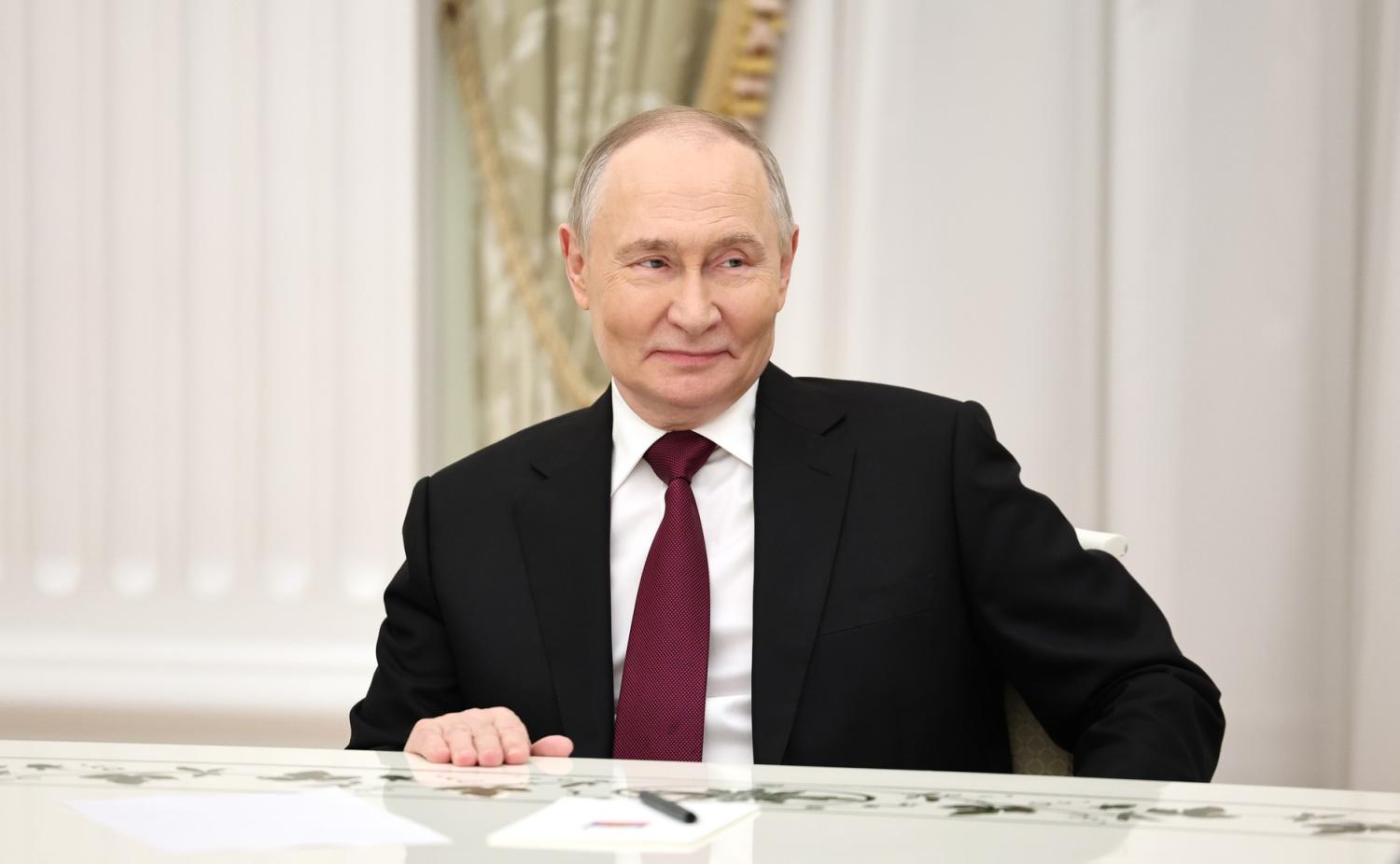
Russian President Vladimir Putin used a high-profile appearance at the St. Petersburg International Economic Forum on Thursday to project confidence about the war in Ukraine, declaring that Russian forces were making daily advances, with ultimate victory all but assured.
Speaking to foreign media editors on the forum’s sidelines, Putin claimed Russian troops had secured full control of the Luhansk region and now dominated most of the Donetsk and Zaporizhzhia regions.
He credited Russia’s military-industrial capacity and the resolve of its forces as decisive advantages in a conflict now entering its fifth year. “The offensive is ongoing daily,” he said, in remarks designed as much for domestic consumption as an international audience.
Putin acknowledged that peace was possible but made clear it would require Ukraine to make territorial concessions, a position Kyiv has categorically rejected at every turn.
He also pointed to discussions held with U.S. President Donald Trump as a potential diplomatic framework, suggesting Washington’s involvement could help bring the conflict to a close if Ukraine agreed to engage on those terms.
The framing was deliberate: positioning Russia as willing to talk while placing the burden of compromise squarely on Kyiv.
The remarks followed an open letter from Ukrainian President Volodymyr Zelenskyy proposing a direct face-to-face meeting with Putin to discuss ending the war. The Kremlin confirmed Putin was aware of the letter but had not reviewed it in detail, neither opening nor closing the door to dialogue but maintaining the ambiguity that gives Moscow maximum diplomatic leverage.
Independent analysts offer a more measured picture. While Russian forces have made incremental gains in eastern Ukraine, Western and Ukrainian military experts note that the pace of those advances has slowed significantly.
The war has long since settled into a grueling, attritional struggle, with both sides paying a steep price for modest territorial shifts.
On another front, Ukraine’s expanding long-range drone campaign is increasingly hitting targets deep inside Russian territory, oil facilities, military airbases, and logistical infrastructure, forcing Putin to pledge further investment in Russia’s air defense systems.
The acknowledgement was a rare concession that Ukraine’s strategy is drawing real blood.
Five years into a war that has devastated both nations, the fundamental deadlock remains firmly in place. Russia wants more Ukrainian land. Ukraine refuses to surrender it. Diplomatic gestures are being made, but none carry the weight of genuine compromise on either side.
With Trump’s Washington now a wild card in the equation, the next move may well be determined not on the battlefield but in the political calculus of great powers deciding how much longer this war serves their interests.
Until that calculation changes, the fighting and the stalemate will continue.
WHAT YOU SHOULD KNOW
Despite Putin’s confident declarations of daily battlefield gains and inevitable victory, the core reality is this: Russia is advancing, but slowly and at enormous cost, while peace remains a distant prospect.
The fundamental deadlock endures. Moscow demands Ukrainian territorial concessions, Kyiv refuses, and every diplomatic gesture is embedded with conditions the other side cannot accept.
Zelenskyy’s olive branch of a proposed meeting remains unanswered in any meaningful way, and Putin’s invocation of Trump-brokered proposals signals that Washington’s role may prove decisive in whatever comes next.
Until one side either breaks militarily or blinks diplomatically, the world should expect more of the same incremental advances, escalating drone warfare, and peace talks that generate headlines without producing peace.