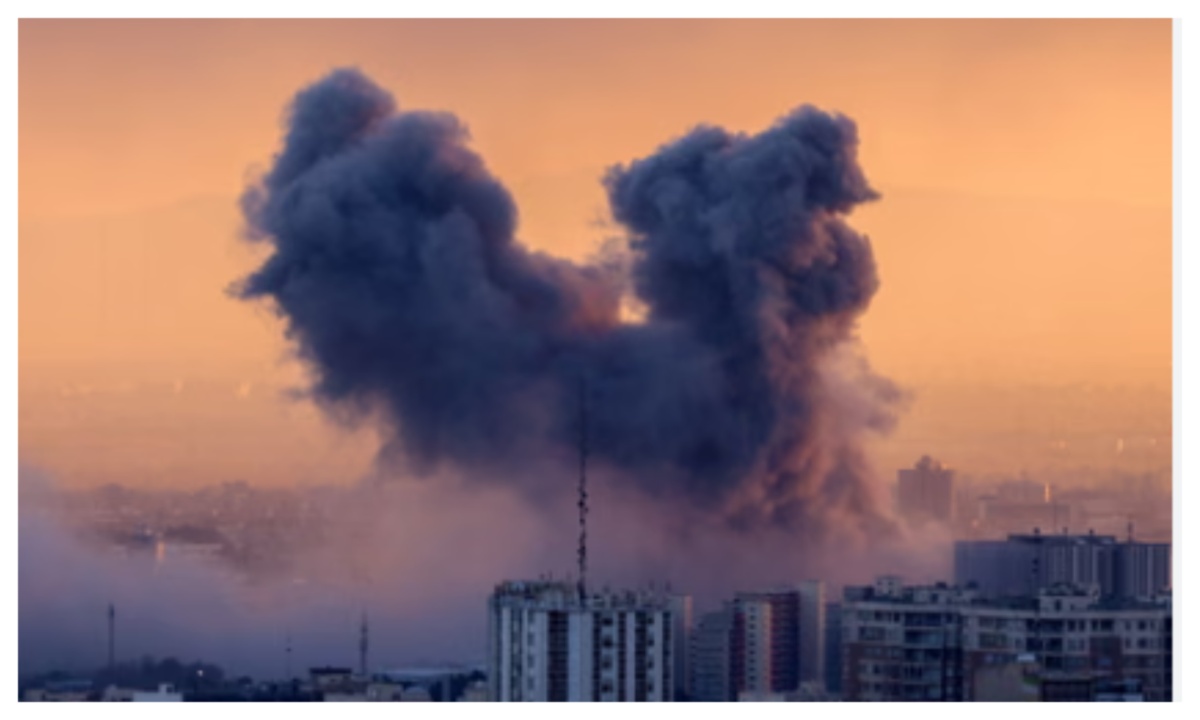
Kuwait announced on Saturday that Iranian forces had struck one of the country’s power and water desalination plants for the second time in as many days, forcing the shutdown of several power generation units and deepening fears over the stability of the tiny Gulf state’s critical infrastructure.
In a statement carried on social media, Kuwait’s Ministry of Electricity, Water and Renewable Energy said the latest Iranian strike led several power generation units to be shut down after “another electricity and water desalination plant was targeted by a hostile attack that led to a fire erupting in one of the plant’s components.”
The attack came as Iran launched renewed strikes on Gulf states following a seventh consecutive night of US attacks on Iranian military sites, including logistics infrastructure, escalating a war that reignited a week after a fragile ceasefire collapsed.
Washington and Tehran have been testing the limits of escalation since that ceasefire fell apart, raising fears of a slide back into all-out war.
Kuwait was not alone in coming under fire. Iran also announced attacks on other regional states hosting US airbases, including Bahrain, Qatar and Jordan, as well as on an American vessel in the northern Indian Ocean.
In Saudi Arabia, civil defence authorities issued rare public warnings, the first in several months, urging residents of Al Kharj and Yanbu provinces to remain alert to potential danger, though the alert was later lifted.
Separately, President Donald Trump has threatened further air strikes on Iranian infrastructure and has declined to rule out a ground assault on Iranian islands and coastal areas.
Saturday’s strike was the latest in a string of attacks on Kuwaiti energy and water facilities that have unfolded over recent months. Iran has repeatedly struck near several desalination plants across the Gulf, with Kuwait earlier reporting damage at its Doha West desalination plant from debris tied to intercepted drones and nearby port strikes.
The vulnerability of these facilities is structural as much as circumstantial: many Gulf desalination plants are physically co-located with power stations as cogeneration facilities, meaning any strike on electrical infrastructure can just as easily cripple water production.
Desalination plants rely on a multi-stage chain of intake systems, treatment facilities, and energy supply, and damage to any single link can halt output entirely.
The stakes for Kuwait are especially high given its near-total dependence on desalinated seawater for drinking supplies. A regional assessment cited by wire reports found that more than 90% of the Gulf’s desalinated water is produced by just 56 plants, each one “extremely vulnerable to sabotage or military action.”
Earlier attacks this year underscore the human cost of the campaign. In March, an Iranian strike on a Kuwaiti power and desalination facility killed one Indian worker and caused significant material damage to a building at the site, an attack Tehran later claimed had actually been carried out by Israel.
Kuwait has also weathered swarms of drones and missiles targeting its airspace and military installations in the months since the broader US-Israel war on Iran began.
The reopening of hostilities threatens to draw Gulf states further into a conflict many had hoped to avoid. Kuwait, Bahrain, Qatar, and Jordan all host American military installations, making them recurring targets as Tehran retaliates against continued US strikes.
With the ceasefire in tatters and both Washington and Tehran signaling little appetite for restraint, officials across the region are bracing for further disruptions to power, water, and other essential services in the days ahead.
Kuwaiti authorities have not yet detailed the extent of the damage from Saturday’s strike or offered a timeline for restoring the affected generation units, though emergency response teams were reported to be on site.
WHAT YOU SHOULD KNOW
Kuwait has been struck twice in two days, exposing how deeply intertwined power and water infrastructure are in the Gulf a single attack can knock out both electricity and drinking water at once.
With over 90% of Kuwait’s water coming from vulnerable desalination plants, and the US-Iran ceasefire now collapsed, this isn’t an isolated incident but part of an escalating pattern that puts civilian essentials, not just military targets, directly in the line of fire.