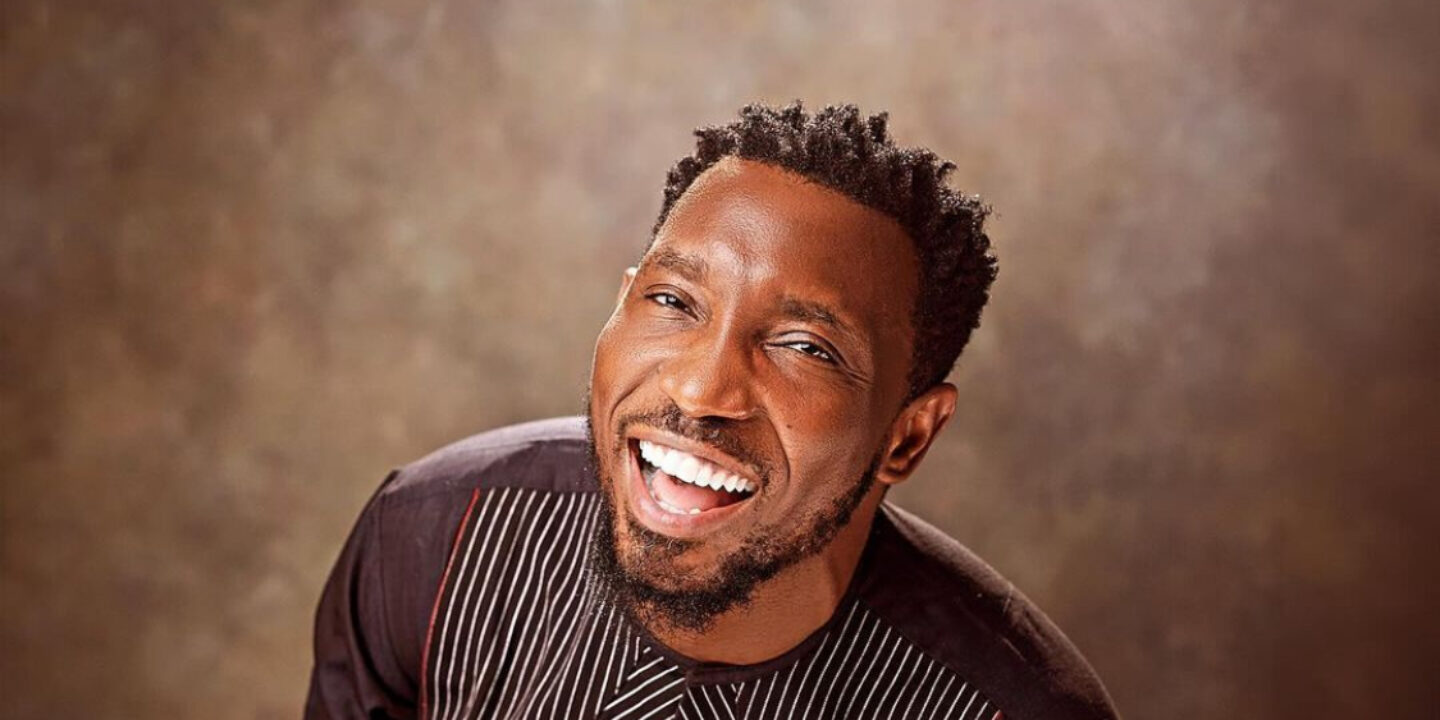
A brewing public feud between Nigerian singer Timi Dakolo and UK-based Nigerian disc jockey Otis Ayodele Kubeyinje, popularly known as “Baddest DJ Timmy,” has escalated into a legal standoff, with lawyers for the “Great Nation” crooner issuing a formal rebuttal to allegations that he owes the DJ money and has refused to pay.
The dispute burst into public view after DJ Timmy took to social media claiming Dakolo owed him £4,106, releasing what he described as an invoice to support the claim. The DJ did not stop at demanding repayment, however.
In a move that raised eyebrows across Nigerian entertainment circles, he threatened that failure to settle the debt would result in him exposing details of Dakolo’s private life, reportedly including his activities in Lagos, to the singer’s wife, who resides in the United Kingdom with their children.
The threat, framed as leverage in a financial dispute, quickly drew attention online, with many observers noting that such an approach blurred the line between a legitimate commercial disagreement and what could amount to intimidation.
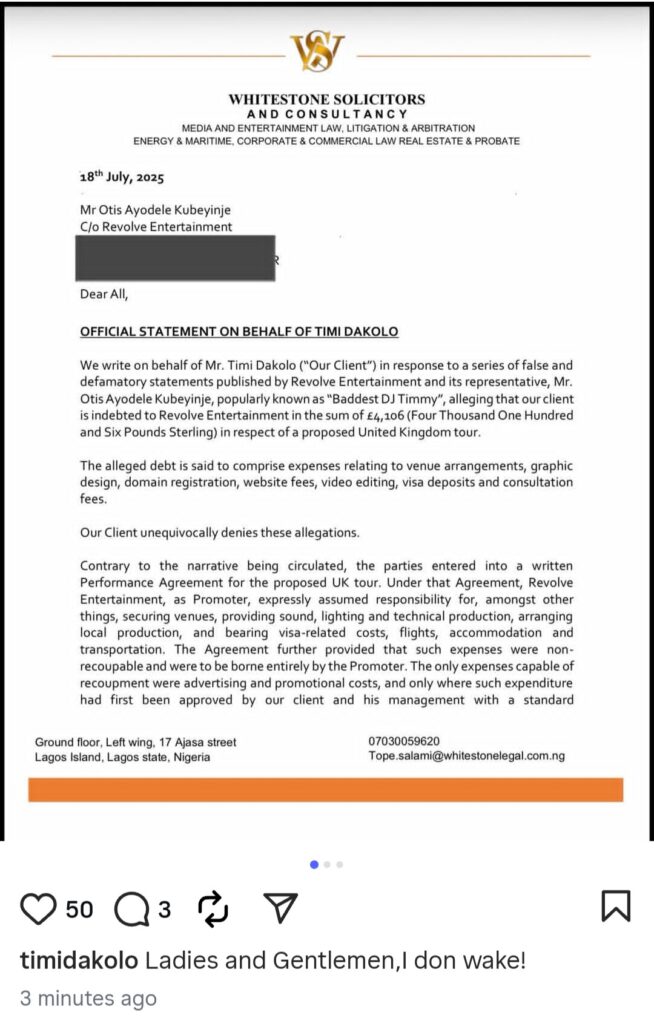
Dakolo did not respond personally. Instead, his legal representatives issued a formal statement laying out a starkly different account of events, one rooted not in a debt owed by the singer but in an unfulfilled contractual obligation on the part of DJ Timmy’s outfit, Revolve Entertainment.
According to the statement, Dakolo and Revolve Entertainment, represented by Kubeyinje, had entered into a written Performance Agreement for a proposed United Kingdom tour.
Under that agreement, the lawyers say, Revolve Entertainment took on the role of promoter and, with it, a specific set of financial and logistical responsibilities: securing venues; providing sound, lighting, and technical production; arranging local production support; and covering visa costs, flights, accommodation, and transportation for the singer and his team.
Crucially, the statement notes that these costs were structured as non-recoupable, meaning they were to be shouldered entirely by the promoter, with no expectation that Dakolo would reimburse or share the burden.
Rather than a tour derailed by the artist’s unavailability or a change of heart, Dakolo’s lawyers paint a picture of a promoter who fell short of the professional standards required to stage the shows.
The statement alleges that Revolve Entertainment failed to meet “fundamental production requirements,” particularly around sound, lighting, and technical production obligations the agreement placed squarely on the promoter’s shoulders.
The proposed technical setup, the lawyers say, fell “materially below the professional standard” needed for a live performance by Dakolo and his band, and as a result, the tour could not go ahead as planned.
Perhaps most pointedly, the statement asserts that Dakolo never publicly announced the tour in the first place, because the responsibility for finalizing and confirming those details rested with Revolve Entertainment, a duty the company had not discharged.
On that basis, the lawyers argue, Dakolo bears no contractual or legal liability for any expenses DJ Timmy or his company incurred, especially where those costs were either explicitly assigned to the promoter under the agreement or were incurred without the approvals the contract required.
Beyond disputing the debt claim, Dakolo’s legal team used the statement to go on the offensive. They accused DJ Timmy of making defamatory statements about the singer and issued a set of formal demands: that he take down every publication deemed defamatory, issue a public retraction, offer an apology, and cease any further conduct that could damage Dakolo’s reputation.
The lawyers made clear that noncompliance would not be the end of the matter, stating plainly that they would pursue the case in court if their demands went unmet.
As of now, DJ Timmy has not issued a public response to the lawyers’ statement, and neither side’s claims have been independently verified beyond the documents each has chosen to share publicly.
What began as a dispute over a five-figure invoice has, in the space of a few days, morphed into a far more serious contest over reputation, contractual obligation, and the limits of what can be said or threatened in public.
Whether the matter proceeds to a courtroom or is resolved privately, the fallout has already given Nigerian entertainment watchers plenty to talk about and put a spotlight on the often murky financial arrangements underpinning diaspora tour promotions.
WHAT YOU SHOULD KNOW
This isn’t a simple “he owes, he won’t pay” story; it’s a contract dispute dressed up as a debt claim.
Dakolo’s lawyers say the tour costs DJ Timmy is chasing were the promoter’s responsibility under their agreement, not the artist’s, and that the tour collapsed because DJ Timmy’s company failed to deliver the production standards it was contractually obligated to provide.
The real flashpoint, though, is the threat to expose Dakolo’s private life to his wife; that’s what turned a business disagreement into a potential defamation case, and it’s why Dakolo’s team is now threatening court action instead of just settling an invoice.