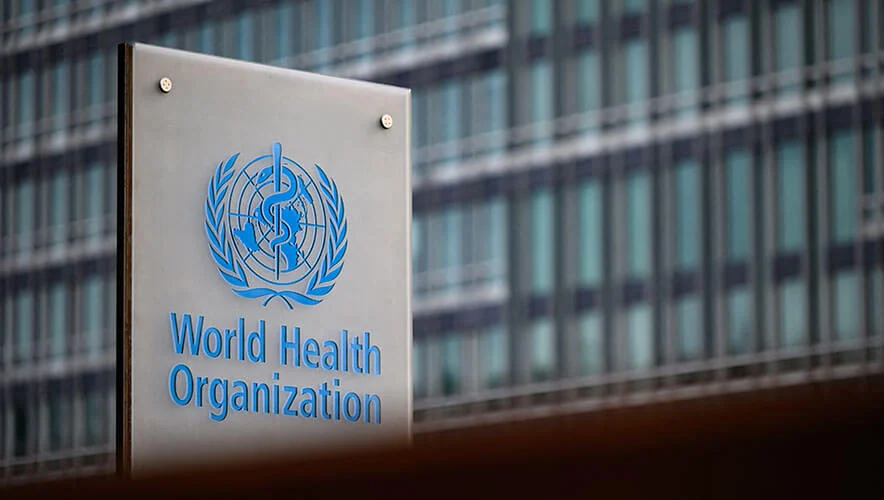
The World Health Organization (WHO) on Tuesday significantly revised downward the number of Ebola cases linked to the ongoing outbreak in the Democratic Republic of Congo, but health officials were swift to warn that the crisis remains acute and the situation fluid.
The DRC Ministry of Health published updated figures reporting a total of 321 confirmed cases, including 48 confirmed deaths and 116 suspected cases still under investigation.
The announcement came after Congolese health authorities released revised case numbers on Monday, triggering a rapid reassessment by international health bodies.
The figures mark a stunning turnaround from the picture that had emerged just days earlier. As recently as last Friday, WHO data had put suspected cases of the Bundibugyo strain at 906.
By Sunday, Africa CDC Director-General Jean Kaseya had announced that more than 1,100 suspected cases were under investigation, numbers that sent a wave of alarm through global health corridors and raised the specter of an outbreak spiraling out of control.
Speaking to reporters, WHO spokesperson Christian Lindmeier sought to explain the dramatic reduction in figures without downplaying the ongoing threat. Many of the previously reported cases, he said, had been eliminated after more rigorous medical investigations.
“They have been cleared out and have either other diseases or have just had a fever and nothing else,” Lindmeier said, adding that the numbers are likely to continue shifting as testing and surveillance efforts expand.
Health officials explained that the confusion stemmed, in part, from the inherently imprecise nature of early outbreak surveillance. A suspected case includes any individual flagged through monitoring systems or presenting symptoms consistent with Ebola, casting a necessarily wide net while confirmed cases are restricted to those who have tested positive for the virus. In a region where fever can be caused by a range of endemic diseases, the overlap is significant.
The U.S. Centers for Disease Control and Prevention also updated its records to reflect the revised toll, attributing the change to guidance from Congolese health authorities. “On May 29, the DRC Ministry of Health updated their total suspect case count to remove suspected cases that have been ruled out after investigation and suspected deaths that are pending the results of ongoing investigations,” the agency said.
Ituri remains the most heavily affected province, with 299 confirmed cases reported across 15 health zones. Nineteen confirmed cases have been reported from seven health zones in North Kivu, with three additional cases from South Kivu.
Yet for all the cautious optimism the revised figures might invite, the broader context paints a sobering picture. The outbreak on the 17th in DRC’s history was declared a Public Health Emergency of International Concern by the WHO on May 17, only five months after the end of the country’s previous Ebola outbreak.
The Bundibugyo strain at the heart of this outbreak presents particular challenges for responders. Unlike previous outbreaks driven by the more common Zaire ebolavirus, for which an approved vaccine exists, the Bundibugyo strain currently has no approved vaccine or targeted treatment, complicating the response significantly.
The outbreak has also crossed an international border. Uganda has reported 15 confirmed cases, including one death, with at least seven cases associated with local transmission events and four with travel links to DRC. Of nine cases with known geographical information, eight were reported in the capital, Kampala.
Compounding the public health emergency are the dire humanitarian conditions on the ground. Nearly 10 million people across Ituri, North Kivu, South Kivu, and Tanganyika are facing acute hunger between January and June 2026, while at the national level, an estimated 26.5 million people in the DRC are experiencing high levels of acute food insecurity.
WHO Director-General Dr. Tedros Adhanom Ghebreyesus has noted grimly that “hunger and disease are old companions,” warning that populations weakened by malnutrition face far greater vulnerability to infection.
Conflict, poor infrastructure, and insecurity are also limiting the movement of aid and access to health services, with many affected health facilities either non-functional or operating under severe constraints.
The speed and scale of the outbreak, set against a backdrop of active conflict and high population movement driven by the region’s mining economy, have raised fears among WHO officials of potential spread to additional areas or countries.
For now, health authorities are urging the public not to interpret the revised case numbers as a sign that the worst has passed. The downward revision reflects better data, not a declining epidemic.
WHAT YOU SHOULD KNOW
The WHO’s revised Ebola figures for the DRC, down to 321 confirmed cases from earlier fears of over 1,100, reflect better data collection, not a shrinking outbreak.
The Bundibugyo strain driving this crisis has no approved vaccine or treatment, the outbreak has already crossed into Uganda, and the affected region is battling active conflict, mass hunger, and crumbling health infrastructure. The numbers may look better on paper, but the danger is very much real and ongoing.