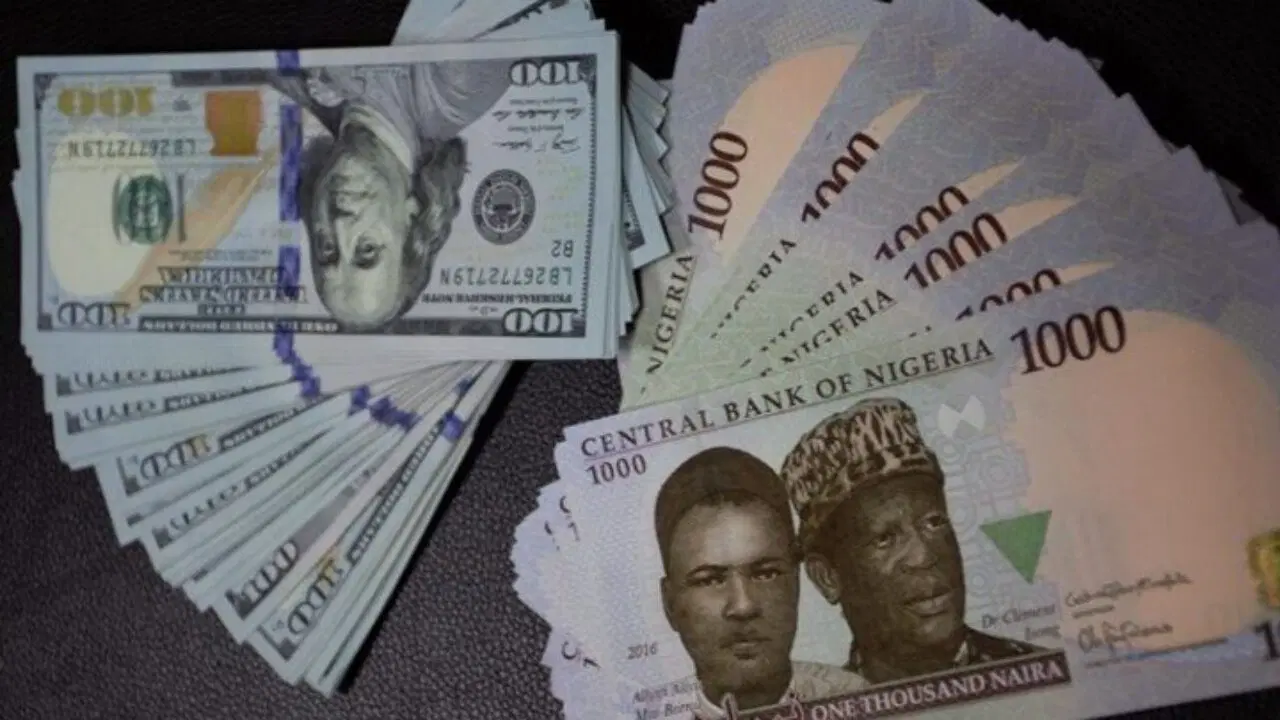
The Nigerian naira maintained a steady position against the United States dollar on Wednesday, trading at ₦1,373.25 per dollar at the official Nigerian Foreign Exchange Market (NFEM), according to the latest data published by the Central Bank of Nigeria (CBN).
The rate has held across multiple consecutive sessions, reflecting a level of consistency rarely seen in Nigeria’s historically volatile currency market.
Market analysts attributed the relative stability to improved interbank transactions and sustained liquidity in the foreign exchange market, noting that increased activity in the interbank segment has helped support the local currency despite persistent demand for dollars.
Currency tracking platforms corroborated the CBN figures, with the naira trading within the ₦1,370 to ₦1,372 range in official transactions, indicating limited fluctuations during the trading period.
Perhaps the most telling indicator of market improvement is the narrowing gap between official and street rates. In the parallel market, the dollar was bought at about ₦1,395 and sold at approximately ₦1,405, a premium of barely 2% over the official rate, compared to spreads of 3–5% recorded at the start of the year.
At the official rate, $100 exchanges for approximately ₦137,325.
The convergence reflects the cumulative impact of the CBN’s reform drive. The foreign exchange reforms implemented by the Central Bank of Nigeria have helped lift external reserves to $50.45 billion and supported relative stability in the naira, with the initial 2023 unification of exchange rates having exposed and corrected distortions that built up over years of multiple windows and administrative controls.
More recently, a CBN directive requiring all International Money Transfer Operators to open naira settlement accounts in Nigeria from May 2026 is expected to improve transparency and ensure diaspora remittance inflows are properly captured within the formal financial system.
Analysts say the direction of the naira in the coming days will depend on foreign exchange inflows, import demand, external reserve levels, and broader market sentiment, a reminder that while the progress is real, the naira’s newfound stability remains one external shock away from being tested.
WHAT YOU SHOULD KNOW
The naira is holding steady at ₦1,373.25 per dollar, and for once, the stability appears earned rather than engineered. The gap between the official and parallel market rates has shrunk to a negligible 1–2%, a development that would have seemed optimistic just a year ago.
The CBN’s forex reforms are working. Rising external reserves now above $50 billion, improved diaspora remittance channels, and tighter market transparency have combined to restore confidence in Nigeria’s currency.
The caution, however, is real; this stability remains fragile and heavily dependent on consistent policy, sustained inflows, and global conditions outside Nigeria’s control.