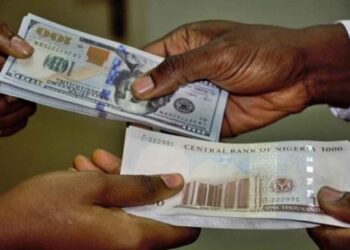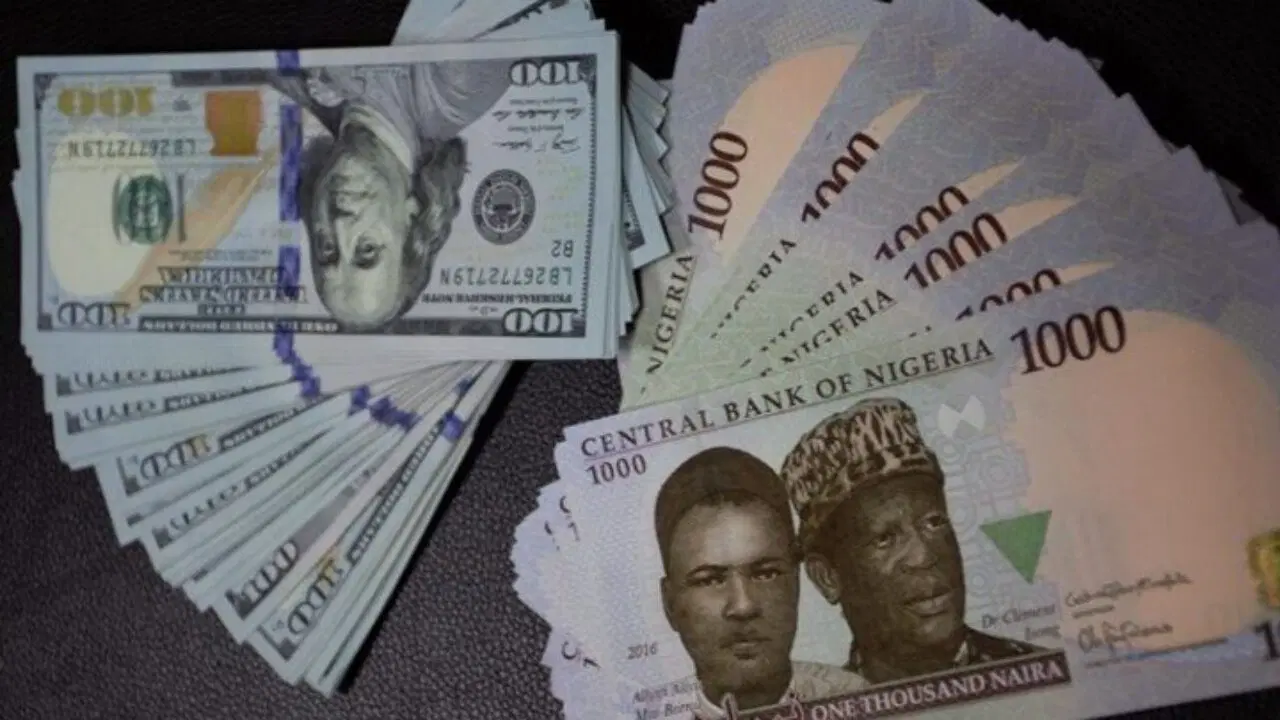
The naira held steady near ₦1,380/$ on the official market on Tuesday, even as attention shifted to Abuja, where the CBN’s rate-setting committee closed out a closely watched two-day meeting.
At the Nigerian Foreign Exchange Market (NFEM), the apex bank’s own data pegged the volume-weighted average rate at ₦1,380.18 per dollar, a level the currency has hovered around for much of the past week.
Traders in Lagos, Abuja, and other commercial hubs described liquidity conditions as adequate but not abundant enough to keep the official rate anchored without triggering the kind of sharp swings that rattled the market in years past.
Away from the regulated banking channels, dollars remained pricier. In the parallel market, still colloquially known as the black market despite years of CBN efforts to formalize trading, dealers were buying dollars at ₦1,410 and selling at ₦1,425, leaving a spread of roughly ₦45 against the official rate.
It’s a gap analysts say has narrowed considerably in recent years, though it has shown signs of widening again in the past week as demand pressure builds ahead of the MPC verdict.
The timing was no accident. The naira’s steadiness on Tuesday came against the backdrop of the CBN’s 306th Monetary Policy Committee meeting, a two-day session that opened Monday in the bank’s Abuja headquarters and was set to deliver its communiqué on interest rates, cash reserve requirements, and the broader policy stance.
Heading into the meeting, the consensus among economists was overwhelmingly for a hold. With the benchmark monetary policy rate sitting at 26.5 percent, a level unchanged since the committee’s last sitting in May, analysts polled ahead of the decision saw little room for the CBN to ease.
Eight analysts surveyed expected the MPC to maintain its tight stance, citing elevated inflation and renewed pressure on the naira, including a widening gap between official and parallel market rates.
Inflation remains the committee’s central preoccupation. Headline inflation eased only slightly to 15.91 percent in June, a figure that, while moving in the right direction, sits well above the CBN’s own medium-term comfort zone.
The bank’s inflation target ceiling stands at 9 percent, with a 2026 forecast of roughly 12.94 percent, meaning even the improved reading leaves the CBN some distance from where it wants to be.
Standard Chartered’s Africa and Middle East chief economist, Razia Khan, was among those flagging fresh complications for policymakers. She pointed to the escalation of tensions in the Middle East and the dollar-denominated pricing of domestic fuel as reasons the bank was unlikely to consider easing at all in 2026.
Adding to the caution, the approach of Nigeria’s general election cycle was seen as making a case for rate cuts politically difficult to justify in any case.
United Capital’s chief economist, Ayodele Akinwunmi, struck a similar note, arguing that holding rates steady would signal the CBN’s commitment to preserving both price stability and foreign exchange stability at a delicate moment.
Complicating the picture further is a shifting global backdrop. Crude prices have pushed higher in recent days, with Brent crossing above $90 a barrel amid escalating US-Iran tensions, a development that cuts both ways for Africa’s largest oil exporter.
Higher crude receipts bolster Nigeria’s export earnings and, by extension, dollar supply into the official market. But the same tensions also raise the specter of imported inflation and higher domestic fuel costs, precisely the pressures the CBN has spent the past two years trying to tame.
Nigeria’s external reserves, meanwhile, have continued to build a cushion. Central bank figures put reserves at close to $52 billion in mid-July, an appreciation streak that has given the CBN more ammunition to defend the naira and smooth out volatility in the official market, even as demand from importers, manufacturers, and travelers keeps pressure on the parallel segment.
For now, the naira’s fate looks tethered to three variables market participants keep coming back to: the steadiness of dollar inflows through official channels, the pace of foreign portfolio investment, and, most immediately, the tone the CBN strikes in Tuesday’s communiqué.
A hold on rates, most analysts agree, would be read as continuity: a signal that the central bank is prepared to keep monetary policy tight until inflation shows a more durable downward trend, even at the cost of near-term growth momentum.
A surprise move in either direction could send ripples through both the official and parallel markets in the days ahead, particularly if it’s read as a shift in the CBN’s appetite for defending the naira.
Until the committee’s decision lands, the currency’s message on Tuesday was one of studied calm, a market waiting rather than reacting.
WHAT YOU SHOULD KNOW
The naira’s stability on July 21 wasn’t really about the currency itself it was about the CBN’s Monetary Policy Committee holding its nerve.
With inflation still stuck near 16% and the MPC widely expected to keep rates at 26.5%, the central bank is choosing to keep money tight rather than risk a naira slide, even as election pressures and Middle East-driven oil volatility complicate the calculus.
As long as that tight stance holds and dollar inflows stay steady, expect the naira to keep trading in this narrow ₦1,380–₦1,425 band. The real risk to watch isn’t today’s rate; it’s any sign the CBN is preparing to ease before inflation genuinely breaks lower.