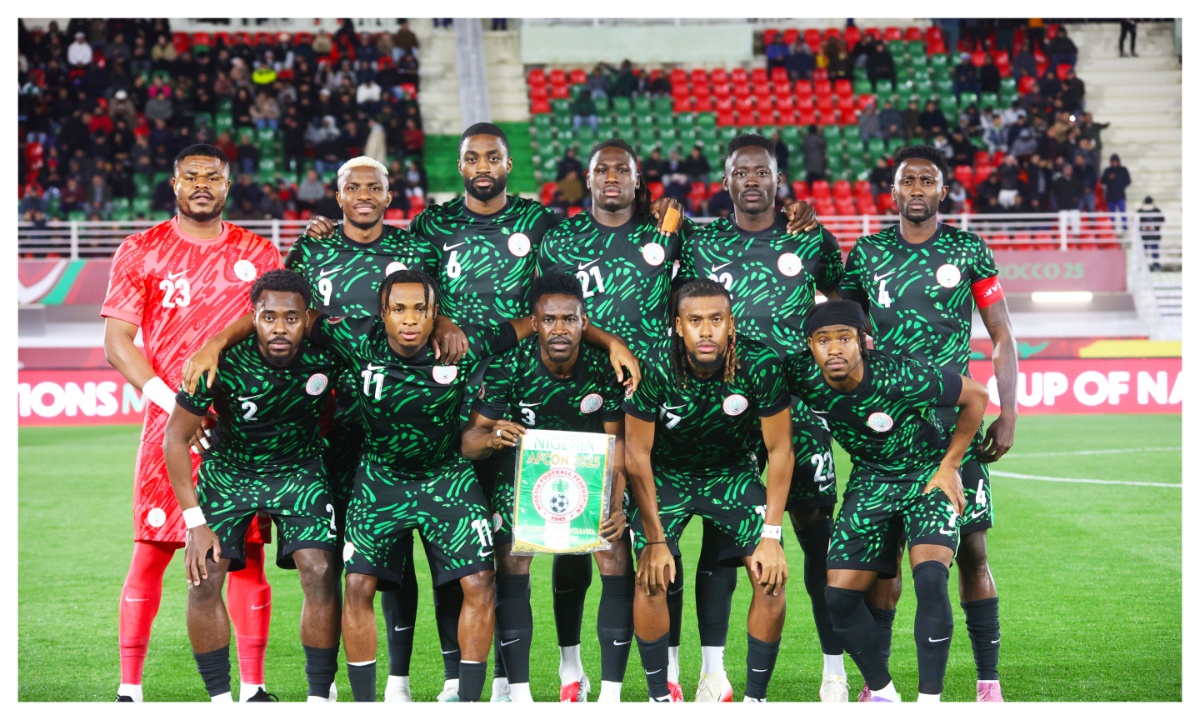
Nigeria’s Super Eagles have opened the second half of 2026 exactly where they left off on the global stage, 26th in the world, even as the ground shifted beneath them on the continent, where they now sit fourth among African nations.
FIFA’s latest men’s world rankings, published on Monday, July 20, confirmed what many observers had anticipated: with no competitive fixtures since June, Nigeria’s points tally was never going to move much.
Eric Chelle’s side last featured in a friendly defeat to Portugal, going down 2-1 to the former European champions. A result like that, in a non-competitive fixture, barely registers in FIFA’s points formula, and so the Super Eagles’ global standing stayed frozen in place.
But rankings are relative, not just absolute, and while Nigeria stood still, others moved.
Egypt’s run to the Round of 16 at the newly expanded 2026 FIFA World Cup, where the Pharaohs were eventually edged out in a tight, narrow contest by eventual runners-up Argentina, was enough to lift Mohamed Salah’s compatriots past Nigeria in the African pecking order.
The Super Eagles, three-time African champions with a proud history at six previous World Cups, now find themselves looking up at a team they’ve traditionally rivalled for continental supremacy.
At the summit of African football, Morocco remains unmoved as the continent’s top-ranked side, their credibility bolstered by a run to the World Cup quarter-finals, the furthest any African nation advanced in the tournament.
That performance also nudged the Atlas Lions up a spot in the global charts, from seventh to sixth, cementing their status as Africa’s flagbearers on the world stage.
Senegal holds onto second place in Africa despite a three-place slide in the global rankings, while Algeria rounds out the continent’s top five, having dropped one spot worldwide. The picture underlines a broader theme of this ranking cycle: World Cup performance, far more than friendly results, has been the decisive currency.
For Nigeria, the numbers carry a familiar sting. The Super Eagles remain one of the most highly-ranked nations absent from football’s showpiece event, having missed out on qualification for the expanded 48-team World Cup after finishing behind South Africa in their qualifying group and then falling to DR Congo in the playoffs.
Unable to accumulate ranking points on the World Cup stage the way Egypt and Morocco did, Nigeria’s position was effectively left to erode by comparison, even without losing points of their own.
Chelle’s side finished third at the 2025 Africa Cup of Nations and lifted the Unity Cup invitational trophy in London earlier this year, results that have helped keep them comfortably clear of the chasing pack. Turkey, Australia, Algeria, Canada, and Côte d’Ivoire occupy the 27th to 31st spots, respectively, some distance behind Nigeria’s tally.
Globally, the biggest headline belongs to Spain, who have returned to the number one position after being crowned 2026 FIFA World Cup champions, defeating Argentina in the final. That result also reshuffles the top of the pile: Argentina slips to second, with France, England, and Brazil rounding out the world’s top five.
With the World Cup now in the rear-view mirror, attention for Nigeria turns to 2027 Africa Cup of Nations qualification, where a string of strong results could help the Super Eagles claw back both continental and global ground.
FIFA has confirmed its next men’s world rankings will be released on October 7, 2026, the first checkpoint at which Nigeria could begin to reverse this slide, provided they can turn form on the pitch into points on the board.
WHAT YOU SHOULD KNOW
Nigeria’s Super Eagles stayed 26th in the world but fell to fourth in Africa, not because they played badly, but because they didn’t play at all. With no competitive matches since June, their ranking points sat still while Egypt and Morocco earned real points at the World Cup.