The Nigeria Hydrological Services Agency has warned that 17 states may experience flooding between July 21 and July 27, 2026, following its latest flood assessment.
NiHSA issued the warning on Tuesday through its National Flood Advisory, which placed the affected areas under a medium flood risk category.
The agency’s Director General and Chief Executive Officer, Arc Umar Mohammed, said the states at risk include Bauchi, Edo, Imo, Kaduna, Plateau, Benue, and 11 other states across the country.
NiHSA said its monitoring system detected rising water levels in several important rivers and flood-prone areas.
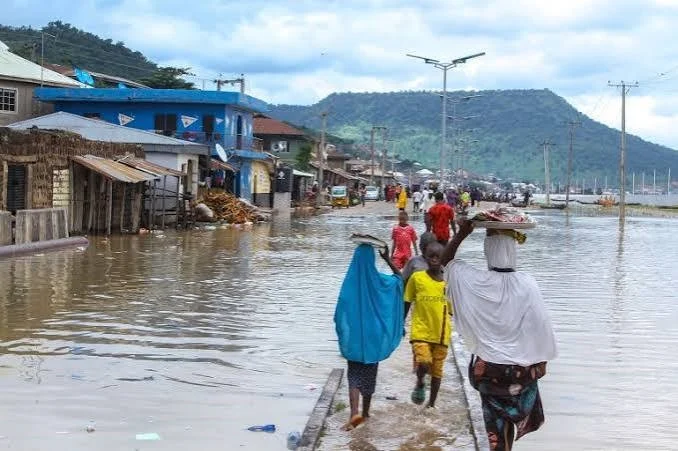
The agency noted that some locations could witness local flooding around river channels and floodplains during the forecast period.
The agency reported that water levels at monitoring points such as Saminara on the Karam River, Waya Dam Site on the Waya River, and Amber on the Amber River have crossed warning levels.
It added that 16 monitoring stations under the national hydrometric network recorded increased water levels, putting nearby communities at risk of flooding.
The assessment showed that Bauchi State has 1,841 communities, 145 schools, 101 health facilities, and eight markets that could be affected.
In Edo State, 148 communities, 131 schools, 123 health facilities, four markets, seven religious centres, and about seven hectares of farmland were listed as areas exposed to possible flooding.
For Imo State, the agency identified 415 communities, 423 schools, 198 health facilities, 49 markets, 111 religious centres, and 75 hectares of farmland as vulnerable.
Kaduna State was listed with 168 communities, 16 schools, three health facilities, and three religious centres at risk, while Plateau State has 205 communities, 137 schools, 44 health facilities, 16 markets, 81 religious centres, and 64 hectares of farmland that may be affected.
Benue State was also listed, with five communities, eight schools, two health facilities, and four religious centres identified as vulnerable.
The agency advised state governments, emergency management bodies, local authorities, and community leaders to take immediate steps to reduce the impact of possible flooding.
NiHSA urged residents living in flood-prone areas to move to safer locations, while emergency agencies were advised to prepare relief materials, including medical supplies, food items, clean water resources, and other essential support.
The agency also called for stronger community awareness through early warning systems and urged residents to avoid crossing flooded roads, bridges, and fast-moving water channels.
It advised states and communities to keep drainage systems, culverts, and waterways clear to allow proper movement of water and prevent avoidable flooding.
NiHSA further encouraged the public to regularly check its flood updates as the situation continues to be monitored.