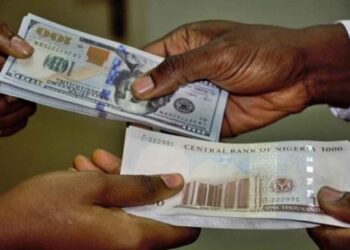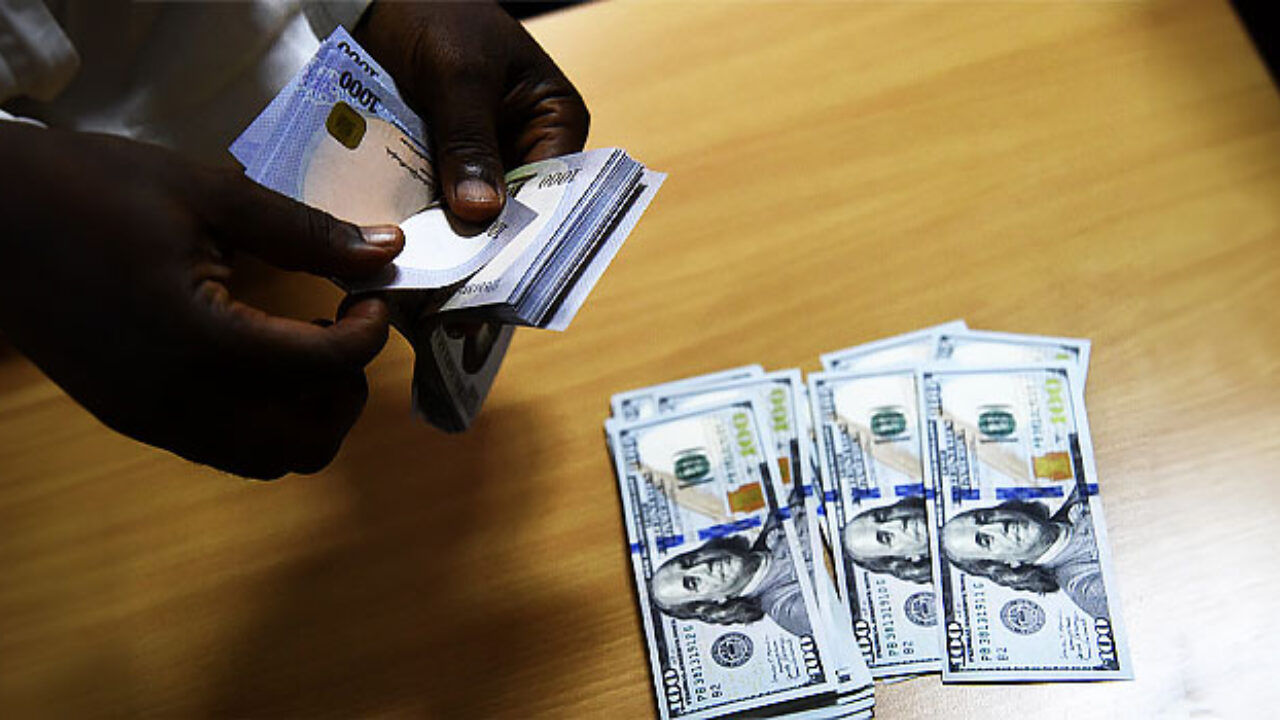
The naira opened trading at ₦1,381.68 to the dollar at the Nigerian Foreign Exchange Market (NFEM) on Wednesday, extending a run of relative calm that has characterized the official window in recent sessions.
The rate closely tracked by importers, exporters, manufacturers, and portfolio investors who depend on the NFEM to source hard currency puts the naira only marginally weaker than the ₦1,375.31 it fetched at Tuesday’s close, according to Central Bank of Nigeria data, and roughly in line with the ₦1,380.11 level recorded on Monday. Traders described the movement as consistent with the narrow band the currency has traded in through much of July.
Away from the official market, the story is different. Dealers in the parallel segment, where dollars change hands privately and outside the banking system, quoted the greenback at an average of ₦1,408 to buy and ₦1,413 to sell on Wednesday, according to rates tracked by Aboki FX. The exact figure, as always, shifts with location, transaction size, and the haggling between individual buyers and sellers.
That gap of roughly ₦31 between the official and black-market selling rates is a familiar signal to currency watchers: demand for dollars outside formal banking channels is still outpacing supply.
In cash terms, someone converting $100 would walk away with about ₦138,168 through the official window, against roughly ₦141,300 on the street, a difference of over ₦3,000 on a relatively modest transaction.
Analysts point to a familiar cluster of forces driving the divergence: foreign exchange inflows, import demand, oil export earnings, diaspora remittances, and the broader question of investor confidence in the naira.
Businesses that can access the NFEM generally prefer to do so, given its more favorable pricing; those who cannot, whether due to documentation requirements, timing, or simply insufficient official liquidity, are pushed toward parallel dealers, where prices adjust more freely and more expensively to whatever demand shows up on a given day.
The Central Bank has continued to lean on reforms aimed at deepening transparency and liquidity in the official market, part of a broader push toward stronger price discovery and, ultimately, a narrower spread between the two markets.
Those efforts have coincided with a period of improved stability at the NFEM the naira has held broadly within a tight range for much of the month even as the parallel market continues to command its premium.
Turnover data lend some support to the liquidity narrative: interbank activity at the NFEM has shown sharp swings session to session, evidence, dealers say, of banks and CBN interventions actively working the market rather than the rate simply drifting on thin volumes.
Neither rate is static. The NFEM figure reflects trades executed as the session progresses and can move intraday; parallel market pricing is set street-by-street by dealers reacting to the volume and urgency of demand in front of them.
Businesses and individuals planning to buy or sell foreign currency would do well to check rates immediately before a transaction rather than relying on the day’s opening quote. A gap of even a few naira per dollar adds up quickly on larger sums.
For now, the picture is one of a currency that has found a measure of stability at the official window, even as the persistent premium in the parallel market serves as a reminder that Nigeria’s foreign exchange story is still, in large part, one of supply struggling to keep pace with demand.
WHAT YOU SHOULD KNOW
The naira’s stability at ₦1,381.68/$ in the official market masks a persistent reality dollars remain scarcer and costlier outside the banking system, where they trade nearly ₦30 higher.
Until supply catches up with demand in Nigeria’s foreign exchange market, this gap between the official and parallel rates will keep shaping the true cost of doing business, making it essential to check live rates before any transaction rather than relying on the official quote alone.