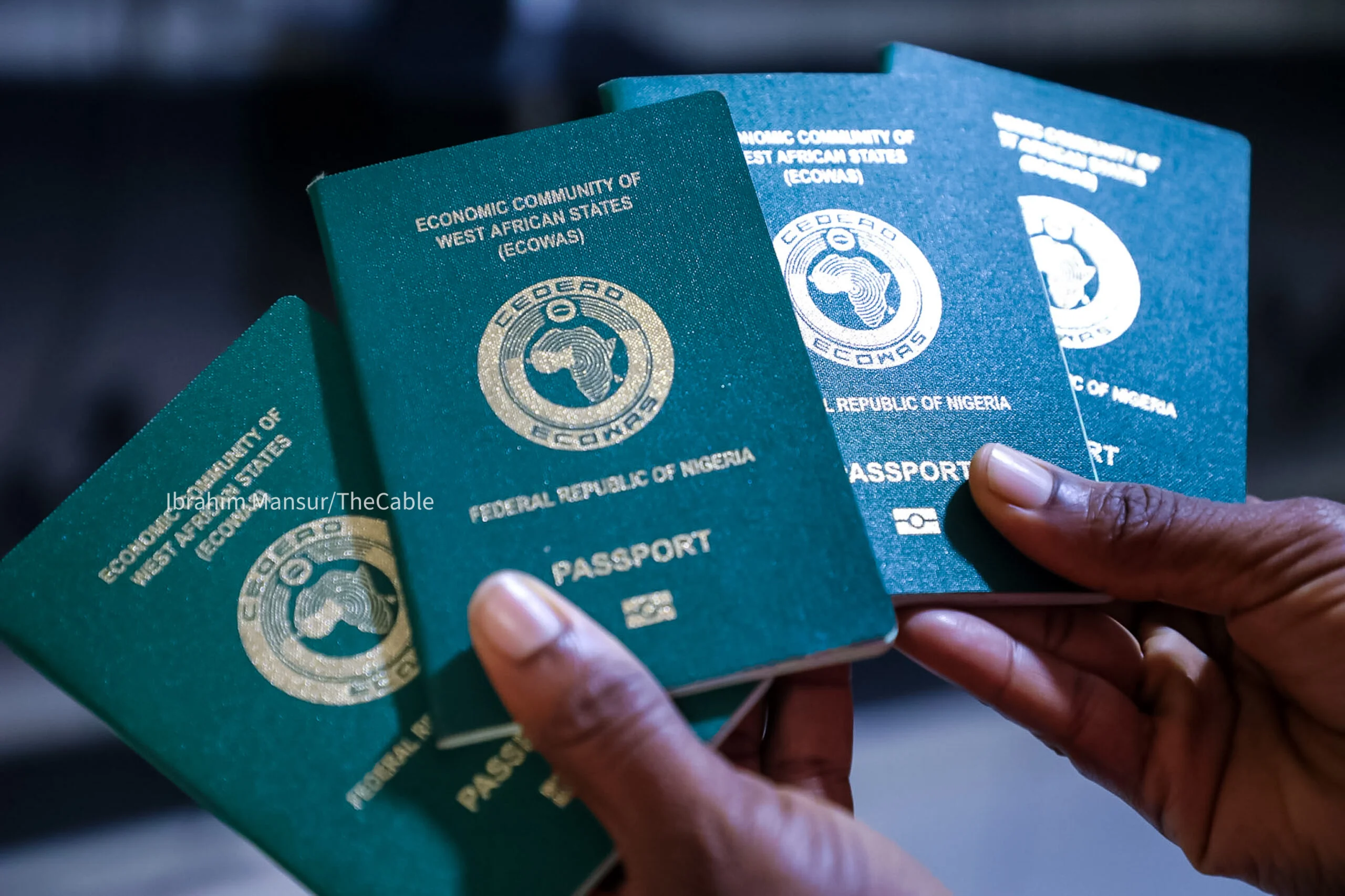
For a Nigerian passport holder weighing where to spend the next holiday without wading through embassy paperwork, the headline sounds encouraging: 44 destinations across Africa, the Caribbean, the Pacific, and parts of Asia and the Middle East are open to entry either visa-free, via a fee-free visa on arrival, or through an e-visa.
But the fuller picture, drawn from the Henley Passport Index, is more of a mixed bag than a triumph, and it’s worth understanding both the opportunity and the context before booking that flight.
The Henley Passport Index, compiled using data from the International Air Transport Association and updated throughout the year, ranked Nigeria at 90th place in its July 2026 edition, tied with the Democratic Republic of the Congo and Turkmenistan, out of 199 passports assessed against 227 travel destinations.
That represents a slight slip from 89th position in the April 2026 update, when Nigeria’s passport had climbed six places from 95th in January 2024.
Here’s the twist reporters covering the index keep coming back to: the ranking has actually been improving even as the number of places Nigerians can freely enter has been shrinking.
The tally of visa-free or visa-on-arrival destinations fell to 44, down from 46 in January 2025 and 45 in January 2024. In other words, Nigeria hasn’t so much gained ground as watched other countries fall faster.
Several nations that once ranked below Nigeria suffered steeper declines of their own, which pushed Nigeria up the global table without any real expansion in where its citizens can actually travel.
Zoom out further, and the long-term trend is unmistakably downward. Nigeria has fallen 27 places over two decades, from 62nd position in 2006 to its current ranking.
Even though the total has held at 44 between the April and July 2026 updates, the destinations making up that figure have shifted.
Between 2025 and 2026, Nigerian travelers gained fresh access to Fiji, Micronesia, Mozambique, Rwanda, Togo, Samoa, Palau Islands, Niue, and Montserrat, largely nations with open or flexible entry policies, particularly among Pacific Island states.
Those additions were offset by losses elsewhere, as Nigeria simultaneously lost access to several countries that tightened their entry requirements, keeping the net figure essentially unchanged.
Regionally, West Africa remains the strongest pillar of Nigerian travel freedom. As members of the Economic Community of West African States, Nigerians enjoy free movement: no visa and no fee, typically for up to 90 days across all 15 ECOWAS states, including Ghana, Senegal, Côte d’Ivoire, Benin, Togo, Sierra Leone, Guinea, Guinea-Bissau, Burkina Faso, Mali, Niger, Cape Verde, The Gambia, and Liberia.
Beyond the bloc, the current list of visa-free, visa-on-arrival, or e-visa destinations includes:
- Africa: Cameroon, Chad, Comoro Islands (VOA), Djibouti, Kenya, Madagascar (VOA), Mauritius, Mozambique, Rwanda, Seychelles, Burundi (VOA)
- Caribbean: Barbados, Dominica, Haiti, Montserrat, St. Kitts and Nevis
- Pacific: Cook Islands, Fiji, Kiribati, Micronesia, Niue (VOA), Palau Islands (VOA), Samoa (VOA), Tuvalu, Vanuatu
- Middle East & Asia: Cambodia (VOA), Iran (VOA), Lebanon, Maldives (VOA), Timor-Leste (VOA)
Notably absent from any of these lists is the Schengen Area. Nigerian holders still need a prior visa for all 29 Schengen countries, and Nigeria carries one of the steepest Schengen rejection rates in the world, reportedly around 46%, among the highest of any nationality applying for European short-stay visas.
The same applies to the United States, the United Kingdom, and Canada, which remain firmly in the “apply first” category for Nigerian travelers.
The Henley Passport Index has become something of an annual barometer for how a country’s diplomatic standing translates into everyday freedoms for its citizens, and for Nigeria, the 2026 data tells a story of stagnation dressed up as progress.
Christian Kaelin, chairman of Henley & Partners, has argued that passport privileges shape opportunity, security, and economic participation, with the greatest mobility concentrated in wealthier, more politically stable nations.
For now, Nigerian travelers looking to explore visa-free will find their best options close to home, across the Pacific islands, and in a scattering of Caribbean and African nations, with the rest of the world still requiring the paperwork this list was meant to help travelers avoid.
WHAT YOU SHOULD KNOW
Nigeria’s passport ranking is rising, but that’s not the same as gaining travel freedom. The number of places Nigerians can enter visa-free or on arrival has actually fallen from 46 to 44 over the past two years, and the ranking only looks better because other countries are declining faster.
Real, unrestricted access remains concentrated in West Africa (via ECOWAS) plus a scattering of Pacific and Caribbean nations, while major destinations like the Schengen Area, the US, the UK, and Canada still require full visa applications. In short: better rank, not better mobility.