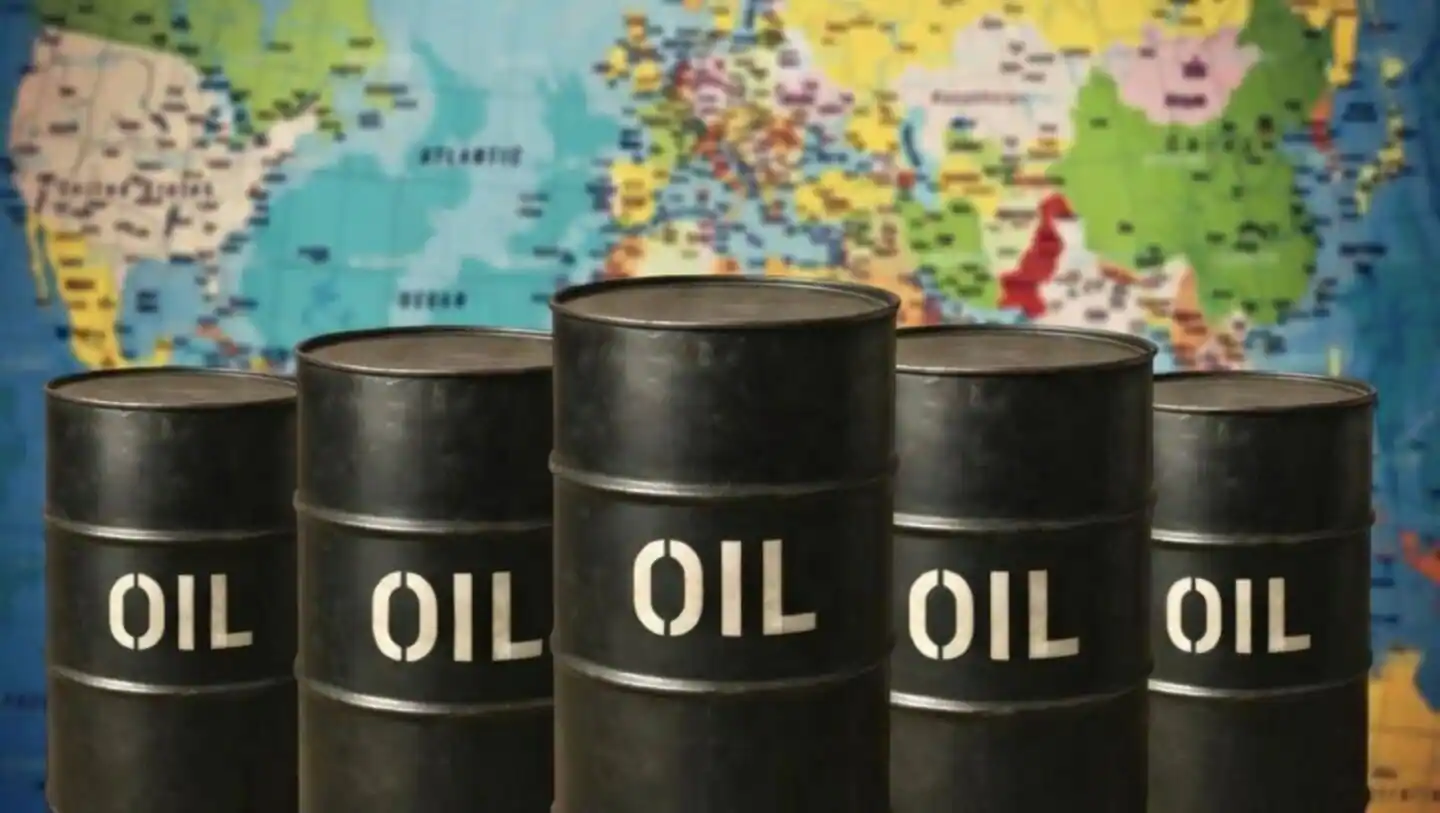
Oil prices held largely steady in early Friday trading, but the week’s dramatic run-up left little doubt among traders that the Middle East has once again become the dominant force in global energy markets.
Brent crude futures sat flat at $95.52 a barrel as of 06:45 GMT, while West Texas Intermediate edged up a modest 7 cents, or 0.1%, to $91.36, a deceptively calm snapshot given the turbulence that defined the preceding five sessions.
Zoom out, and the picture looks far more dramatic. Brent has surged 7.6% since Monday, and WTI has climbed an even steeper 10.4%, putting both benchmarks on course for their strongest weekly performance since the week ending July 20.
That kind of move doesn’t happen without a serious jolt to the market’s sense of security, and this week, that jolt came from the reignition of hostilities between Washington and Tehran.
The conflict, now in its seventh month since erupting from joint U.S.-Israeli strikes in late February, appeared to enter a dangerous new phase this week. American strikes killed and wounded dozens, including Iranian civilians, in what analysts are calling the fiercest exchange between the two nations since July.
For a market already pricing in geopolitical risk, the escalation was a stark reminder that the premium built into crude isn’t merely theoretical.
Adding to the unease, Israeli Defence Minister Israel Katz issued fresh warnings that Israel intends to “cripple” Iran’s military and civilian infrastructure, a phrase that traders parsed carefully, given that Iranian energy facilities would likely fall within that scope.
Any strike on Iranian production or export infrastructure would mark a significant escalation beyond the shipping-lane skirmishes that have rattled markets in recent months.
Nowhere is the anxiety more visible than in the diesel market. U.S. diesel prices have been pushed to record highs, a squeeze compounded by a second front entirely: Ukrainian drone and missile strikes on Russian refineries, which have chipped away at refined product supply even as crude flows remain comparatively less disrupted.
The combination of a Middle East crude scare layered on top of a Russian refining crunch has left distillate markets particularly exposed, with knock-on effects for shipping, agriculture, and trucking costs likely to follow.
Analysts are moving quickly to recalibrate. ANZ raised its short-term Brent forecast to $95 a barrel on Friday, explicitly flagging further upside if the conflict deepens.
The bank’s note captured the mood on trading desks succinctly: the market, it said, is “entering a delicate adaptation phase,” where elevated inventories have so far cushioned the shock, but that buffer is thinning by the week.
That framing matters. Supply disruptions rarely move markets in a straight line; the real test comes when the cushion of spare inventory runs out, and every barrel of disruption translates directly into price. ANZ’s language suggests that point may be approaching faster than many had modeled even a month ago.
Diplomatically, the door to de-escalation remains only narrowly open. U.S. Vice President JD Vance told reporters Thursday that Washington has no plans to engage Iran in talks unless Tehran halts its attacks on commercial shipping through the Strait of Hormuz, one of the world’s most critical chokepoints, through which roughly a fifth of global oil consumption typically passes.
Iran, for its part, showed no sign of backing down, expanding its list of vessels it deems non-compliant and therefore subject to fines, seizure, or detention.
Notably, Iraqi vessels remain something of an exception, one of the few categories of ships Tehran continues to clear for transit, a detail that has taken on outsized commercial significance.
Indeed, even amid the wider chaos, Iraq has managed to ramp up its own exports substantially. Baghdad’s oil shipments jumped to roughly 2.34 million barrels per day in August, up sharply from about 1.35 million bpd in July, according to two Iraqi energy officials who spoke Wednesday.
September volumes are expected to climb further still, driven by steep discounts and continued Iranian sign-off for Iraqi tankers navigating the strait, an arrangement that has proven unexpectedly lucrative for buyers willing to look past the regional risk.
If there was a note of restraint in an otherwise combustible week, it came from an unlikely source: Russian President Vladimir Putin, who suggested Thursday that a path toward ending the war in Ukraine still exists and that both the United States and China stood ready to support a peace settlement.
Whether that proves to be a genuine diplomatic opening or simply rhetorical positioning, it was enough to take some of the edge off crude’s advance, a small but telling sign that traders are watching every geopolitical thread for signs of relief, not just the ones centered on Iran.
For now, the oil market finds itself suspended between two competing narratives: a genuine and escalating security crisis in the Middle East pushing prices higher, against a backdrop of inventory buffers, alternative supply routes through Iraq, and faint diplomatic signals from Moscow that could yet cap the rally.
Which narrative wins out over the coming weeks may well depend less on economic fundamentals than on decisions made in Tehran, Tel Aviv, and Washington, a reminder that in this market, geopolitics isn’t just a factor. It’s the whole story.
WHAT YOU SHOULD KNOW
Oil markets are being driven almost entirely by geopolitical risk right now, not fundamentals. The escalating U.S.-Iran conflict, threats to Iranian energy infrastructure, and Ukrainian strikes on Russian refineries pushed Brent and WTI to their biggest weekly gains since July, with diesel hitting record highs.
The shrinking inventory buffers mean the market has less room to absorb the next shock, so any further escalation, particularly around the Strait of Hormuz, could send prices sharply higher from here.