The naira traded at ₦1,329.12 to the dollar at Nigeria’s official foreign exchange window on Thursday, a marginal pullback from Wednesday’s close but one that still leaves the currency hovering near territory it has not occupied in two years.
Figures from the Nigerian Foreign Exchange Market (NFEM) put Thursday’s rate at ₦1,329.12/$1, a slight retreat from Wednesday’s ₦1,326.69/$1 close, a level that had marked the naira’s strongest position against the dollar in roughly two years.
The Central Bank of Nigeria (CBN) calculates the official NFEM rate as a volume-weighted average of transactions executed during each trading session, meaning the figure reflects actual market activity rather than an administratively fixed peg.
Thursday’s rate is the latest data point in what has become a sustained rally for the local currency. The naira gained roughly ₦29 against the dollar between August 14 and September 1, an appreciation of about 2.15 percent, as it moved from levels above ₦1,360/$1 to below ₦1,330/$1.
Traders and analysts have pointed to two main drivers behind the move: firmer dollar liquidity in the official window and a steady rebuilding of confidence among market participants who, for years, treated the NFEM rate with skepticism.
The rally briefly pushed the naira below the ₦1,330/$1 threshold for the first time since May 2024, a psychological marker that traders had watched closely through the year.
Central bank data also showed the currency gained close to 1.5 percent at the official market in August alone, even as movement in the parallel segment remained comparatively muted, evidence, analysts say, that the appreciation has been concentrated in the formal channel the CBN oversees directly.
Behind the naira’s improved standing lies a stronger external balance sheet. External reserves climbed to roughly $53.8 billion by the end of August, up from about $45.57 billion at the start of the year, a gain of more than $8 billion in eight months, and a level that has already surpassed the CBN’s own full-year reserve projection of around $51 billion.
The buffer gives the apex bank more room to defend the currency and meet legitimate dollar demand without depleting its war chest, a dynamic that has historically underpinned confidence in Nigeria’s exchange rate management.
Remittances have added a second pillar of support. Formal inflows through licensed international money transfer operators reportedly hit a record $947 million in July, a sign that more diaspora Nigerians are routing dollars through official channels rather than informal networks, a shift that, if sustained, would ease pressure on the parallel market over time.
Away from the CBN’s official window, the picture looks markedly different. Aboki Forex quoted the dollar at roughly ₦1,395 on Thursday, while TalentBase reported parallel-market buying and selling rates of about ₦1,400 and ₦1,410, respectively, across major trading hubs.
Other trackers have placed the spread even wider during the week, with black-market quotes touching ₦1,410 in some locations even as the CBN rate sat closer to ₦1,329.
That leaves a gap of roughly ₦65 to ₦80 between the official and street rates, a premium that has narrowed from earlier in the year but refuses to close entirely.
The persistence of that gap, even as the official rate rallies, underscores a structural reality familiar to anyone who has tracked Nigeria’s currency market: formal liquidity gains do not automatically translate into parity with the parallel segment, where retail demand, informal remittance flows, and speculative positioning continue to set their own price.
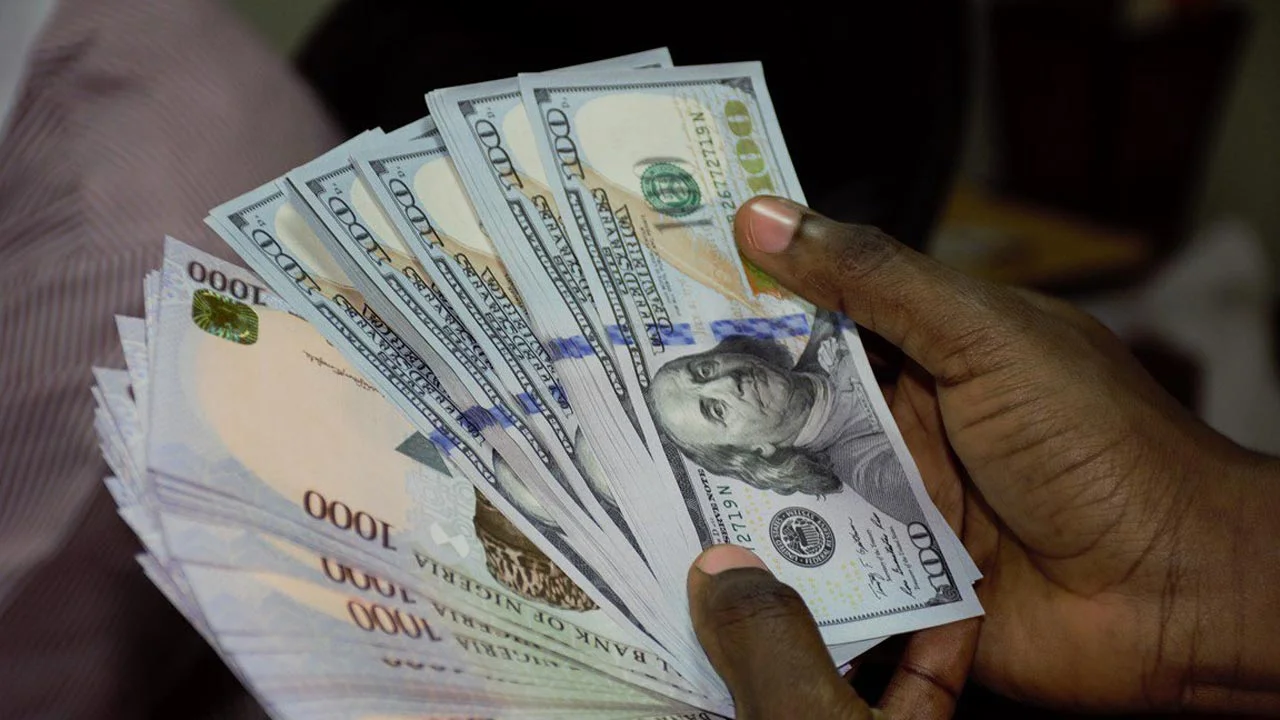
The arithmetic illustrates the divergence starkly. At Thursday’s official rate of ₦1,329.12/$1, $100 converts to roughly ₦132,912. At the parallel market’s ₦1,395/$1, the same $100 fetches about ₦139,500, a difference of nearly ₦6,600, or almost 5 percent, depending entirely on which market a buyer or seller can access.
Analysts caution that both figures are snapshots. Parallel-market rates in particular can shift several times within a single trading day, varying by location, transaction size, and the counterparties involved, meaning any two Nigerians exchanging dollars for naira on the same afternoon could walk away with noticeably different amounts.
For now, the official market’s momentum appears intact, propped up by reserves that continue to build and remittance inflows running at record levels.
Whether that strength eventually pulls the parallel rate down to meet it or whether the two markets continue operating on largely separate tracks is likely to remain one of the more closely watched threads in Nigeria’s economic story through the final quarter of the year.
WHAT YOU SHOULD KNOW
The naira’s official rate is genuinely strengthening now near a two-year high at ₦1,329.12/$1 thanks to stronger reserves ($53.8bn) and record remittance inflows. But the parallel market still trades nearly 5% higher, around ₦1,395–1,410/$1.
Don’t assume the official rate is what you’ll actually get on the street; that gap remains wide despite the rally, so where you exchange still matters more than the headline number.