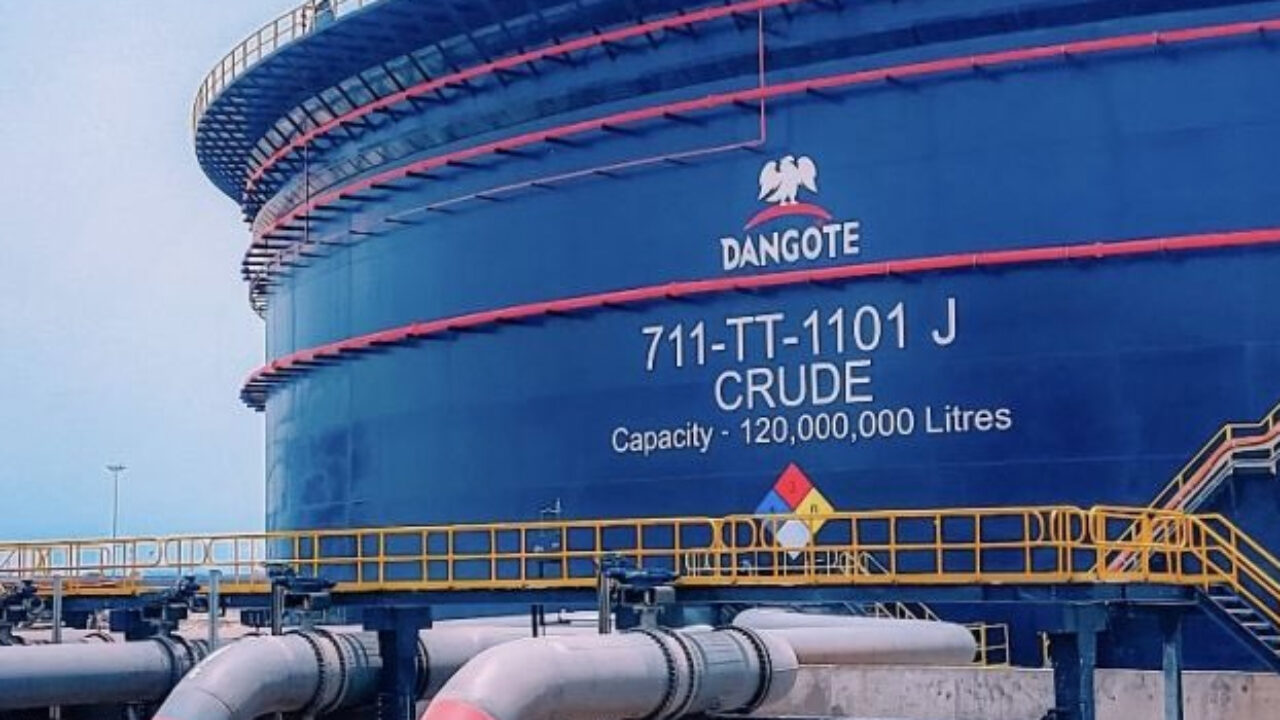
Africa’s largest oil refinery is going global, planning to more than double its capacity by 2028 and seize a commanding share of the jet fuel market as geopolitical tensions reshape world energy trade.
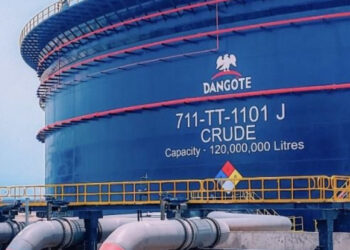
The Dangote Refinery, the 650,000-barrel-per-day industrial behemoth located on the outskirts of Lagos, Nigeria, has announced plans to add a further 700,000 barrels per day of fully complex refining capacity by the end of 2028, a move that would push its total output well past the one-million-barrel threshold and reshape Africa’s role in the global energy economy.
The announcement was made by the refinery’s Chief Executive Officer, David Bird, speaking before an audience of energy industry heavyweights at the S&P Global Energy Middle East Petroleum and Gas Conference in London, a deliberate choice of platform that underscores just how seriously Dangote is positioning itself as a player not merely in African energy, but on the world stage.
“We will bring 700,000 barrels per day of fully complex refining capacity on stream by the end of 2028,” Bird declared, adding that the company has already purchased long-lead items and is actively in the process of awarding construction contracts, which signals that this is no speculative roadmap but a program already in motion.
The CEO was equally forthcoming about the refinery’s current competitive standing. “We’re very grateful to be seen as a reliable, high-quality, and dependable supplier able to land our product competitively all over the world,” he said.
Perhaps the most strategically significant dimension of Bird’s address was his emphasis on jet fuel. The refinery currently produces a significant surplus of aviation fuel beyond what can be absorbed by domestic and regional African demand, and Bird made clear that international markets are firmly in the company’s crosshairs.
His reasoning is grounded in a convergence of structural and geopolitical forces. Africa’s aviation sector, while growing, still consumes relatively modest volumes of jet fuel compared to the major markets of Europe, North America, and Asia, leaving Dangote with exportable volumes that can be redirected to fuel-hungry markets elsewhere.
At the same time, global fuel trade flows have been thrown into disarray by heightened tensions in the Middle East, particularly concerns over freedom of navigation through the Strait of Hormuz, the narrow chokepoint through which a significant portion of the world’s petroleum trade passes.
With Gulf-region suppliers facing increased uncertainty, refiners outside that corridor are finding themselves unexpectedly well-positioned.
Dangote is one such beneficiary. Its location on the Atlantic coast of West Africa places it outside the arc of Middle Eastern instability, and its scale gives it the logistical muscle to supply major international markets competitively.
Bird’s London address hinted at ambitions that stretch well beyond 2028. He outlined a vision in which the Dangote Group could ultimately scale its total refining capacity to 2.1 million barrels per day, a figure that would rank it among the most formidable refining operations anywhere in the world.
To that end, the group is also exploring the development of an additional refinery in East Africa, a move that would extend the company’s geographic footprint across the continent and give it a strategic foothold closer to Indian Ocean shipping lanes and fast-growing East African energy markets.
Bird framed the expansion not simply as a corporate growth exercise but as a continental imperative. Increasing Africa’s own refining capacity, he argued, would reduce the continent’s long-standing dependence on imported refined products, a dependence that has for decades seen African nations export crude oil only to reimport it in processed form at significantly higher cost.
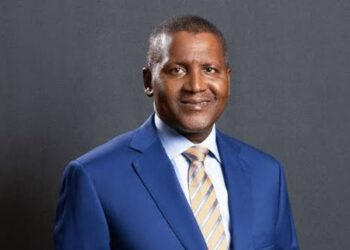
The Dangote Refinery’s rise has already been one of the defining energy stories of the decade. When its founder, Africa’s wealthiest man, Aliko Dangote, broke ground on the project, skeptics questioned whether a single private-sector actor could deliver a project of such scale in Nigeria’s historically challenging business environment.
Now, with expansion plans accelerating, construction contracts being awarded, and its CEO delivering keynote addresses in London, the refinery appears to be entering a new and more assertive phase, one in which it does not merely serve Africa’s needs but actively competes to shape the global fuel trade.
WHAT YOU SHOULD KNOW
The Dangote Refinery is making a bold and decisive move from regional supplier to global energy powerhouse.
It plans to add 700,000 barrels per day of refining capacity by 2028, potentially scaling to 2.1 million barrels per day and a jet fuel surplus ready for international markets. The refinery is strategically capitalizing on Middle Eastern supply disruptions to cement its place in the world energy trade.
Africa is no longer just an oil producer. With Dangote leading the charge, it is fast becoming a serious refining force, one capable of competing with and supplying the world.