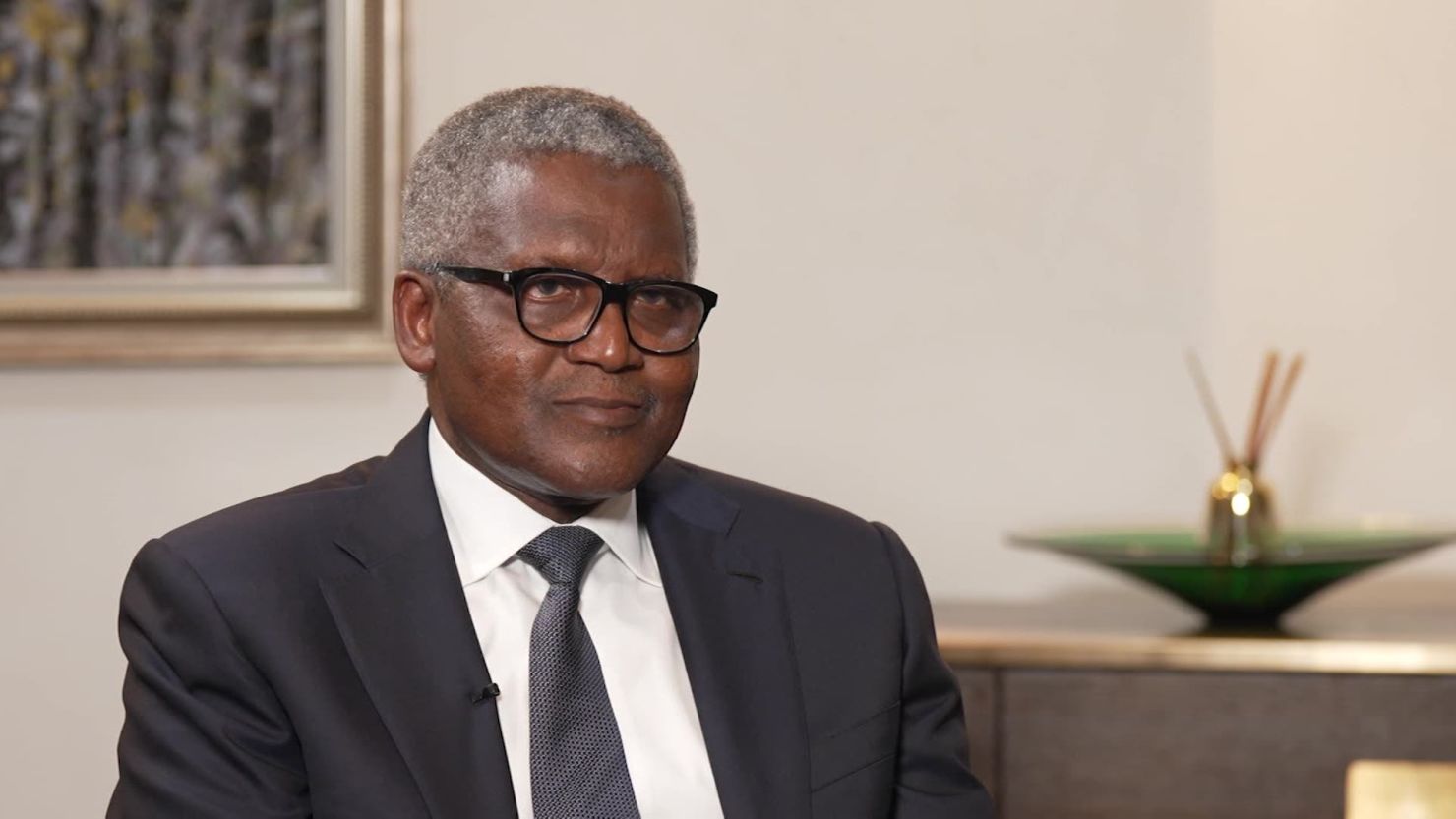
The Dangote Group has moved beyond refining, with its Kalaekule oilfield in the Niger Delta now producing crude, marking Africa’s richest man’s bold entry into upstream oil production.
The company is currently producing approximately 4,500 barrels per day from the Kalaekule field on Oil Mining Lease (OML) 72, following a delayed start-up in December 2025, with production projected to rise to 15,000 barrels per day within weeks.
The announcement was made by Olajumoke Ajayi, Chief Executive of West African Exploration and Production (WAEP), Dangote’s upstream joint venture, confirming what industry insiders had long anticipated.
For Devakumar Edwin, Vice President of the Dangote Group’s oil and gas division, the timing could not be more deliberate. Speaking in an interview with S&P Global’s Platts, Edwin disclosed that the company has already begun standard well testing and is preparing to scale up output.
“We have opened a well and begun standard testing, which should be completed in the next three to four weeks,” he said, adding that large scale pumping and fresh drilling campaigns would follow shortly after.
The Kalaekule field is no stranger to oil wealth. The licenses are located in shallow water southeast of the Niger Delta, roughly 22 kilometers from the Bonny terminal. Discoveries were first made on the blocks in 1966, and WAEP acquired the assets from Shell in 2015. Output from the fields peaked at 21,000 barrels per day in 1999 before declining in 2003.
After more than two decades of relative dormancy, the fields are once again flowing, this time under the banner of Nigeria’s most ambitious indigenous energy conglomerate.
Dangote holds an 85 percent stake in WAEP, which in turn holds a 45 percent working interest in two oil licenses, OML 71 and 72. The Nigerian National Petroleum Company Limited (NNPC Ltd) holds the remaining stake, while WAEP’s minority stakeholder, First E&P, operates the assets.
The upstream push comes as a direct strategic response to one of the Dangote refinery’s most persistent vulnerabilities: crude supply. The plant has struggled to obtain sufficient Nigerian crude in its early months, forcing it to import large volumes of WTI Midland crude from the US and sparking a bitter public row between the NNPC, international oil companies, Dangote, and Nigeria’s upstream regulators.
The Chief Executive Officer of the Dangote refinery, David Bird, said the upstream assets could potentially provide a reliable crude source for Dangote’s refinery, which recently reached its full 650,000-barrel-per-day nameplate capacity.
Bird also noted that the company is seeking to establish its own shipping presence, with the goal of combining indigenous production with Dangote-owned vessels to create a fully integrated and stable supply chain.
Yet even the most optimistic projections reveal the scale of what lies ahead. Forecasts indicate production from OML 71 and 72 could peak at about 43,000 barrels of oil equivalent per day by 2036 — a fraction of the refinery’s crude requirements.
The refinery currently relies heavily on external crude, with Nigerian grades accounting for about 65 percent of its imports in early 2025, supplemented by supplies from the United States and Angola.
Analysts caution that while the upstream foray is strategically sound, the path from 4,500 barrels a day to volumes that can meaningfully feed a 650,000-barrel refinery is long and uncertain.
Nigeria’s broader oil production landscape offers little comfort either. Nigeria’s crude oil production has remained below government targets, constrained by underinvestment, oil theft, and limited exploration. Output stood at about 1.38 million barrels per day in March, significantly short of the 2 million bpd goal for 2026.
Despite these headwinds, the symbolism of this moment is hard to overstate. The development underscores a broader shift in Nigeria’s oil and gas landscape, where major domestic players are increasingly pursuing integrated models to navigate supply uncertainties and market volatility.
For Aliko Dangote, the move represents the final piece of an audacious vertical integration puzzle from wellhead to filling station. Whether the Kalaekule field becomes a footnote or the foundation of a genuine upstream empire will depend on execution, geology, and Nigeria’s ability to create a stable environment for investment.
What is certain, as the first crude flows from OML 72, is that the rules of the Nigerian energy game are changing and Dangote is writing the new ones.
WHAT YOU SHOULD KNOW
Dangote Group’s entry into upstream oil production marks a watershed moment for Nigerian energy. With the Kalaekule field now pumping its first barrels, Africa’s most powerful industrialist is moving to control the entire oil value chain, from drilling to refining to distribution.
The strategy is clear: end the refinery’s costly dependence on foreign crude and imported refined products. However, while the ambition is historic, the output remains modest for now, and analysts warn it could take years before Dangote’s own fields make a meaningful dent in the refinery’s massive crude appetite.