The World Health Organization on Saturday confirmed a total of eight cases of hantavirus linked to the outbreak aboard the cruise vessel MV Hondius, with three deaths recorded so far.
The latest update marks an increase from the seven cases previously reported, with the health agency stating that the figures were current as of Friday, May 8, 2026.

“As of 8 May, a total of 8 cases, including 3 deaths, have been reported,” the organisation stated.
According to WHO, six of the reported infections have been confirmed as the Andes virus, while four patients remain hospitalised.
The agency also disclosed that one case initially classified as suspected has now been reclassified as a non-case after testing negative for the virus through polymerase chain reaction and serological testing.
Hantaviruses are zoonotic viruses commonly carried by rodents and can occasionally infect humans.
The WHO said investigations are ongoing to determine the exact source of exposure, including a review of the travel history and possible contact points of the index case.
It added that one of its experts, alongside a specialist from the European Centre for Disease Prevention and Control, is currently on board the ship to support passengers, crew members and operators.
The cruise ship had been travelling from Ushuaia to Cape Verde when the outbreak emerged.
WHO stated that illness onset among affected individuals occurred between April 6 and April 28.
The agency said symptoms observed included fever, gastrointestinal complications, rapid progression to pneumonia, acute respiratory distress syndrome and shock.
Despite the severity of the confirmed cases, WHO assessed the risk to the global population as low and said it would continue close monitoring.
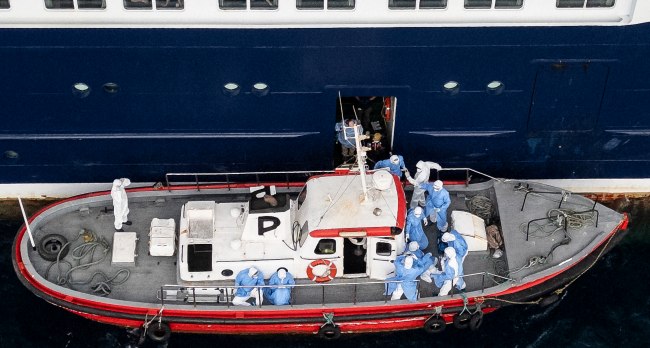
The vessel was carrying 147 people from 23 nationalities, including passengers from the United Kingdom, Spain, and the United States, as well as crew members from the Philippines.
WHO also disclosed that nationals from 12 countries had already disembarked at Saint Helena on April 24.
The United States government confirmed on Friday that it is organising an evacuation flight for American passengers aboard the vessel, which is currently sailing toward Tenerife in the Canary Islands.
“The Department of State is arranging a repatriation flight to support the safe return of American passengers on this ship,” a State Department spokesperson said.
The spokesperson added that American authorities are working with the Spanish government and other federal agencies to coordinate the operation.
According to the ship operator, 17 Americans are currently on board.
WHO highlighted that the Andes virus remains the only known hantavirus strain capable of person-to-person transmission, heightening concerns among international health authorities.
The agency said it has already distributed technical guidance to affected countries, covering case investigation, management of shipboard outbreaks, passenger disembarkation procedures and monitoring of returning travellers.
It also disclosed that an adult male who disembarked in Tristan da Cunha on April 14 remains stable in isolation and is currently classified as a probable case pending laboratory confirmation.
Passengers who travelled on the same flight from Saint Helena to South Africa with one confirmed case have been contacted.
WHO said 75 contacts have so far been identified in South Africa, with 42 already traced and placed under active monitoring.
The organisation urged countries linked to the outbreak to maintain strong public health coordination and continue implementing preventive measures.
It stressed that early detection, prompt isolation of suspected cases and strict infection prevention protocols remain critical for protecting healthcare workers, passengers and crew.
WHO further stated that current evidence does not support routine laboratory testing or quarantine for asymptomatic contacts.
What You Should Know
The hantavirus outbreak aboard MV Hondius is drawing global attention because it involves the Andes virus, the only hantavirus strain known to spread between humans.
Although WHO has assessed the overall global risk as low, the presence of confirmed deaths and ongoing international contact tracing highlights the seriousness of the event. Health authorities are focused on rapid case identification, isolation and monitoring of exposed individuals.
The incident also underscores the unique public health challenges posed by infectious disease outbreaks on cruise ships, where close contact can accelerate transmission.