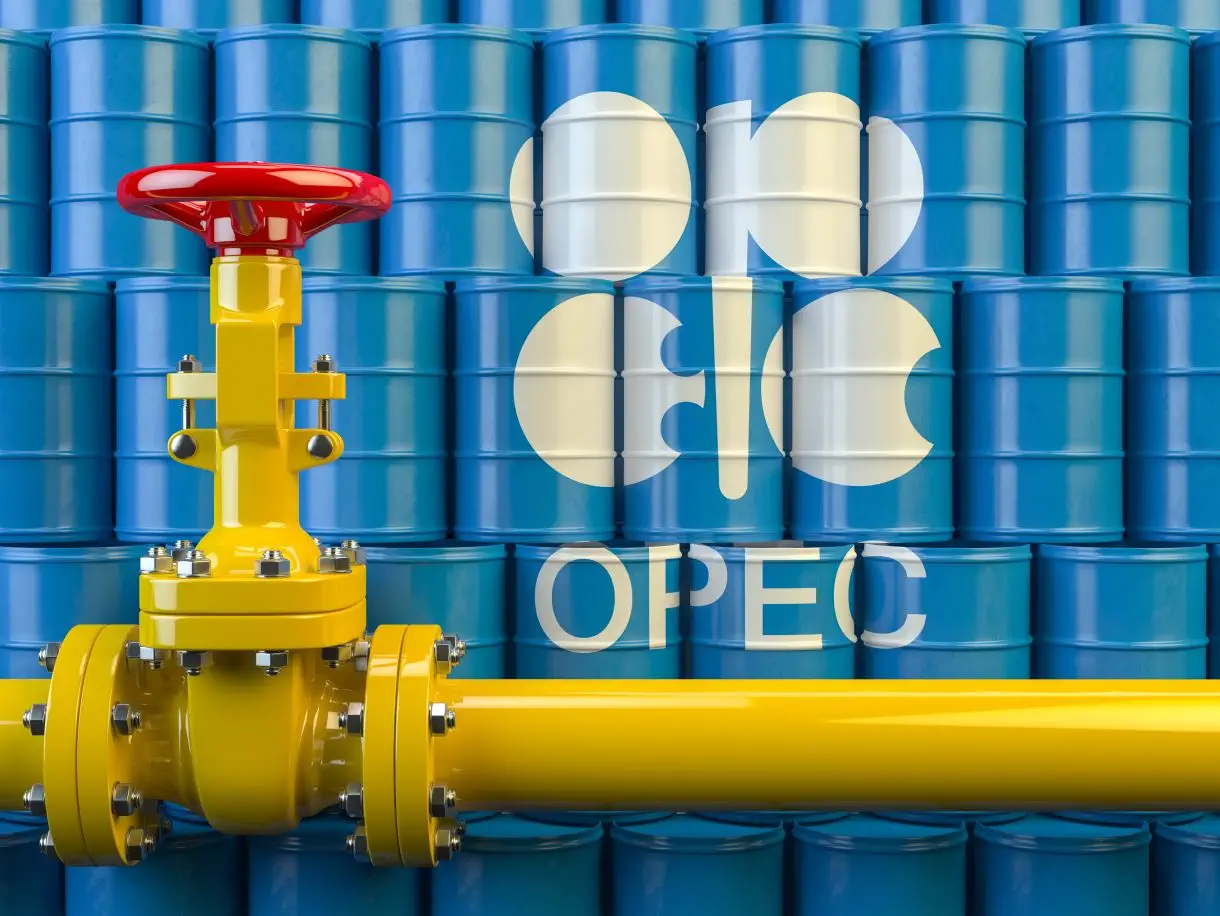
The United Arab Emirates (UAE) announced Tuesday that it is withdrawing from OPEC and the broader OPEC+ alliance, effective May 1, ending a membership that stretches back more than half a century.
The announcement, carried by state news agency WAM, lands at perhaps the worst possible moment for OPEC.
The organization is already reeling from the catastrophic disruption triggered by the war with Iran, which has choked oil flows through the Strait of Hormuz, the narrow chokepoint through which roughly one-fifth of the world’s crude oil and liquefied natural gas normally passes, and sent global energy markets into free fall.
The Iran war has already wiped out 7.88 million barrels per day of OPEC’s production, resulting in what experts have called the single largest supply collapse for the producers’ group in recent decades.
OPEC production fell 27 percent to 20.79 million barrels per day in March alone, a drop that surpasses the cuts seen during the COVID-19 pandemic and dwarfs the disruptions of the 1970s oil crisis and the 1991 Gulf War.
Now, into that chaos, Abu Dhabi has detonated another crisis, and this one is of the cartel’s own making.
The UAE, the world’s seventh-largest oil producer, joined OPEC through its emirate of Abu Dhabi in 1967, four years before the federation itself was founded in 1971.
For nearly six decades, the country sat at the table in Vienna, coordinating output, absorbing quota constraints, and playing the role of loyal, if sometimes fractious, partner to Riyadh. That era is now over.
“During our time in the organization, we made significant contributions and even greater sacrifices for the benefit of all,” read the official UAE statement. “However, the time has come to focus our efforts on what our national interest dictates.”
UAE Energy Minister Suhail Mohamed al-Mazrouei was blunt in his characterization of the decision. “This is a policy decision,” he told Reuters. “It has been done after a careful look at current and future policies related to the level of production.”
When pressed on whether Abu Dhabi had consulted its most powerful Gulf neighbor before pulling the trigger, al-Mazrouei was equally unambiguous: the UAE did not raise the issue with any other country. The message to Riyadh, delivered without a phone call, without a summit, without even a courtesy warning, could not have been more pointed.
Energy research company Rystad Energy described the UAE’s departure as a significant shift for the oil-producer group. “Losing a member with 4.8 million barrels per day of capacity and the ambition to produce more takes a real tool out of the group’s hands,” the firm’s head of geopolitics analysis said.
Rystad analyst Jorge Leon went further: “While near-term effects may be muted given ongoing disruptions in the Strait of Hormuz, the longer-term implication is a structurally weaker OPEC.”
U.S. crude oil surpassed $100 per barrel for the first time since April 10, following the announcement as Iran peace talks simultaneously stumbled. The timing was brutal for energy-importing economies already strained by months of supply disruption.
Beneath the clinical language of energy policy, the rupture with OPEC reflects a deeper unraveling in the relationship between Abu Dhabi and Riyadh, two neighbours and nominal allies whose interests have diverged sharply in recent years.
The UAE and Saudi Arabia have increasingly competed over economic issues and regional politics, particularly in the Red Sea area. The two countries joined together in a coalition to fight against Yemen’s Iran-backed Houthi rebels in 2015, but that coalition broke down into recriminations in late December when Saudi Arabia bombed what it described as a weapons shipment bound for Yemeni separatists backed by the UAE.
Now, the Iran war has exposed what UAE officials describe as a fundamental failure of Gulf solidarity. Anwar Gargash, diplomatic adviser to the UAE president, did not mince his words at the Gulf Influencers Forum. “The Gulf Cooperation Council countries supported each other logistically, but politically and militarily, I think their position has been the weakest historically.”
Gargash said. “I expected this weak stance from the Arab League, and I am not surprised by it, but I hadn’t expected it from the Cooperation Council, and I am surprised by it.”
Those are extraordinary words from a senior UAE official, a public indictment of Gulf partners at a moment of existential regional tension.
If the departure is a wound to Riyadh, it is a windfall for Washington and for Donald Trump in particular. The U.S. president has long railed against OPEC, accusing the bloc of artificially inflating oil prices and exploiting American security guarantees.
Trump has repeatedly tied U.S. military support for Gulf nations to the question of oil pricing, arguing that while Washington underwrites the region’s security, OPEC repays the favour by keeping prices high.
The UAE’s exit, which is expected to eventually bring more oil to market, is precisely the outcome Trump has lobbied for. An Abu Dhabi producing at full capacity, unshackled from cartel quotas, and selling directly into global markets aligns neatly with the White House’s stated energy agenda. Expect Washington to frame this development as a diplomatic win in the days ahead.
OPEC was already scheduled to meet in Vienna on Wednesday, and the timing of Abu Dhabi’s announcement, on the eve of that gathering, ensured maximum impact. The cartel has typically sought to project a united front despite internal disagreements ranging from geopolitics to production quotas. That facade is now considerably harder to maintain.
The UAE stated that it will continue to invest across the energy value chain, including oil, gas, renewables, and low-carbon solutions, and that its production policies will continue to be guided by responsibility and market stability. But the operative word in Abu Dhabi’s vocabulary going forward is independence.
For OPEC, the question now is whether the UAE’s exit triggers a cascade. For Saudi Arabia, it is whether the group it has dominated for decades can survive in recognisable form.
And for global energy consumers, already battered by months of war-driven price shocks, the hope is that a liberated UAE will eventually flood the market with the barrels the world so desperately needs.
WHAT YOU SHOULD KNOW
The UAE’s departure from OPEC after nearly six decades is far more than an energy policy shift. It is a declaration of strategic independence. Driven by frustration over Gulf allies’ failure to provide meaningful military and political solidarity during the Iran War, mounting tensions with Saudi Arabia, and the desire to produce oil on its own terms, Abu Dhabi has chosen national interest over cartel loyalty.