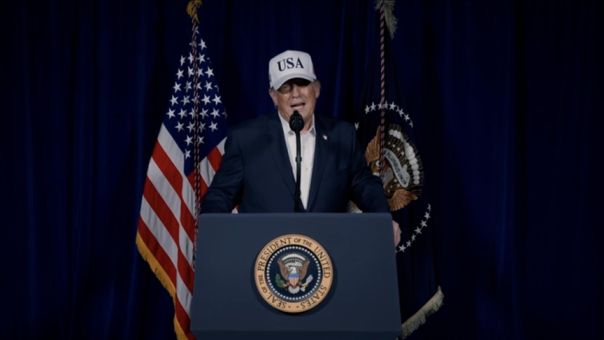
US President Donald Trump has announced plans to dispatch a delegation to Pakistan for renewed negotiations with Iran, while simultaneously escalating rhetoric with threats targeting the country’s critical infrastructure if no agreement is reached.
In a strongly worded message shared on his Truth Social platform, Trump declared, “NO MORE MR. NICE GUY!”, warning that failure to secure a deal would prompt the United States to “knock out every single Power Plant, and every single Bridge, in Iran.”
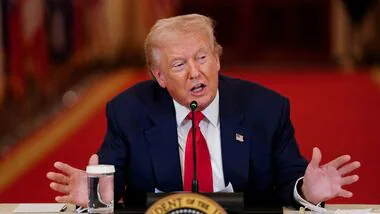
The diplomatic push comes as Iran, the United States, and Israel approach the final three days of a fragile two-week ceasefire that paused hostilities triggered by joint US-Israeli strikes on Iran earlier this year. So far, only one negotiation session has taken place, held in Islamabad on April 11, but it ended without a breakthrough, leaving both sides far from agreement.
Despite Trump describing the proposed deal as “very fair and reasonable,” Iranian officials have pushed back. Parliament Speaker and senior negotiator Mohammad Bagher Ghalibaf stated that discussions remain distant from any conclusive outcome. The central issue continues to revolve around Iran’s nuclear programme, which Washington insists must be curtailed, while Tehran maintains it has no intention of developing nuclear weapons.
Another major point of contention is the Strait of Hormuz, a vital global energy route through which a significant portion of the world’s oil and gas supply passes. Iran had initially shut down the strait following the outbreak of war, causing global economic disruptions. Although it briefly reopened the route during a temporary ceasefire, authorities quickly reinstated restrictions in response to a U.S. naval blockade targeting Iranian ports.
Trump has also claimed that Iran agreed to surrender its stockpile of enriched uranium, estimated at around 440 kilogrammes. However, Iran’s foreign ministry has firmly denied this, insisting that the material would not be transferred under any circumstances and had never been part of negotiations.
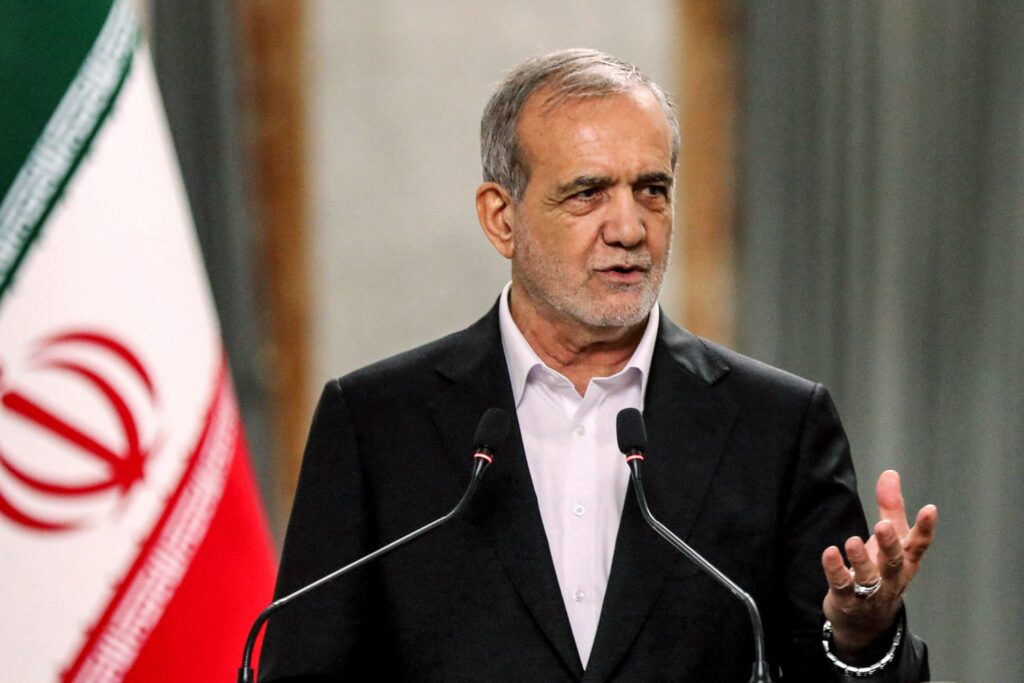
Meanwhile, Iranian President Masoud Pezeshkian questioned why the country should abandon what he described as its legitimate right to pursue nuclear development. Tensions have further intensified following reports of confrontations in the Strait of Hormuz, including warnings issued by Iran’s Revolutionary Guards that any unauthorized vessel passing through the waterway would be treated as collaborating with hostile forces.
Security measures have been heightened in Islamabad ahead of the anticipated talks, with road closures, checkpoints, and increased military presence across key areas of the city. The upcoming negotiations are expected to determine whether diplomacy can prevail or if the region will slide back into confrontation.
What you should know
The escalating standoff between the United States and Iran highlights a fragile geopolitical situation tied to nuclear ambitions, economic pressure, and strategic control of global energy routes.
While diplomatic talks are being pursued, both sides remain deeply divided on key issues, particularly uranium control and sanctions. The Strait of Hormuz remains a flashpoint due to its importance to global oil supply. Trump’s aggressive rhetoric signals a hardline approach, while Iran continues to assert its sovereignty.
The outcome of upcoming negotiations in Pakistan could shape the direction of Middle East stability and global economic conditions in the coming months significantly.