The federal government has pushed back strongly against reports alleging hidden spending and the diversion of federal revenues, describing the claims as a fundamental misreading of a recent World Bank assessment of Nigeria’s economy.
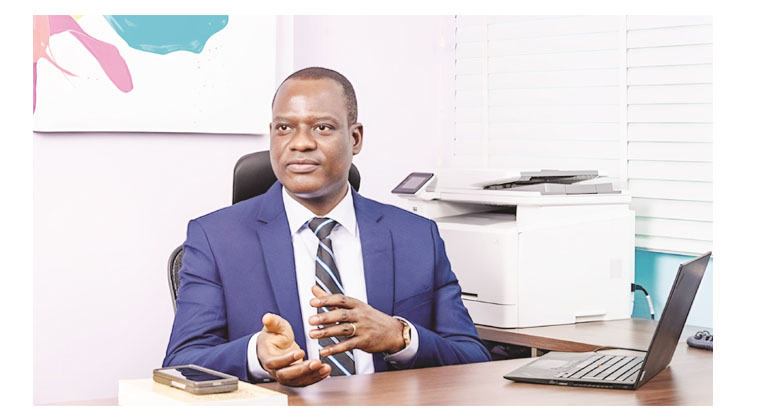
Minister of State for Finance, Taiwo Oyedele, speaking through an official statement issued in Abuja on Sunday, said the reports amounted to a misrepresentation of findings contained in the latest Nigeria Development Update, a periodic economic review published by the World Bank, and warned that such misinterpretations risk undermining public confidence in ongoing fiscal reforms.
The controversy stems from recent media interpretations of the World Bank report, which some commentators had used to suggest that a significant portion of federation earnings was being siphoned off or left unaccounted for.
The claims triggered widespread public concern about the integrity of Nigeria’s federal revenue management system—concerns that the government moved swiftly to quell.
Oyedele was unequivocal in his rebuttal. “Recent media interpretations suggesting that a significant portion of federation earnings was being diverted were inaccurate and based on a misunderstanding of Nigeria’s fiscal framework,” he said, distancing the government from any suggestion of financial impropriety at the federal level.
At the heart of the dispute are deductions made by the Federation Account Allocation Committee — the statutory body responsible for distributing revenues among the three tiers of government. Critics had portrayed these deductions as evidence of wasteful or missing funds. The minister, however, insisted they are entirely lawful.
According to Oyedele, the FAAC deductions flagged in media reports serve clearly defined and legally backed purposes. These include statutory transfers, savings and investments, security-related expenditures, cost-of-collection charges, refunds to ministries, departments, and agencies, and transfers and interventions that directly benefit state and local governments.
“Refunds and transfers to states and other tiers of government should not be classified as leakages,” the minister stressed, arguing that these represent lawful fiscal flows—including repayments of legitimate obligations and allocations that are fully backed by Nigerian law.
To label such transactions as missing or diverted funds, he argued, is not only inaccurate but potentially dangerous to public discourse around governance and fiscal management.
The minister also aimed at what he described as the selective use of outdated figures in some commentaries, noting that such an approach distorts the true picture of Nigeria’s fiscal health and ignores the reforms that the World Bank’s own report acknowledged.
Far from painting a picture of a failing system, Oyedele argued, the World Bank report actually affirms that Nigeria’s reform agenda is on course. He pointed to reforms introduced in early 2026—notably a new executive order designed to safeguard the remittance of petroleum revenues—as evidence that the government is actively addressing concerns around deductions and revenue transparency.
The fiscal impact of these reforms, the minister noted, is already being projected. Revenues available to all tiers of government are expected to increase by approximately 0.4 percent of gross domestic product annually as a result, a figure that, while modest in percentage terms, represents a significant injection into the country’s public finances.
Beyond the immediate controversy, Oyedele used the statement to highlight what he described as encouraging signs across Nigeria’s wider economic landscape, signs he said the World Bank report itself had acknowledged.
Economic growth, he said, is becoming more broad-based across sectors, moving beyond the historically oil-dependent pattern that has long characterized Nigeria’s fiscal narrative. Inflation, which surged to painful levels in recent years, is gradually declining. The country’s external position is also strengthening, supported by improved foreign reserves and a current account surplus.
Perhaps most significantly, the minister pointed to an improvement in Nigeria’s debt indicators, including—for the first time in over a decade—a reduction in the country’s debt-to-GDP ratio.
For a country that has long grappled with mounting debt obligations and shrinking fiscal space, the development signals a potentially pivotal shift in the country’s financial trajectory.
Rounding off his statement, the minister appealed directly to media organizations and stakeholders to exercise greater care when engaging with complex fiscal data, warning that irresponsible interpretations could erode public trust and hamper the momentum of ongoing reforms.
“The World Bank does not conclude that Nigeria’s fiscal system is collapsing or that reforms have failed. Rather, it affirms that reforms are working and should be sustained to achieve inclusive growth,” the statement read.
The Federal Government, for its part, reaffirmed its commitment to fiscal transparency, enhanced revenue mobilization, and efficient public spending—pledges that, in the current climate of economic anxiety, the government clearly hopes the public will receive with confidence.
WHAT YOU SHOULD KNOW
The federal government’s central message is simple: the money is not missing. Deductions from federal revenues that have been flagged as suspicious are, in fact, legally backed transactions, routine transfers, statutory obligations, and allocations to state and local governments that are standard components of public finance administration.