Nigeria’s upstream oil and gas sector is riding a wave of renewed investor confidence, with the country’s petroleum regulator announcing that a fresh licensing round is already in the pipeline even before the ink dries on the current one.
The Nigerian Upstream Petroleum Regulatory Commission (NUPRC) has confirmed that the 2026 oil licensing round will commence no later than the third quarter of the year, following approval by the Minister of Petroleum Resources.
The announcement, which signals an accelerating pace of reform in Africa’s largest oil producer, came on Wednesday during a high-profile visit by Meren Energy, formerly known as Africa Oil, to the commission’s Abuja headquarters.
NUPRC Chief Executive Oritsemeyiwa Eyesan confirmed that the bid round has received formal presidential and ministerial approval, in strict alignment with the provisions of the Petroleum Industry Act.
“We are fortunate that the President and Minister of Petroleum Resources have approved the 2026 Licensing Round,” Eyesan said, adding, “We are currently finalizing the 2026 launch, which will happen by the third quarter.” This is a make-or-break point, and we want to ensure we succeed.”
The announcement underscores the Tinubu administration’s intent to maintain momentum in a sector that has historically suffered from stop-start investment cycles. The commission is already wrapping up the 2025 licensing round, with the commercial bid stage expected in July, before attention shifts fully to the 2026 exercise.
The back-to-back sequencing of licensing rounds marks a significant departure from past practice and reflects a more structured, business-friendly regulatory calendar.
Eyesan described the heightened participation in the 2025 licensing round as a testament to the fact that Nigeria was headed in the right direction, noting that rising investments and an upswing in production were clear evidence that the sector had become more attractive under President Bola Tinubu’s leadership.
The company, rebranded from Africa Oil, has emerged as one of the most committed foreign players in Nigeria’s deepwater landscape, and its Group Chief Executive, Dr. Oliver Quinn, did not attempt to downplay that commitment.
“We have participated in world-class assets such as Agbami, Akpo, and Egina. Over the last 20 years, we have invested about $11 billion in these assets, while approximately $4 billion has been paid in taxes and royalties,” Quinn said. “Nigeria remains at the core of our business because of the quality of its assets.”
Quinn added that the ongoing reforms in Nigeria’s energy sector had been a decisive factor in the company’s decision to deepen its footprint. He stated that those reforms had inspired Meren Energy to increase its investments in Nigeria, hence its active interest in asset divestments and licensing rounds, and confirmed that Africa remains the company’s investment priority, with Nigeria ranking first on that list.
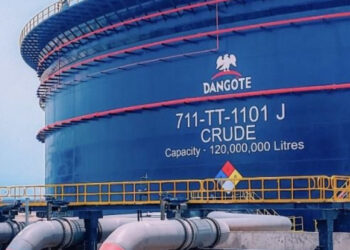
Quinn also revealed that Meren Energy was the first company in Nigeria to sell crude oil to the Dangote refinery and pledged to continue fulfilling its Domestic Crude Supply Obligation, so long as the price remains right.
The disclosure adds another dimension to the company’s role in Nigeria’s energy story, one that now extends beyond export-oriented production into supporting the country’s nascent domestic refining capacity.
Nigeria’s upstream sector has endured years of underinvestment, insecurity, and policy uncertainty. The Petroleum Industry Act, signed into law in 2021, was meant to be the turning point, but implementation has been uneven.
The back-to-back licensing rounds and the enthusiasm of companies like Meren Energy suggest that the regulatory environment is finally delivering tangible results.
Recent reforms and policy initiatives, according to NUPRC, have improved investor confidence and created a more competitive environment for upstream petroleum operations.
For a country that has seen its oil production dip to multi-decade lows in recent years, the optics and the trajectory could hardly be more welcome.
With the 2025 commercial bids due in July and the 2026 round set to launch weeks thereafter, Nigeria appears determined to keep its foot firmly on the accelerator.
WHAT YOU SHOULD KNOW
Nigeria’s upstream oil sector is turning a corner, with the NUPRC set to launch back-to-back licensing rounds in 2025 and 2026, and a company like Meren Energy, which has staked $11 billion in Nigerian deepwater assets over two decades, doubling down on fresh investments.
Nigeria is open for business. The Petroleum Industry Act is finally bearing fruit, investor confidence is rising, and production is trending upward.
The real test, however, lies not in the announcements but in execution, converting regulatory momentum into sustained output and long-term economic value for Nigerians.