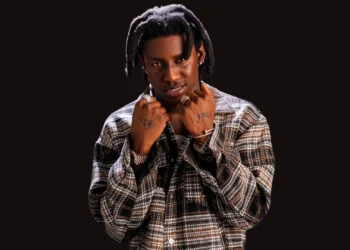
Qing Madi has accused JTon Music CEO Joy Tongo of forging her signature and stealing from her, allegations that have ignited a fierce debate about how young artists are treated in Nigeria’s music industry.
Born Chimamanda Pearl Chukwuma on July 1, 2006, the 19-year-old Delta State native has, in just a few short years, risen from relative obscurity to become one of the most talked-about voices in contemporary Afrobeats.
Yet behind the chart success and the sold-out streams lies what she describes as a nightmare of legal intimidation, digital sabotage, and alleged financial wrongdoing.
Madi signed her first record deal with Richie Music Empire at the age of just 15, before later moving to JTon Music and Columbia Records, where she launched breakout hits like “Ole” and her debut album.
The departure, however, triggered a breach of contract lawsuit from her first label against both her and JTon. It was the beginning of what would become years of corporate entanglements for an artist still navigating her teenage years.
According to the singer, her decision to leave JTon Music’s administration prompted the label to file a staggering lawsuit against her. While Madi claims to have emerged victorious in court, the conflict soon took a sharp digital turn, escalating from courtroom proceedings to all-out warfare on streaming platforms.
The flashpoint that brought the dispute into public view came when JTon Music reportedly took down her new collaboration with Zinoleesky, “Pepper Me,” from the streaming platform Spotify, a move Madi characterized as a deliberate act of retaliation. She was not silent about it.
Taking to TikTok in a live broadcast that has since gone viral, Madi alleged that her former label boss stole from her, forged her signature, and sued her for $2 million, a case she claims to have won.
She also accused the label of orchestrating an illegal takedown of “Pepper Me,” saying she worked with her team to prove the removal was unlawful before the label allegedly found another route to pull down her new album project, “Barely Legal.”
“She went through the corners again to take down the project,” the singer lamented, her frustration palpable, her words unfiltered.
She called on fans to speak out against what she described as an ongoing injustice, expressing exhaustion at the prolonged battle with her former label.
Madi publicly accused the label of weaponizing their distribution access to punish her for leaving, a tactic that analysts say is becoming an increasingly common tool used against artists who attempt to exit contractual relationships.
The singer drew a direct parallel to the case of veteran artist Cynthia Morgan, who famously accused her former label of similarly attempting to suppress her career, warning that the same forces were now targeting her.
The Nigerian music industry produces global hits, but critics argue it has yet to build any meaningful legal protection mechanism for its emerging talent. Labels understand that digital platforms provide the only reliable way to reach an audience and that a young artist can’t afford endless litigation.
Joy Tongo has not taken the allegations lying down. In a pointed response posted to her Instagram page, she dismissed Madi’s claims as “false,” categorically denied forging her signature or stealing from her, and delivered a direct challenge to the singer’s assertion of courtroom victory.
Tongo argued that the case Madi claimed to have won had not yet gone to trial and, crucially, that an existing injunction ruling was the legal basis that empowered the label to issue takedowns of her music.
“What case have you won? Because last time I checked, the case still hasn’t gone to trial,” Tongo reportedly wrote a statement that, if accurate, significantly complicates Madi’s public narrative.
As the legal and public relations battle rages on, the dispute has become a mirror reflecting some of the most uncomfortable truths about the music industry’s relationship with young talent.
Behind the headlines lies what many describe as a deeper, more systemic story of broken contracts, power imbalances, and a betrayal that, depending on who you believe, started long before either side went public.
What is not in dispute is this: a 19-year-old artist finds herself fighting on multiple fronts in court, on streaming platforms, and in the court of public opinion at an age when most of her peers are still in secondary school.
The full legal picture remains murky, with both sides presenting conflicting accounts of court outcomes and contractual obligations. As proceedings continue, the music industry will be watching closely. For Qing Madi, the stakes could not be higher; her catalogue, her career, and her creative freedom all hang in the balance.
WHAT YOU SHOULD KNOW
At the heart of this story is a 19-year-old artist locked in a bitter legal and professional war with her former record label.
Qing Madi alleges signature forgery, financial theft, and deliberate career sabotage through illegal music takedowns, while JTon Music’s Joy Tongo insists the claims are false and that an active court injunction legally justifies their actions.