The Nigerian Upstream Petroleum Regulatory Commission (NUPRC) has announced that sweeping regulatory reforms have unlocked more than “$10 billion” in fresh investments.
Mrs. Oritsemeyiwa Eyesan, the Commission Chief Executive of the NUPRC, disclosed on Thursday, April 9, 2026, while addressing industry stakeholders at the Society of Petroleum Engineers (SPE) Nigeria Council’s prestigious “Oloibiri Lecture Series and Energy Forum 2026” held at the PTDF Tower in Abuja.
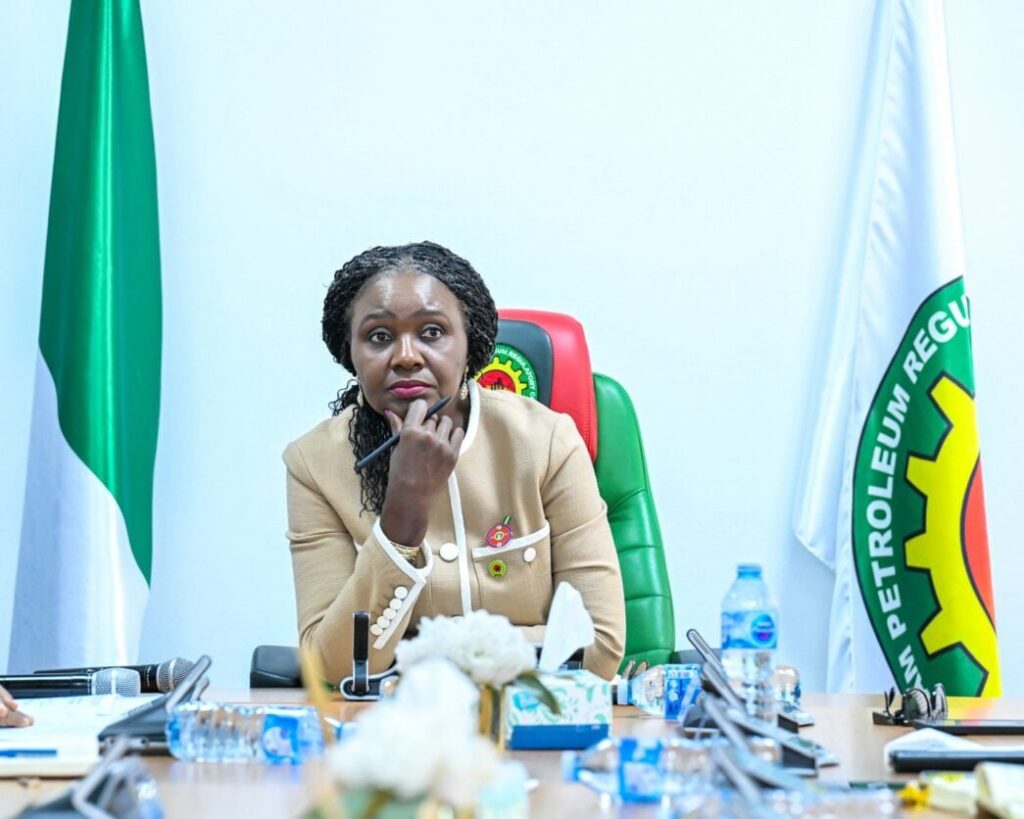
The annual event, named after the historic site of Nigeria’s first commercial oil discovery in 1956, served as a fitting platform for reflecting on the sector’s evolution from its pioneering days to its current push for renewed growth.
Eyesan credited the reforms—crafted through close collaboration with operators, service providers, and investors—with replacing regulatory discretion and ambiguity with clarity, predictability, and strict timelines. “The predictable regulatory environment reduced investment risks and supported partners to take a multi-billion-dollar final investment decision,” she told the gathering.
According to the NUPRC chief, the Commission has so far gazetted “19 regulations,” with five additional ones in the pipeline. These cover critical aspects of upstream operations, from licensing and fiscal terms to environmental management and reservoir stewardship.
The changes are firmly anchored on the “Petroleum Industry Act (PIA) of 2021,” landmark legislation signed by former President Muhammadu Buhari to overhaul the sector by promoting transparency, improving governance, attracting investment, and boosting government revenue. Complementary executive orders have further streamlined approval processes and enhanced fiscal incentives.
Eyesan emphasized that the new framework does more than attract capital; it also promotes effective reservoir management and advanced recovery techniques to maximize resource value while ensuring sustainable outcomes for the country.
“Collectively, these projects represent over $10 billion in new upstream investment and highlight the importance of clear policy and firm regulation,” she added.
The reforms have already delivered concrete results through several high-profile projects that have reached or are advancing toward Final Investment Decisions (FIDs). Eyesan highlighted ‘Bonga North,’ ‘Ubeta,’ and the ‘HI development’ as prime examples. These initiatives have benefited from improved fiscal clarity, streamlined licensing rounds, and faster approval timelines—factors that had previously deterred or delayed investment in Nigeria’s deepwater and gas assets.
Industry reports indicate that Bonga North, a major deepwater oil project operated by Shell and partners, carries an estimated ‘$5 billion’ investment tag, with expectations of first oil around 2030 and peak production of approximately 110,000 barrels per day. Ubeta, a gas project, and the HI development (often linked to non-associated gas supplies supporting NLNG Train 7) further underscore the shift toward both oil and gas monetization. Together with related commitments, these have contributed to a broader wave of upstream momentum.
Nigeria’s upstream sector has faced years of challenges, including oil theft, pipeline vandalism, fiscal uncertainty, and global energy transition pressures. The PIA and subsequent NUPRC interventions represent a deliberate effort to reposition the country as a competitive investment destination in a tightening global capital market for hydrocarbons.
Eyesan noted that the Commission continues to introduce additional regulatory measures aimed at further strengthening investor confidence and the sector’s overall competitiveness. “Such measures are essential to fostering innovation, strengthening investor confidence and sustaining competitiveness,” she said.
The NUPRC boss also reaffirmed ambitious national production targets, including reaching 2 million barrels of oil per day and 10 billion standard cubic feet of gas by 2027, with longer-term aspirations pushing toward 3 million bpd.
Achieving these goals will require not only sustained investment but also harmonized efforts in digitalization, infrastructure protection, and local content development—issues expected to dominate ongoing industry discourse.
While the $10 billion figure marks a notable vote of confidence from international and domestic players, seasoned observers caution that translating commitments into actual barrels and revenue will depend on execution, security of assets, and the maintenance of a stable policy environment.
For now, however, Mrs. Eyesan’s message at the Oloibiri Forum was one of progress: Nigeria’s upstream sector, long criticized for underperformance relative to its potential, is beginning to reap the dividends of deliberate regulatory overhaul.
As the country commemorates its oil heritage while eyeing a more secure energy future, the coming years will test whether this momentum can be sustained amid volatile oil prices, energy transition dynamics, and domestic developmental needs.
WHAT YOU SHOULD KNOW
Nigeria’s upstream oil and gas sector has unlocked over $10 billion in new investments thanks to the decisive regulatory reforms driven by the NUPRC under the Petroleum Industry Act (PIA) 2021.
Clarity, predictability, and reduced discretion in the regulatory environment have replaced ambiguity with defined timelines and transparent rules, significantly lowering investment risks and enabling major final investment decisions on projects like Bonga North, Ubeta, and HI development.