American households woke up on Friday to the most alarming inflation report in nearly two years, as the Bureau of Labor Statistics confirmed what economists had long feared: the U.S.-Iran war has lit a fire under consumer prices.
The annual inflation rate jumped to 3.3% in March 2026—the highest level since May 2024 and a sharp acceleration from the 2.4% rate recorded in February.
While the headline figure came in marginally below the consensus forecast of 3.4%, offering a thin silver lining, the broader picture painted by Friday’s Consumer Price Index report is one of an economy under mounting pressure from a geopolitical crisis with no clear end in sight.
The culprit behind the surge is unmistakable. The energy index surged 10.9% in March—the largest monthly increase since September 2005—with gasoline alone jumping 21.2% on a seasonally adjusted basis, the largest single-month increase since the series was first published in 1967, accounting for nearly three-quarters of the entire monthly CPI gain.
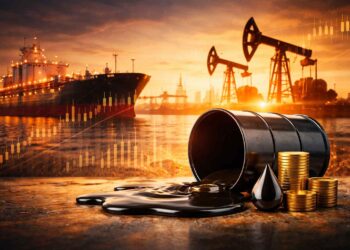
The conflict has echoed the 1970s energy crisis through acute supply shortages, currency volatility, and heightened risks of stagflation and recession. The trigger was swift and brutal: the suspension of tanker traffic through the Strait of Hormuz—through which 20% of the world’s oil passes—disrupted global supply chains almost overnight, with Brent crude jumping 15% to $83 per barrel by early March. Gasoline prices at the pump climbed above $4 per gallon for the first time in more than three years.
Not all the news was grim. Core CPI—which strips out volatile food and energy—came in at 0.2% month-over-month, below the 0.3% consensus, rising 2.6% year-over-year from 2.5% in February and below expectations of 2.7%. That divergence tells a critical story: the Iran war’s inflationary damage, for the moment, has not spread far beyond the fuel pump.
But economists warn that containment may be temporary. “Even if the war ends and gasoline prices fall back to their prewar level, inflation excluding volatile food and energy costs is likely to creep up toward a 3.0% rate by the end of the year because of continued tariff effects and rising health care costs,” one analyst cautioned.
Secondary effects on manufactured goods and non-energy categories are likely to appear with a lag, with fuel surcharges expected to push up airline fares and shipping and logistics prices in the months ahead.
Friday’s data has effectively closed the door on Federal Reserve rate cuts for the foreseeable future. In March, the Fed had penciled in one interest rate cut for 2026, but the expectation of higher inflation has caused many economists to scrub that cut entirely from their forecasts.
The FOMC voted 11-1 to hold rates steady at 3.5%–3.75% at its March meeting, and seven of 19 participants now see no cuts at all in 2026. Markets are currently pricing zero 2026 rate cuts, reflecting recognition that energy inflation prevents accommodation despite signs of employment weakness.
Minutes released this week from the Fed’s March 17-18 meeting suggest that some policymakers on the central bank’s rate-setting panel now think it may become necessary to consider a future rate hike. That prospect—rate increases rather than cuts—would represent a dramatic reversal from the easing cycle many investors had been counting on entering the year.
The damage is not confined to the gas station. Consumers have already paid an additional $8.4 billion in fuel costs in the month after the Iran war started, according to an estimate from the Joint Economic Committee’s Democratic minority.
Rising prices for goods and services, from airline fees to higher mortgage rates, could also weigh on household finances, potentially derailing consumer spending, which accounts for roughly 70 cents of every dollar of GDP.
“We’re going to be paying the price for this through much of the year,” Mark Zandi, chief economist at Moody’s Analytics, told CBS News. “We should see a bit of a bump in the cost of airline tickets. Grocery prices will probably be a bit higher.”
Politically, the numbers landed like a grenade. Pennsylvania Congressman Brendan Boyle, Ranking Member of the House Budget Committee, declared that “today’s report makes clear that inflation is skyrocketing because of Trump’s failed economic agenda and his reckless war with Iran.”
While the announcement of a two-week ceasefire earlier this week offered some reprieve to skyrocketing oil prices, analysts say inflation is likely to remain elevated through the first half of the year. Oxford Economics has forecast that “the impact of the war on energy prices will push headline CPI inflation well above 3% in March and above 4% by April.”
The open question is whether a soft core number in March buys the Fed any real optionality—or whether April and May data, when tariff effects and oil passthrough into services are expected to broaden, will close that window before it ever fully opens.
For now, the Federal Reserve finds itself in a trap of geopolitical making—unable to cut rates without stoking inflation further and unable to raise them without risking an economy already showing signs of strain.
Friday’s CPI report may have come in slightly below the worst-case scenario, but for millions of Americans filling their tanks and buying groceries, the difference is barely perceptible.
WHAT YOU SHOULD KNOW
The U.S.-Iran war has delivered the biggest inflation shock in nearly two years, pushing prices up 3.3% in March—driven almost entirely by a historic 21% single-month surge in gasoline prices.
While core inflation remains relatively contained at 2.6%, the damage is spreading, and it isn’t over. The Fed is now trapped—cutting rates risks fueling inflation further, while holding them squeezes an already stressed consumer. Any hopes of interest rate relief in 2026 are effectively dead.
Americans should brace for higher prices at the pump, in the grocery aisle, and on airline tickets for months to come. The war didn’t just disrupt oil markets—it disrupted the entire economic outlook.