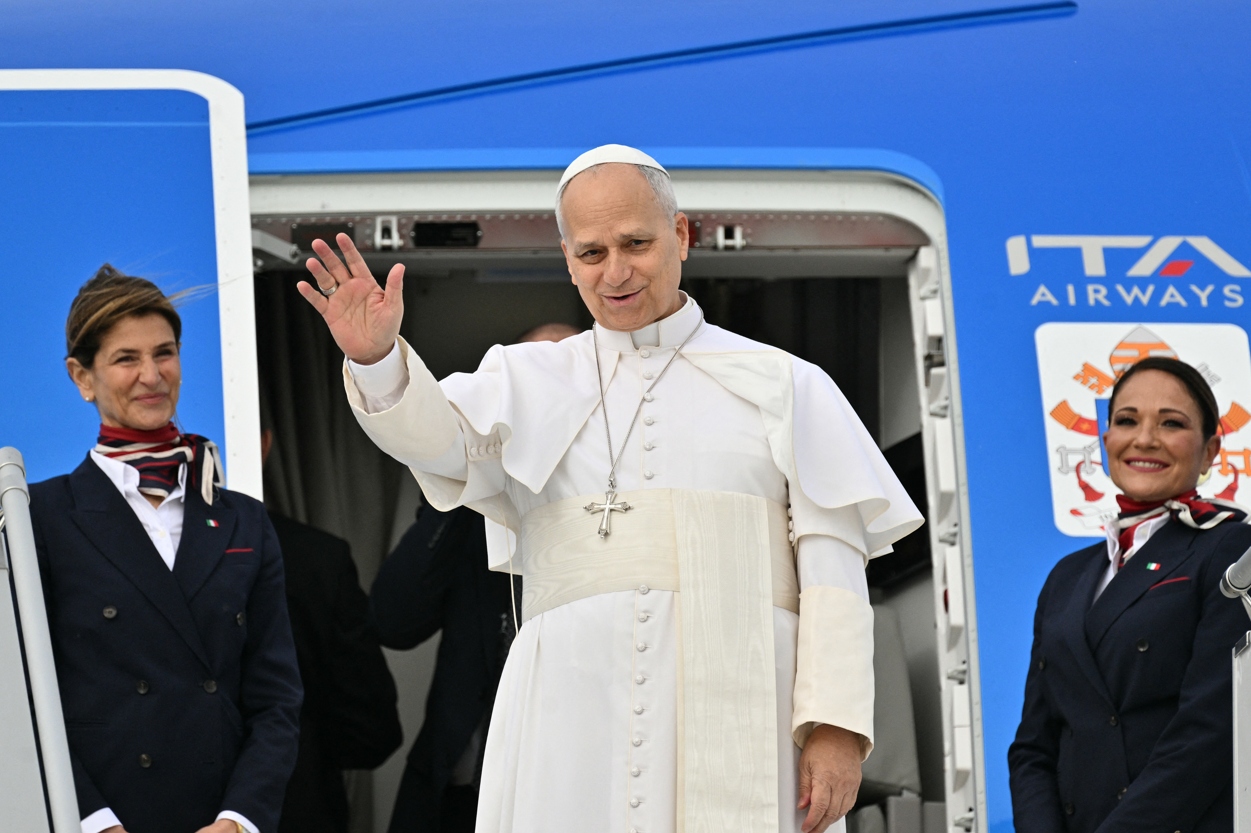
Pope Leo XIV is set to arrive on Saturday in Angola, marking the third leg of his historic African tour, which has been shaped by a growing exchange of criticism with Donald Trump over the Middle East conflict.
Leo is poised to become the third pontiff to visit the oil-rich nation, where about 44 percent of the population identifies as Catholic, following earlier visits by Pope John Paul II in 1992 and Pope Benedict XVI in 2009.
Ahead of his scheduled arrival in the capital, Luanda, the pope will conclude a three-day visit to Cameroon with an open-air Mass at Yaoundé airport. Upon arrival in Angola, he is expected to meet President João Lourenço and deliver a speech as part of a tour that has seen him adopt a more assertive tone on global issues.
As witnessed in Cameroon, large crowds are expected to gather to welcome the leader of the world’s 1.4 billion Catholics before his departure on Tuesday.
“It’s as if God were very close to us,” said Helena Maria Miguel, reflecting the anticipation surrounding the visit.
The pope’s repeated appeals for global peace are likely to resonate in Angola, a country that emerged in 2002 from a 27-year civil war that followed independence from Portugal in 1975.
Throughout his 11-day, four-nation African tour, Leo has consistently warned against corruption, the exploitation of Africa’s resources, and the risks associated with artificial intelligence. His rhetoric has grown sharper in recent days following criticism from JD Vance, who had urged the Vatican to focus on moral issues.
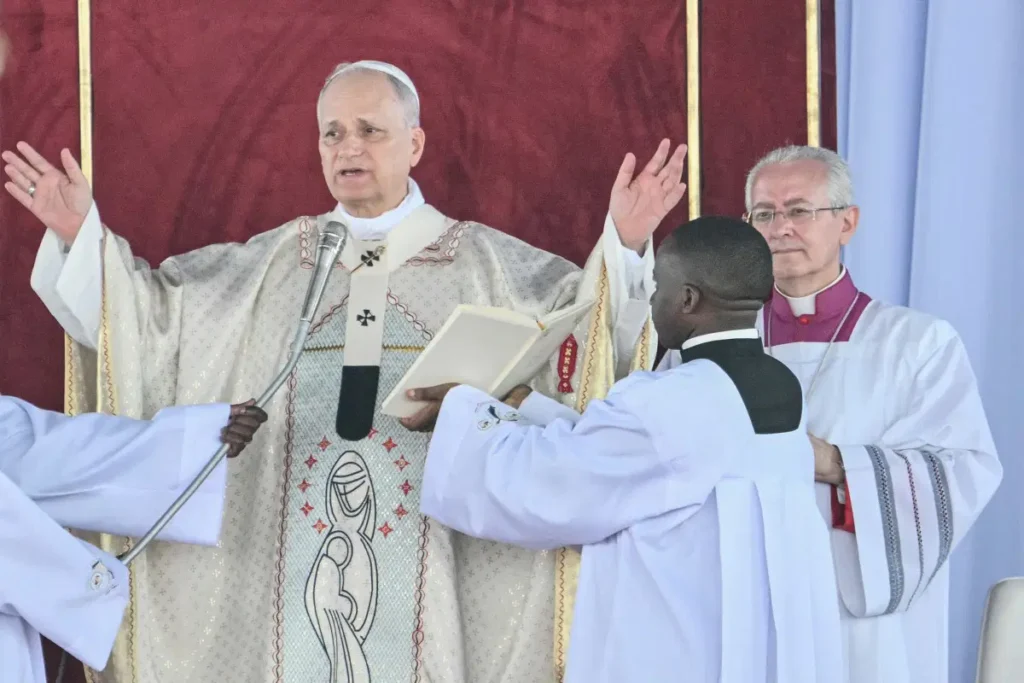
Without directly naming his critics, Leo stated that the world was “being ravaged by a handful of tyrants” and criticised those who use religion to justify conflict. During his stop in Cameroon, he urged leaders to tackle corruption and condemned “those who, in the name of profit, continue to seize the African continent to exploit and plunder it.”
These remarks are expected to strike a chord in Angola, where despite vast oil wealth, a significant portion of the population continues to live in poverty. The country remains heavily reliant on oil, leaving it vulnerable to global price fluctuations, while corruption has long been a concern, including during the era of former president José Eduardo dos Santos.
The visit also comes at a difficult time for the country, following deadly floods in the Benguela region and recent unrest linked to the rising cost of living.
“There is a lot of suffering, a lot of poverty in Angola. I hope the pope will see with his own eyes the needs of the youth here,” said Antonio Masaidi.
On Sunday, the pope is expected to celebrate a large open-air Mass in Kilamba, on the outskirts of Luanda, where preparations are underway to host tens of thousands of worshippers.
Later in the day, he will travel by helicopter to Muxima, home to a historic 16th-century church overlooking the Kwanza River and considered one of southern Africa’s most important pilgrimage destinations. A new basilica is currently under construction there as part of a major government-backed tourism project.
“It is a historic moment of grace, a moment of profound emotion, with tears in our eyes and gratitude in our hearts,” said Father Mpindi Lubanzadio Alberto.
The pope’s itinerary also includes a visit to Saurimo, more than 800 kilometres from Luanda, where he will meet residents of a retirement home and celebrate another Mass before departing Angola.
He is then expected to continue to Equatorial Guinea, the final stop of an extensive 18,000-kilometre journey that began in Algeria.
What you should know
Pope Leo XIV’s African tour highlights key global and regional issues, including peace, corruption, and economic inequality.
His visit to Angola carries both religious and political significance, coming at a time of rising global tensions and domestic challenges within the country. His increasingly direct criticism of global leaders signals a shift toward a more vocal papacy on geopolitical matters.
For Angola, the visit offers moral encouragement but also draws attention to persistent poverty, governance issues, and youth concerns.
The success of the visit will depend on how its message translates into meaningful reflection and action by both leaders and citizens.