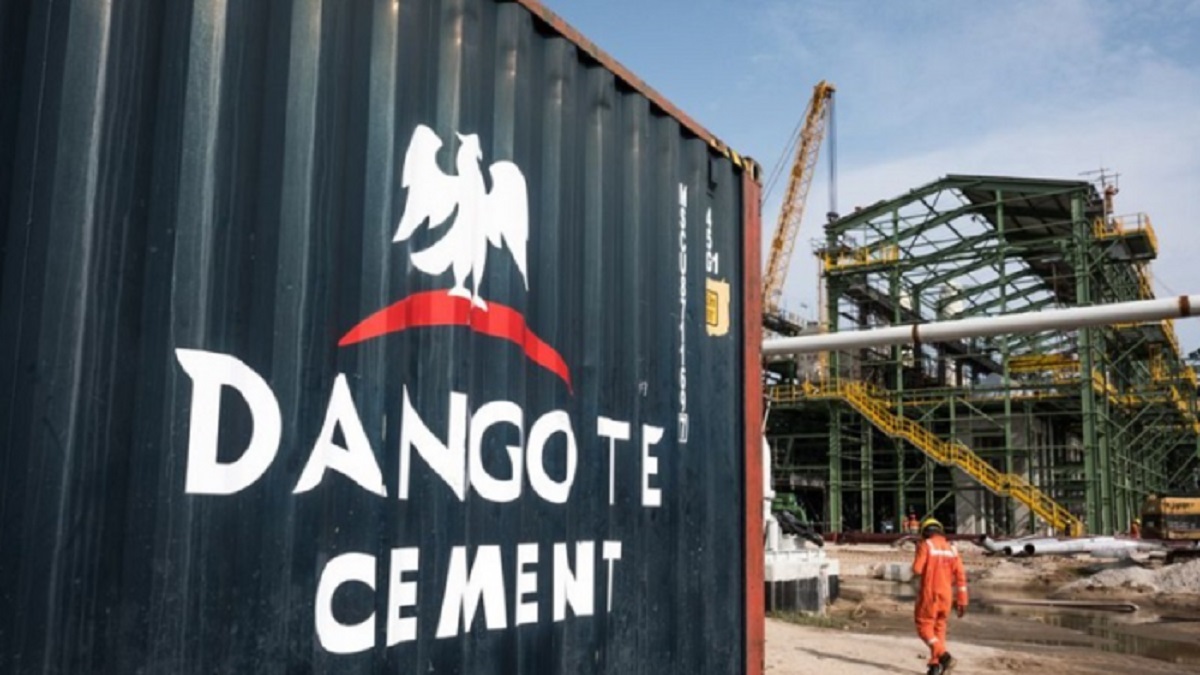
Dangote Cement Plc, Africa’s largest cement producer, has reported a pre-tax profit of N1.53 trillion for the fiscal year ended December 31, 2025, a staggering 109% surge from the N732.54 billion posted in 2024.
This milestone, fueled by robust revenue growth and a dramatic slash in finance costs, marks the company’s first-ever crossing of the N1 trillion threshold in after-tax profits, underscoring its dominance in Nigeria’s industrial landscape despite a slight dip in production volumes.
The audited results, filed with the Nigerian Exchange (NGX) over the weekend, paint a picture of operational excellence in a challenging economic environment marked by inflationary pressures and fluctuating commodity prices across Africa.
Profit after tax more than doubled to N1.01 trillion from N503.25 billion the previous year, propelling earnings per share to N59.86 from N29.74.
In a move sure to delight shareholders, the board has recommended a dividend payout of N45.00 per share—a 50% increase from the N30.00 distributed for 2024—reflecting confidence in the company’s cash flow and prospects.
A Year of Margin Expansion and Efficiency Gains
Dangote Cement’s top-line growth was nothing short of impressive, with group revenue climbing 20.3% year-on-year to N4.31 trillion from N3.58 trillion in 2024. This N726 billion increase was primarily driven by strong domestic demand in Nigeria, where revenue soared 35% to N2.96 trillion, accounting for the lion’s share of the group’s incremental gains.
In contrast, Pan-African operations held steady, generating N1.35 trillion compared to N1.39 trillion the prior year, highlighting Nigeria’s role as the engine of growth amid regional headwinds.
Even as revenues swelled, the company demonstrated remarkable cost discipline. Cost of sales edged down by 0.68% to N1.63 trillion from N1.64 trillion, bolstering gross profit by 38.11% to N2.67 trillion. This efficiency translated into a 53.23% jump in operating profit to N1.77 trillion from N1.16 trillion.
A pivotal factor in the profit explosion was the halving of finance costs to N351.50 billion from N700.30 billion, alleviating debt burdens and allowing pre-tax earnings to balloon despite a modest 0.9% decline in overall volumes to 27.5 million tonnes.
On the balance sheet front, property, plant, and equipment stood at N3.9 trillion, emblematic of the firm’s heavy investments in expanding its footprint across the continent. Total liabilities contracted to N3.42 trillion from N4.23 trillion, signaling improved financial health and deleveraging efforts.
The robust N1.01 trillion net profit has fortified retained earnings, enhancing the company’s equity base and positioning it for sustained capital expenditures.
Expansion, Exports, and Sustainability Push
Chief Executive Officer Arvind Pathak hailed 2025 as “a landmark year” for Dangote Cement, emphasizing that EBITDA—a key measure of operational profitability—surged 43.4% to N1.98 trillion. “Despite a marginal decline in volumes, our focus on margin discipline and cost efficiency propelled profit after tax past the N1 trillion mark for the first time in our history,” Pathak said in a statement accompanying the results.
The year saw strategic expansions that bolstered the company’s export capabilities and regional presence. Notably, Dangote commissioned a 3 million tonnes per annum (Mta) grinding plant in Côte d’Ivoire during the third quarter, enhancing its Pan-African production capacity.
Cement and clinker exports jumped 18.6%, including 34 shipments to key markets like Ghana and Cameroon, as the firm capitalized on cross-border demand.
In a nod to sustainability and cost savings, Dangote accelerated its shift to eco-friendly logistics by deploying over 3,000 Compressed Natural Gas (CNG) trucks. The company aims to fully convert its fleet by 2027, a move that could reduce fuel expenses and align with global green initiatives amid rising scrutiny on carbon emissions in the cement industry.
Market Reaction and Broader Implications
Despite the blockbuster earnings, Dangote Cement’s shares took a hit in Friday’s trading session on February 27, 2026, closing at N779.00 per share – a 6.1% drop from the previous close of N829.50. Market analysts suggest this dip may reflect broader sectoral volatility or profit-taking, as the results were released after hours, leaving investors yet to fully digest the positive news. Year-to-date, however, the stock has appreciated 27.9% from its opening price of N609.00, ranking it 59th on the NGX in performance.
With 16.9 billion shares outstanding and a market capitalization of N13.1 trillion, Dangote Cement remains the third most valuable listing on the NGX, trailing only MTN Nigeria and BUA Foods. It constitutes about 10.6% of the exchange’s total equity valuation, cementing its status as a bellwether for Nigeria’s manufacturing sector.
This performance comes at a time when Nigeria’s economy grapples with post-pandemic recovery and infrastructure deficits, where cement demand is tied to government spending on roads, housing, and energy projects.
Dangote’s results could signal broader industrial optimism, potentially influencing investor sentiment across the bourse. As Africa’s cement giant continues to expand, eyes will be on how it navigates currency fluctuations, energy costs, and competitive pressures from rivals like BUA Cement and Lafarge Africa.
Shareholders will vote on the proposed dividend at the upcoming annual general meeting, with payouts expected to inject liquidity into the market. For now, Dangote Cement’s 2025 scorecard stands as a testament to strategic agility in turning economic challenges into unprecedented profits.
WHAT YOU SHOULD KNOW
Dangote Cement delivered a historic performance in 2025, posting a record pre-tax profit of N1.53 trillion (up 109% YoY) and crossing N1 trillion in profit after tax for the first time.
The single most important factor driving this massive leap was the sharp reduction in finance costs—nearly halved from N700 billion to N351 billion—which, combined with strong revenue growth and tight cost control, more than doubled earnings despite a slight drop in sales volumes.
This shows how decisively lowering debt-related expenses can transform profitability, even in a tough operating environment.