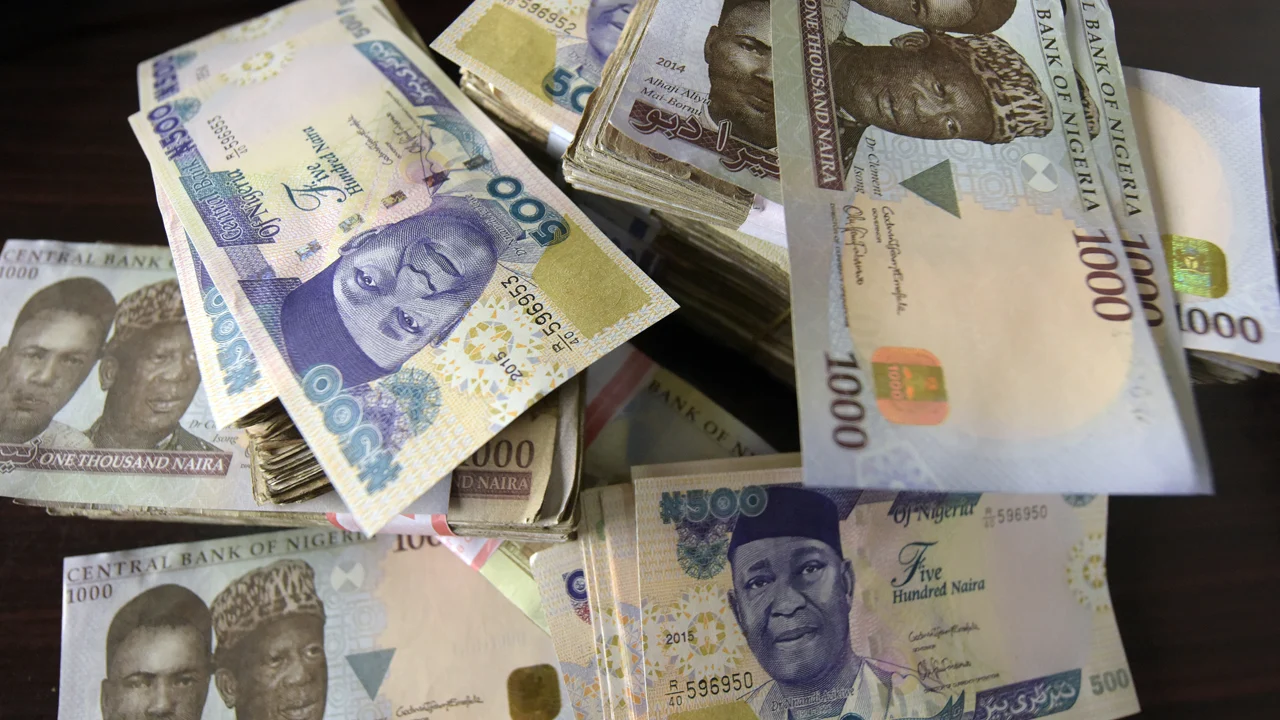
Nigeria’s naira weakened across all five trading sessions in the official foreign exchange market, closing at its lowest point following the Central Bank of Nigeria’s (CBN) 304th Monetary Policy Committee (MPC) meeting.
The currency’s slide, which defied some positive macroeconomic signals, underscores ongoing liquidity pressures and mixed market reactions to the bank’s latest policy adjustments.
The naira opened the week on Monday at N1,353.5 per US dollar, according to official data from the CBN, but began its descent immediately after the MPC’s conclusion on Tuesday.
By the end of trading that day, it had fallen to N1,359 per dollar, a drop that extended through the remainder of the week. Wednesday saw a further weakening to N1,359.5, followed by N1,361.5 on Thursday, culminating in a close of N1,368.5 on Friday—the week’s nadir and a clear indicator of sustained downward momentum.
This performance comes on the heels of the MPC’s decision to trim the Monetary Policy Rate (MPR) by 50 basis points to 26.5 percent, a move aimed at balancing economic growth with inflation control amid declining headline inflation figures. CBN Governor Olayemi Cardoso, speaking at the meeting’s close in Abuja, highlighted that inflation had eased for the eleventh straight month to 15.1 percent in January 2026, while external reserves hit a 13-year high of $50.45 billion.
Despite these upbeat metrics, the naira’s reaction suggests investors remain wary, possibly due to lingering concerns over foreign exchange liquidity and broader economic uncertainties.
Analysts point to a pattern of inconsistent post-MPC currency movements, influenced heavily by prevailing market conditions and sentiment. For instance, after the 303rd MPC meeting in November, the naira actually strengthened to N1,441 per dollar from N1,452, buoyed by favorable liquidity at the time. In stark contrast, the 302nd meeting saw the currency weaken to N1,493.2 from N1,491.49, reflecting heightened pressure at the time.
This variability highlights how external factors, such as global oil prices, remittance flows, and investor confidence, often overshadow policy announcements in dictating short-term exchange rate trends.
The week’s depreciation isn’t isolated; it builds on a similar trend from the prior week, in which the naira slipped from N1,344 on Monday to N1,348 by Friday, with intermittent weakening in between. This broader trajectory indicates that the naira’s woes may stem from structural issues rather than a knee-jerk response to the latest MPC outcomes.
Market observers attribute the persistence to the CBN’s ongoing efforts to moderate the currency’s recent rally, including liquidity management actions that have tempered gains in the Nigerian Foreign Exchange Market (NFEM).
In the parallel market, the naira also faced headwinds, depreciating on Friday amid reports of increased demand for dollars from importers and travelers. While the official and parallel rates continue to converge—a goal of recent CBN reforms—the gap remains a flashpoint for arbitrage and speculation.
Looking ahead, economists suggest that sustained reserve buildup and further inflation moderation could provide a buffer, but much depends on fiscal discipline and external shocks. As one trader in Lagos’s bustling forex hubs told this reporter, “The rate cut is a signal of confidence, but the market needs more than signals—it needs dollars flowing freely.” With Nigeria’s economy still navigating post-pandemic recovery and global volatility, the naira’s path remains a key barometer of progress.
The CBN has yet to comment on the week’s movements, but upcoming data releases on trade balances and inflation could offer clues to future interventions. For now, the naira’s steady slide serves as a reminder of the delicate balance between policy easing and currency stability in Africa’s largest economy.
WHAT YOU SHOULD KNOW
The naira continued its steady depreciation in the official market last week, closing at N1,368.5/$ after the CBN’s 304th MPC meeting—despite the bank’s recent 50 bps rate cut and improving inflation and reserve figures.
The recent weakening is not a one-off reaction to the latest policy decision but part of a broader, ongoing depreciating trend driven primarily by persistent foreign exchange liquidity constraints and cautious investor sentiment—rather than any dramatic shift in CBN policy direction.