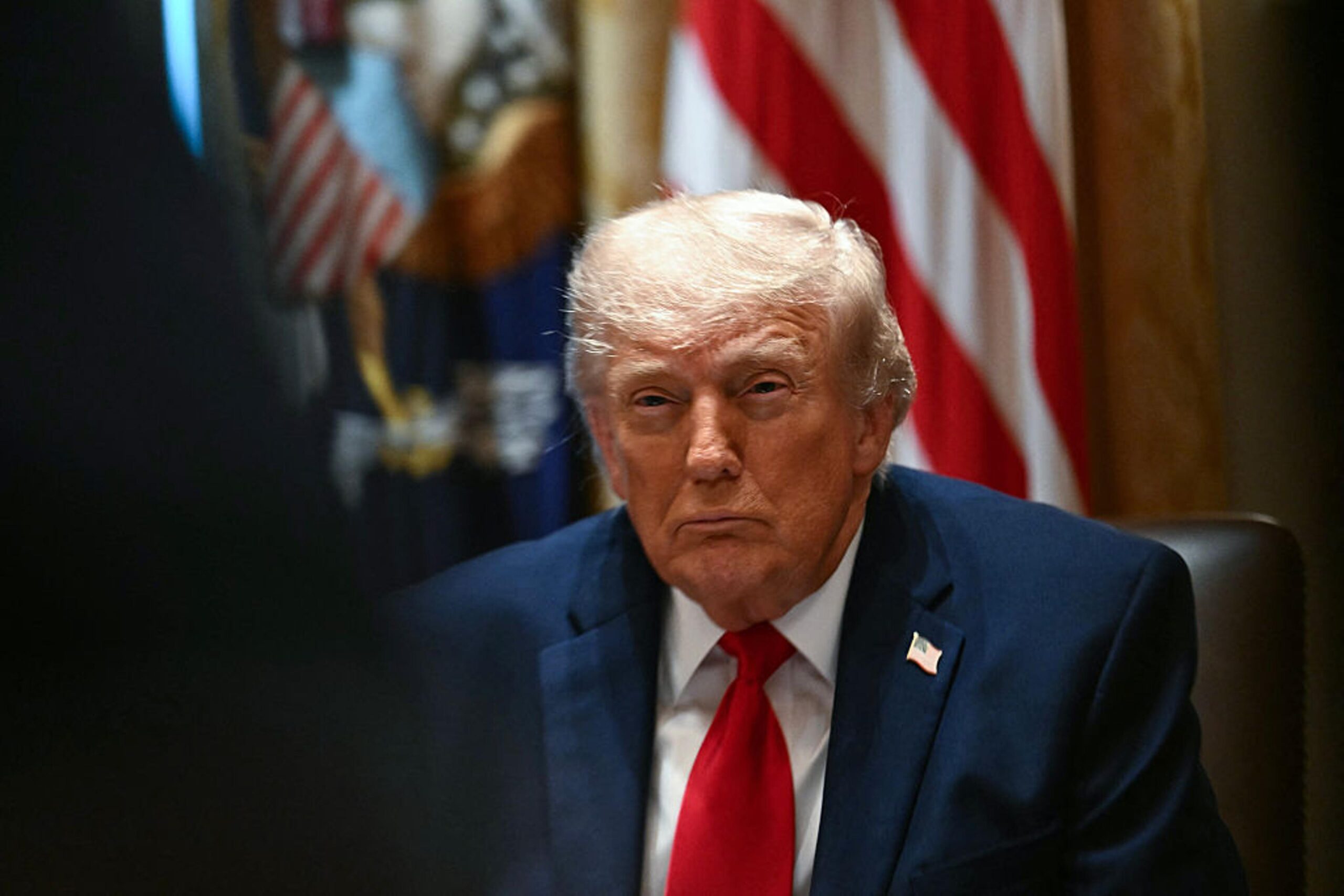
President Trump has appointed housing regulator Bill Pulte as acting director of national intelligence, a man with no national security experience whatsoever, placing him in charge of the entire American spy apparatus.
The appointment, announced by Trump on his Truth Social platform, comes after the abrupt resignation of Tulsi Gabbard in late May. Gabbard, herself a deeply divisive choice for the post, departed following what observers characterized as growing friction with the president over his approach to the war in Iran, a tension that had been simmering beneath the surface of an already turbulent intelligence community.
Trump, in his characteristic fashion, showed little concern for the traditional prerequisite of intelligence or national security credentials.
“William has deep experience managing the most sensitive matters in America, the safety and soundness of the markets,” the president wrote, drawing a pointed parallel between Pulte’s financial oversight work and the demands of running an agency whose mandate stretches from counterterrorism to signals intelligence.
Notably, Trump confirmed that Pulte will retain his existing roles at FHFA, Fannie Mae, and Freddie Mac, a layering of responsibilities with few modern precedents.
Pulte, 38, is no stranger to controversy. An heir to the PulteGroup homebuilding fortune, he has spent much of his tenure in federal service as one of the most combative figures in Trump’s orbit, a status that has won him fierce admirers and equally fierce critics.
American media have repeatedly branded him the president’s “attack dog,” a characterisation that those close to him neither vigorously deny nor appear troubled by.
His record in office reflects that reputation. Pulte publicly accused Democratic Senator Adam Schiff and New York Attorney General Letitia James of falsifying documents on mortgage applications.
The Wall Street Journal later reported that, according to an internal complaint filed at Fannie Mae, Pulte had himself improperly accessed the mortgage records of James and other Democratic officials, an allegation that raised immediate questions about the ethics of the very regulator entrusted to oversee the nation’s housing finance system.
Pulte’s tenure at the top of housing finance has been marked by a combustible mix of ideological warfare and personal vendettas. He fired internal ethics watchdogs who were investigating allies he favored, framing those dismissals publicly as an effort to root out diversity, equity, and inclusion (DEI) policies at Fannie Mae, a characterization critics dismissed as pretextual.
Even within MAGA circles, his proposal to introduce a 50-year mortgage in the United States has provoked significant backlash, with movement stalwarts arguing the idea contradicts core conservative financial principles and risks entrapping borrowers in a lifetime of debt obligations.
The appointment also lands amid swirling reports of Pulte’s deteriorating relationships on multiple fronts. He parted ways with his own family over the future direction of PulteGroup, resigning from its board in 2020.
More recently, US media reported that his standing within Trump’s inner circle has grown increasingly fraught. The Wall Street Journal and Politico both reported a remarkable episode from 2025 in which Treasury Secretary Scott Bessent reportedly threatened to physically assault Pulte at a private club dinner, an incident that, if accurate, illustrates just how isolated Pulte has become even among the president’s senior advisers.
A federal grand jury indicted Attorney General James in October of last year on a mortgage fraud case that Pulte had championed, though a federal judge dismissed the matter without prejudice a month later on separate procedural grounds.
Pulte has also backed a related fraud case against Federal Reserve Governor Lisa Cook, a case upon which Trump premised his attempt to fire the sitting monetary policymaker, an effort currently pending before the Supreme Court.
For intelligence veterans and national security professionals watching from the sidelines, Tuesday’s announcement prompted alarm. The office of the Director of National Intelligence coordinates the activities of eighteen separate agencies, including the CIA, the NSA, and the Defense Intelligence Agency.
The role demands not only familiarity with classified threat streams but the diplomatic acuity to navigate bureaucratic rivalries, foreign intelligence relationships, and the delicate political interface between the White House and the intelligence community.
Whether a man whose primary credential is managing the American mortgage market and whose defining characteristic in office has been aggressive political combat can meet those demands remains, by any conventional measure, an open question.
The White House did not immediately respond to requests for comment on how Pulte intended to manage the competing demands of two Cabinet-level briefs simultaneously, nor on whether a permanent nominee for the director of national intelligence role was under consideration.
WHAT YOU SHOULD KNOW
President Trump has appointed Bill Pulte, a housing regulator with zero national security experience, to lead the entire US intelligence community while simultaneously keeping his existing financial oversight roles.
The move follows the resignation of Tulsi Gabbard and continues a pattern of loyalty-over-qualification appointments.
Pulte is a polarizing figure even within Trump’s own circle, dogged by allegations of ethics violations, improper records access, and strained relationships reaching all the way to the Treasury Secretary.
The man now overseeing America’s eighteen intelligence agencies, including the CIA and NSA, has never worked a single day in national security.