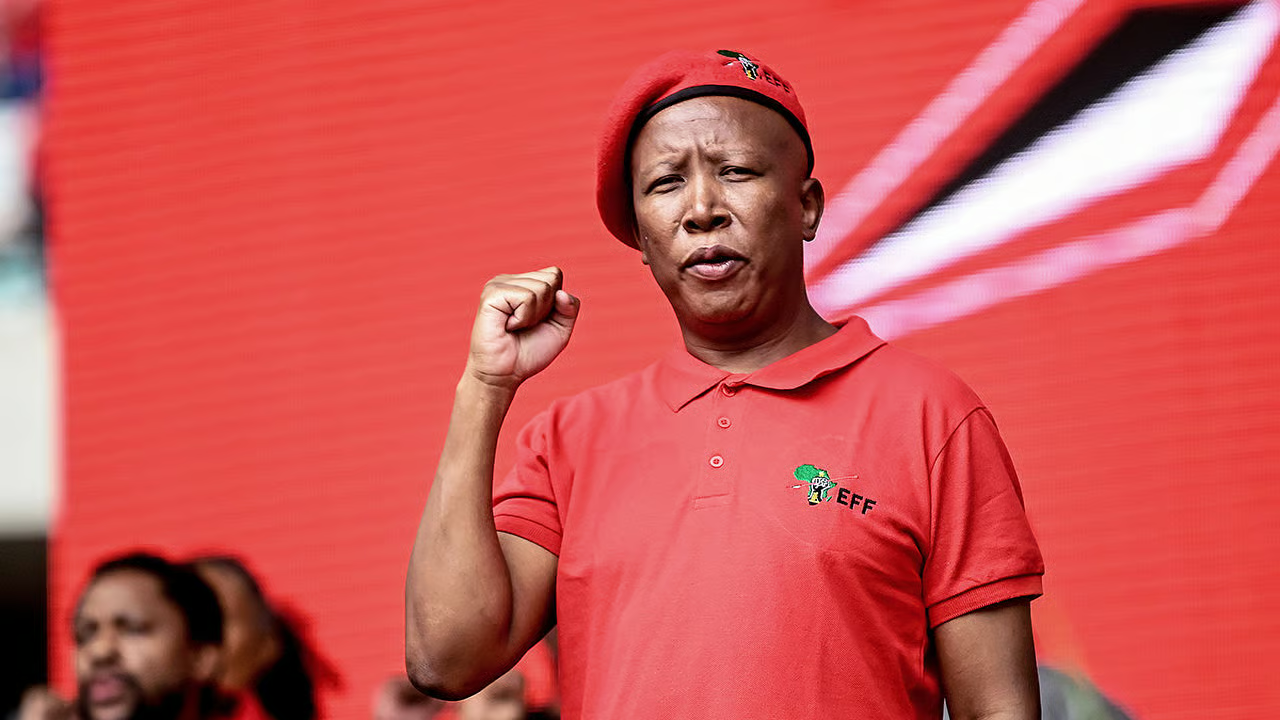
South Africa’s Economic Freedom Fighters (EFF) leader Julius Malema was sentenced to five years in direct imprisonment on Thursday for unlawfully possessing a firearm and related offenses stemming from a fiery 2018 rally.
The 45-year-old politician, long known for his radical rhetoric and red-beret-clad supporters, showed little visible emotion as Magistrate Twanet Olivier delivered the ruling in the magistrate’s court here in what was formerly East London.
Malema was convicted last October on five counts under the Firearms Control Act, including unlawful possession of a firearm, unlawful possession of ammunition, discharging a weapon in a public or built-up area, and reckless endangerment.
The case dates back to July 28, 2018, during the EFF’s fifth anniversary celebrations at the packed Sisa Dukashe Stadium in Mdantsane, Eastern Cape. Video footage widely circulated at the time captured Malema on stage, in front of an estimated 20,000 cheering supporters—including families, medical personnel, and police—firing multiple shots into the air with a semi-automatic rifle. He was also seen emptying a 9mm pistol beforehand.
Prosecutors argued the act posed a serious risk in a crowded public space, violating strict gun laws designed to curb violence in a country still grappling with high rates of firearm-related crime.
Malema had pleaded not guilty, maintaining throughout the trial that the incident did not warrant criminal charges. His legal team mounted a vigorous defense, but the court found him guilty on all counts against him. His co-accused, Adriaan Snyman, was acquitted.
Within minutes of the sentence being read, Malema’s lawyers applied for leave to appeal both the conviction and the punishment. The five-year term for the primary firearm possession charge was accompanied by two years for ammunition possession (likely to run concurrently or adjusted) and fines totaling around R60,000 (approximately $3,300) for the remaining offenses, with additional prison time if unpaid.
If the sentence is ultimately upheld after what could be a lengthy appeals process, it would trigger a significant blow: under South African law, a prison term exceeding 12 months without the option of a fine disqualifies a person from serving as a member of parliament. Malema, a sitting MP and the commanding voice of the EFF, could be forced to vacate his seat.
The EFF, which positions itself as a champion of the poor and a relentless critic of the African National Congress (ANC) government, is currently the fourth-largest party in parliament.
It draws particularly strong backing from young, disillusioned Black South Africans who feel the promises of liberation after the 1994 end of apartheid have not been delivered on land reform, economic equality, or jobs. Persistent racial inequalities, high unemployment, and service delivery failures have fuelled the party’s “radical economic transformation” agenda, including calls for expropriation of land without compensation.
A prolonged absence of Malema, the party’s founder and most recognizable face, could test the EFF’s cohesion and momentum, especially as South Africa’s political terrain shifts amid coalition governments and voter frustration.
EFF officials quickly framed the case as a politically motivated “attack” on the party and its leadership. Supporters gathered outside the court in a show of solidarity, with some describing the sentence as persecution rather than justice. Malema himself has previously suggested that any imprisonment would be worn as a “badge of honor” in the struggle for economic freedom.
Legal experts had speculated that the state was pushing for a harsh term—up to 15 years in some arguments—but the magistrate opted for a more measured five years on the lead charge, balancing the gravity of discharging a weapon near civilians against factors such as Malema being a first-time offender in this context, his family responsibilities, and his political role.
The incident occurred at a time when Malema’s inflammatory style—marked by songs, chants, and provocative gestures—has both energized his base and drawn accusations of inciting division. Critics argue that public figures, especially politicians, must be held to the same standards of firearm safety as ordinary citizens.
As the appeal process begins, all eyes remain on whether this marks a temporary setback for one of South Africa’s most polarizing yet influential opposition voices or the beginning of a deeper challenge to the EFF’s rise.
For now, Malema walks free pending appeal, but the shadow of a potential prison term looms large over his and his party’s future.
WHAT YOU SHOULD KNOW
Julius Malema, leader of South Africa’s far-left Economic Freedom Fighters (EFF), has been sentenced to five years in prison for unlawfully firing a rifle at a 2018 public rally.
If the conviction and sentence are upheld on appeal, Malema will be disqualified from serving as a member of Parliament—a major potential setback for the EFF, South Africa’s fourth-largest party with strong youth support amid persistent racial and economic inequalities.
He remains free pending appeal.