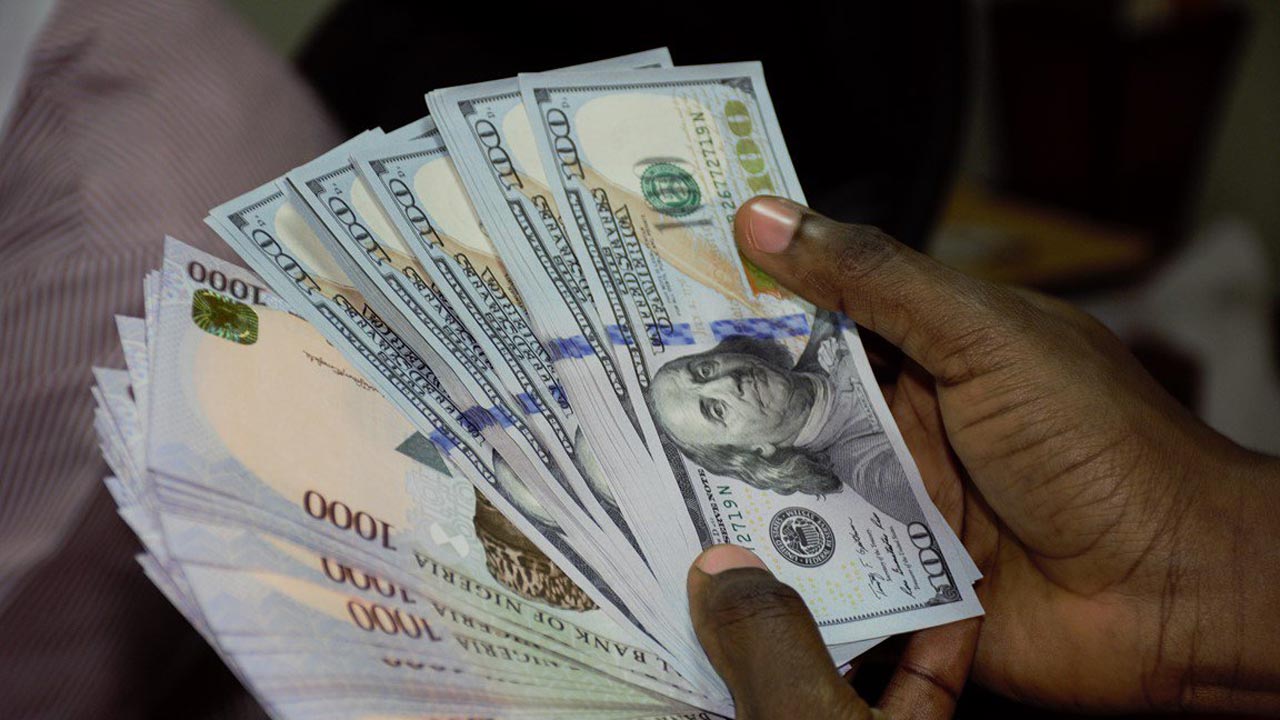
The Nigerian naira opened Thursday’s session on a firmer note in the Nigerian Foreign Exchange Market (NFEM), trading at approximately ₦1,344.20 per US dollar.
Real-time market data as of 7:00 AM WAT showed the local currency holding a relatively tight band, reaching an intraday high of ₦1,343.83 before settling near the ₦1,344 level.
This modest appreciation extends a recent streak of stability in the official market, where the naira has posted gains in recent sessions, trading in the low ₦1,340s earlier in the week, according to Central Bank of Nigeria (CBN) figures.
Analysts and market watchers largely attribute the positive momentum to two key factors: a pickup in foreign currency inflows and the CBN’s sustained drive to clear outstanding foreign exchange obligations.
The apex bank’s ongoing efforts to resolve backlog demands have helped restore confidence among investors and corporates, easing some of the pent-up pressure that previously weighed on the currency.
Financial experts described the prevailing market sentiment as cautiously optimistic. Recent economic reforms — including measures to enhance remittance flows through formal channels and greater transparency in the FX market — are seen as providing underlying support for the naira. These steps have contributed to better liquidity and narrowed the gap between official and parallel market rates in recent months.
However, caution remains the watchword. Seasoned observers point out that demand pressures for the dollar could intensify later in April and beyond, driven by traditional needs such as international education fees, overseas travel, and seasonal imports of goods. How the market absorbs this potential uptick in dollar demand will be a critical test for the naira’s stability in the short term.
The latest movement comes against a backdrop of broader policy continuity at the CBN, which has prioritized FX market unification, backlog clearance, and reserve management. While external reserves have faced some fluctuations, improved inflows have offered a buffer. Market participants will be closely monitoring upcoming CBN interventions and data releases for any signals of further tightening or easing in liquidity conditions.
For ordinary Nigerians and businesses, the naira’s performance in the official window has direct implications, from the cost of imported essentials to planning for foreign transactions.
A sustained appreciation could provide some relief on inflation pass-through from imports, though analysts stress that volatility remains a feature of the market and any gains must be underpinned by consistent inflows and prudent fiscal-monetary coordination.
As trading progresses through the day and into the remainder of the month, all eyes will be on supply-side developments and demand dynamics. The naira’s ability to hold these levels could signal growing stability, but the coming weeks promise to be telling for whether this firmness translates into longer-term strength or remains a tactical respite in an often challenging FX environment.
WHAT YOU SHOULD KNOW
The Naira strengthened to approximately ₦1,344.20 per US dollar in early Thursday trading, driven primarily by improved foreign currency inflows and the Central Bank of Nigeria’s ongoing efforts to clear FX backlogs.
While market sentiment remains optimistic due to recent economic reforms, analysts caution that rising dollar demand for education, travel, and seasonal imports could test this stability in the coming weeks.