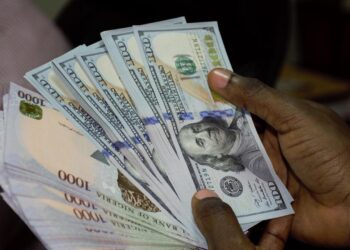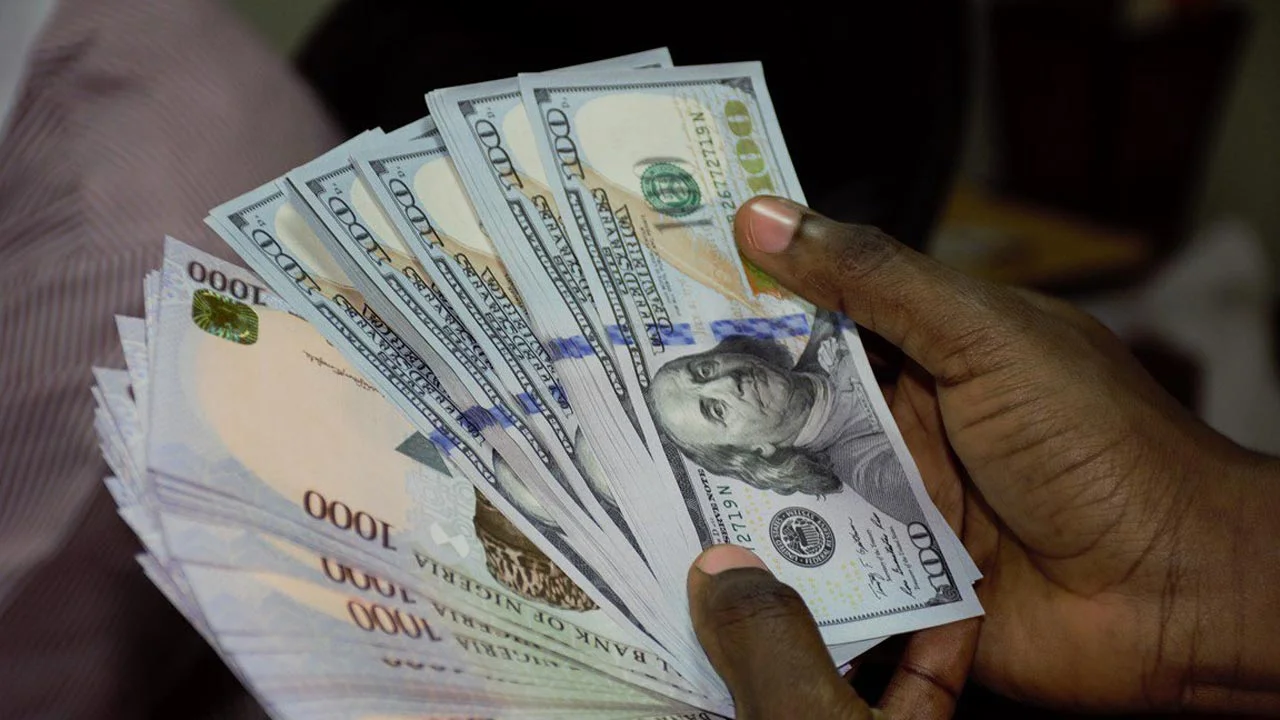
The naira closed largely unchanged on Friday, trading at ₦1,369.92 to the dollar on the official market, as Nigeria’s currency continued to defy the volatility that has long defined its foreign exchange landscape.
In the parallel market, the dollar changed hands for roughly ₦1,420, a spread that, by Nigerian standards, counts as remarkably tight.
At the Nigerian Foreign Exchange Market (NFEM), the naira’s close of approximately ₦1,369.92/$1 cemented its position as the country’s official benchmark rate, the figure banks, importers, and multinational corporations use to price cross-border transactions.
Under the hood, that number isn’t set by fiat; the Central Bank of Nigeria (CBN) derives it from a volume-weighted average of actual completed trades, meaning it moves with real transaction flow rather than administrative decree.
Contrast that with the parallel market, the informal network of street-side dealers and currency traders that Nigerians have long turned to when official channels run dry. There, the dollar settled around ₦1,420, a rate governed purely by the blunt mechanics of supply and demand among currency dealers, with no central authority smoothing the edges.
Do the math, and the everyday implications become clear: at Friday’s official rate, $100 fetched about ₦136,992, while a $1,000 transfer was worth close to ₦1.37 million figures that matter enormously to the students, medical patients, and diaspora families who rely on remittances priced against these benchmarks.
Perhaps the more consequential detail in Friday’s trading is what didn’t happen: the gap between official and black-market rates, historically a barometer of FX market dysfunction and a magnet for arbitrage, remained compressed relative to prior years.
At the depths of Nigeria’s currency crisis, that spread yawned wide enough to spawn a thriving arbitrage economy and erode confidence in the naira outright.
A narrower gap today suggests the reforms rolled out by the CBN over the past two years floating the currency, unifying multiple exchange windows, and working to boost dollar liquidity are beginning to stick.
Market analysts point to improved liquidity conditions as the primary driver, alongside Nigeria’s steadily climbing external reserves. Still, few are declaring victory.
The persistent appetite for dollars from importers, manufacturers, and everyday businesses continues to exert quiet pressure on both markets, a reminder that stability in Nigeria’s FX space remains a managed outcome rather than a settled fact.
Friday’s figures arrive amid a broader if uneven story of naira resilience in 2026. External reserves have continued climbing, recently topping $52 billion, and the currency has shown periodic bouts of appreciation even as it fields ongoing demand pressure.
Whether this relative calm holds will depend on the same forces that have shaped Nigeria’s FX story for years: oil revenue, import demand, and the CBN’s ability to keep dollars flowing into a market that has, for over a decade, been thirstier for hard currency than its formal channels could supply.
For now, though, both benchmarks, official and parallel, are telling a similar story: a currency finding its footing, one trading session at a time.
WHAT YOU SHOULD KNOW
The naira’s stability on July 24, 2026, trading at ₦1,369.92 officially and ₦1,420 on the parallel market, is less about a single good day and more about a narrowing gap between the two rates.
The shrinking spread is the real signal: it shows Nigeria’s FX reforms and improved dollar liquidity are gaining traction, even as steady demand from importers and businesses keeps the currency under watch.
In short, the naira isn’t just holding steady it’s showing early signs that the reform-driven stability may be structural, not accidental.