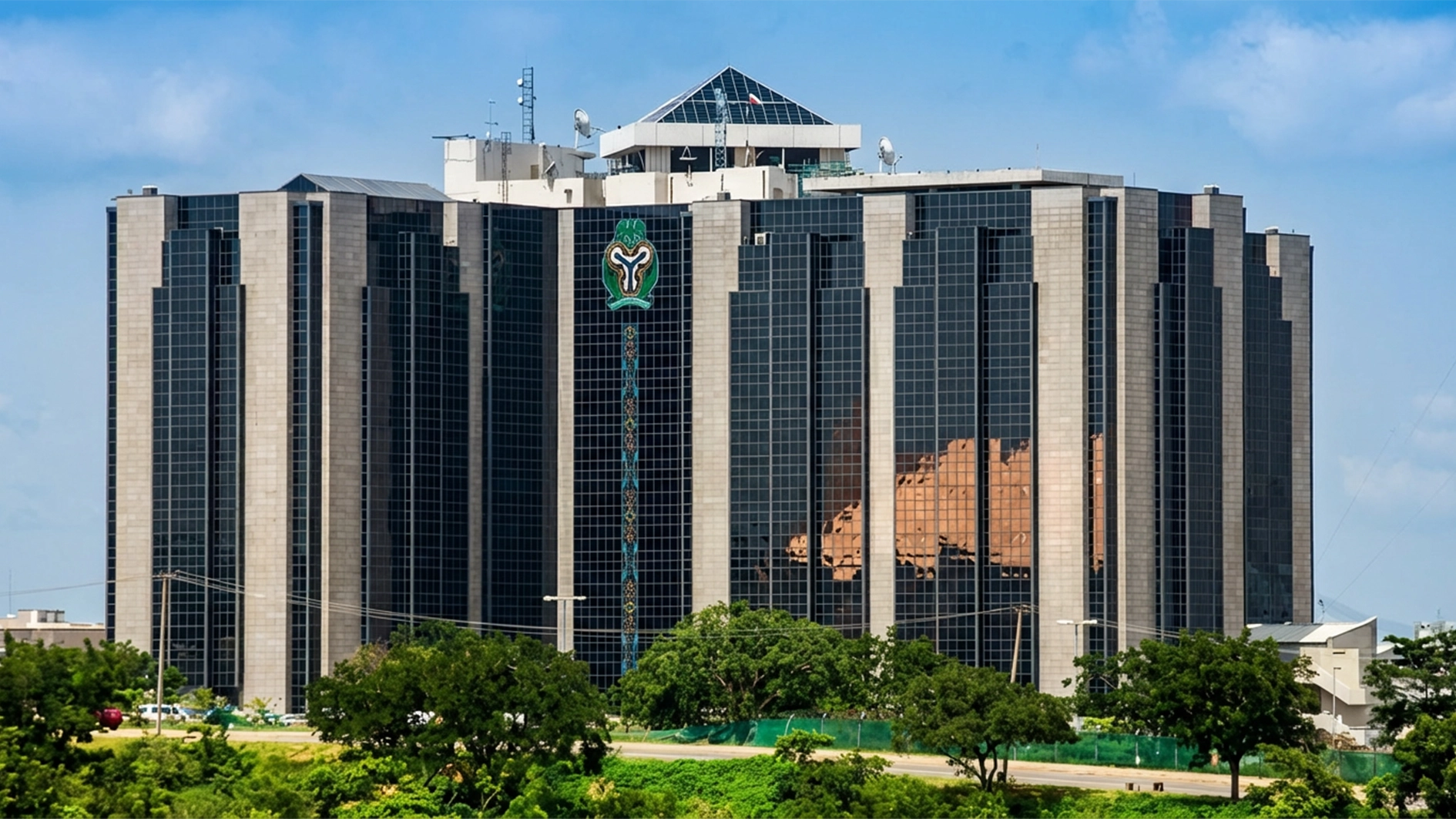
The Central Bank of Nigeria (CBN) has moved to sharpen its regulatory teeth against terrorism financing, designating the issue a current supervisory priority in a fresh signal that the apex bank is bracing for closer, more sustained scrutiny of how money moves through the country’s financial institutions.
The disclosure came in a statement issued on Tuesday and signed by Hakama Sidi-Ali, the CBN’s Acting Director of Corporate Communications and Investor Relations, who said the decision forms part of the bank’s continuing effort to shield the Nigerian financial system from exploitation by illicit actors.
For banks, payment service banks, microfinance institutions, and other CBN-regulated entities, the announcement effectively raises the stakes on compliance.
Regulators are now expected to pay particular attention to four areas: how institutions identify and manage terrorism financing risk, how they monitor transactions for red flags, how faithfully they implement targeted financial sanctions, and how promptly and accurately they file suspicious transaction reports tied to terrorism financing.
The CBN was careful to frame the move within its existing supervisory architecture rather than announce an entirely new regime.
The bank said it would continue relying on a risk-based supervisory model, a blend of on-site inspections and off-site monitoring to reinforce compliance with anti-money laundering, counter-terrorism financing, and counter-proliferation financing rules, collectively known in regulatory circles as AML/CFT/CPF.
That framing matters. A risk-based approach means examiners will not treat every institution identically; instead, banks and other regulated entities judged to carry higher exposure because of their customer base, geographic footprint, product mix, or transaction patterns are likely to face more intensive examination than lower-risk peers. What changes now is the intensity dial, not the underlying methodology.
The CBN linked the heightened focus to Nigeria’s broader domestic and international cooperation efforts on counter-terrorism financing, counter-proliferation financing, and financial-system integrity.
That context is significant: Nigeria has spent recent years working to strengthen its AML/CFT framework following its placement on the Financial Action Task Force’s (FATF) grey list of jurisdictions under increased monitoring, a designation the country exited in 2024 after implementing a series of reforms alongside agencies such as the Nigerian Financial Intelligence Unit (NFIU) and the Economic and Financial Crimes Commission (EFCC).
Analysts who track Nigeria’s regulatory posture say the latest move fits a familiar pattern: episodic tightening of supervisory attention on specific typologies of financial crime, often timed to align with international review cycles or emerging security concerns.
Nigeria continues to contend with financing risks tied to insurgent and militant activity in parts of the country’s north-east and elsewhere, making terrorism financing controls a persistent regulatory concern rather than a one-off initiative.
In practical terms, the designation places additional pressure on compliance and risk departments across the banking sector to demonstrate, not merely assert, that their transaction-monitoring systems, sanctions-screening tools, and suspicious-transaction-reporting processes are functioning effectively.
Institutions found wanting during on-site or off-site examinations could face closer follow-up engagement; the CBN noted that “further supervisory engagement will be undertaken as appropriate,” language that leaves room for enforcement action, remediation demands, or additional reporting obligations should gaps be identified.
The apex bank stopped short of naming specific institutions, transactions, or enforcement actions in Tuesday’s statement, and it did not attach a timeline for the enhanced scrutiny or indicate when a review of results might be published.
It is also unclear whether the elevated priority will translate into new circulars, guidelines, or reporting templates for banks, or whether it will operate purely as an internal supervisory emphasis within the CBN’s existing examination cycle.
The move underscores the balancing act facing Nigeria’s financial regulators: maintaining the confidence of international partners and rating agencies that the country’s financial system is not a conduit for illicit finance, while avoiding compliance burdens heavy enough to stifle the banking sector’s operational efficiency.
For now, the CBN’s message to the industry is unambiguous: terrorism financing controls are back at the top of the supervisory agenda, and institutions should expect regulators to be watching more closely than before.
WHAT YOU SHOULD KNOW
The CBN hasn’t introduced new rules; it has turned up the intensity of enforcement on rules that already exist.
Terrorism financing is now a top supervisory priority, meaning banks and other regulated institutions can expect closer, more frequent scrutiny of their transaction monitoring, sanctions screening, and suspicious-activity reporting.
For the industry, the message is simple: compliance systems that were merely adequate before may no longer pass muster. Institutions need to be able to prove their controls work, not just claim they do.