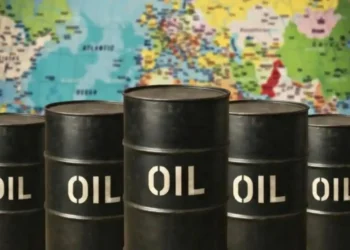
Oil rose for a second day on Thursday, pushing Brent past $100 a barrel, as traders braced for worse Gulf supply disruptions after the fiercest attacks yet in the six-month Iran-U.S. conflict.
Brent crude futures rose 40 cents, or 0.4%, to $101.61 a barrel by 08:14 GMT, while U.S. West Texas Intermediate added 49 cents, or 0.51%, to reach $96.54.
The moves mark a continuation of a rally that has now carried Brent roughly 30% higher from the lows touched in early August, when a fragile ceasefire briefly raised hopes that hostilities might wind down. Those hopes collapsed later that month when fighting resumed in earnest.
The latest escalation began earlier this week when the U.S. military said it had destroyed five Iranian crude oil tankers in retaliation for what Washington described as attempted attacks on an American warship.
Iran’s Islamic Revolutionary Guard Corps answered in kind, claiming to have struck American vessels and a wider set of tankers in the Gulf. Tehran put the number at ten and warned that any further U.S. action would be met with escalation.
The tit-for-tat strikes have become a defining feature of a conflict that has now stretched across multiple fronts of the Strait of Hormuz corridor. U.S. forces have also targeted tankers near Iran’s Kharg Island export hub and in the Gulf of Oman, deepening fears that Tehran’s ability to move crude even through informal channels involving vessels with transponders switched off is being steadily eroded.
President Donald Trump added to the tension Thursday, warning that the United States could strike Iran’s Pickaxe Mountain facility and urging Tehran toward caution, while acknowledging that the war is likely to drag on past the November midterm elections, a signal to markets that traders should not expect a quick resolution.
Flows through the Strait of Hormuz, which carried roughly a fifth of the world’s seaborne oil and gas before the war, remain sharply below pre-conflict levels.
The strait has become the central battleground of the conflict, with both sides seeking to assert control over a waterway that Iran has used as leverage throughout the fighting.
Pressure is mounting elsewhere too. Iran-aligned Houthi militants have stepped up strikes on energy infrastructure in Saudi Arabia, forcing several facilities offline and adding a second front of supply risk in the Red Sea corridor, long a critical artery for Saudi exports.
“The recent run-up in prices lays bare the market’s approach,” said PVM analyst John Evans, noting that traders now expect the conflict to outlast even the more pessimistic forecasts made a month ago. With exports diminished, he said, the oil balance stays tight, and prices stay elevated.
The rally is not confined to futures screens. In the physical crude market, the dated Brent benchmark against which roughly two-thirds of the world’s physical oil supply is priced has held above $100 since September 3, according to LSEG data, underscoring that the price move reflects genuine tightness in actual barrels changing hands, not just speculative positioning.
Analysts increasingly agree that the durability of the rally now hinges less on the war itself and more on the buying behavior of China, the world’s largest crude importer.
Beijing has stepped up purchases in recent weeks after months of subdued demand, a shift ING analysts say has helped boost physical crude markets independent of the supply shock from the Gulf.
The reversal is notable because soft Chinese demand had, for months, functioned as one of the few reliable counterweights to the war’s bullish pressure on prices.
David Jorbenaze, global oil market lead at ICIS, argued that this dampening effect was never a structural feature of the market; it reflected refiners drawing down ample inventories rather than buying fresh barrels, a buffer that has now been largely spent.
ING analysts cautioned that the relationship could work in either direction from here: continued Chinese buying could amplify the price impact of any fresh supply disruption, while a pullback in Chinese imports could take some of the edge off the rally, even as the war itself continues to smolder.
With Washington signaling no quick end to hostilities, Tehran vowing further escalation, and a second supply front opening in the Red Sea, traders appear to be pricing in a market that stays tight well into the fall, leaving China’s import appetite as the wildcard that could determine whether $100 oil becomes the new floor or merely a way station toward higher prices still.
WHAT YOU SHOULD KNOW
The single most important thing to know: the durability of $100 oil now hinges on China, not the war itself.
The Iran-U.S. conflict has already done the damage: Hormuz flows are choked, tankers on both sides are being destroyed, and Trump has signaled the fighting will outlast the November midterms. That’s the floor under prices.
But whether Brent grinds higher or plateaus depends on whether Beijing keeps rebuilding stockpiles it spent down over the past year. If Chinese buying continues, it amplifies every future supply shock. If it pulls back, it’s the only thing likely to cap the rally.