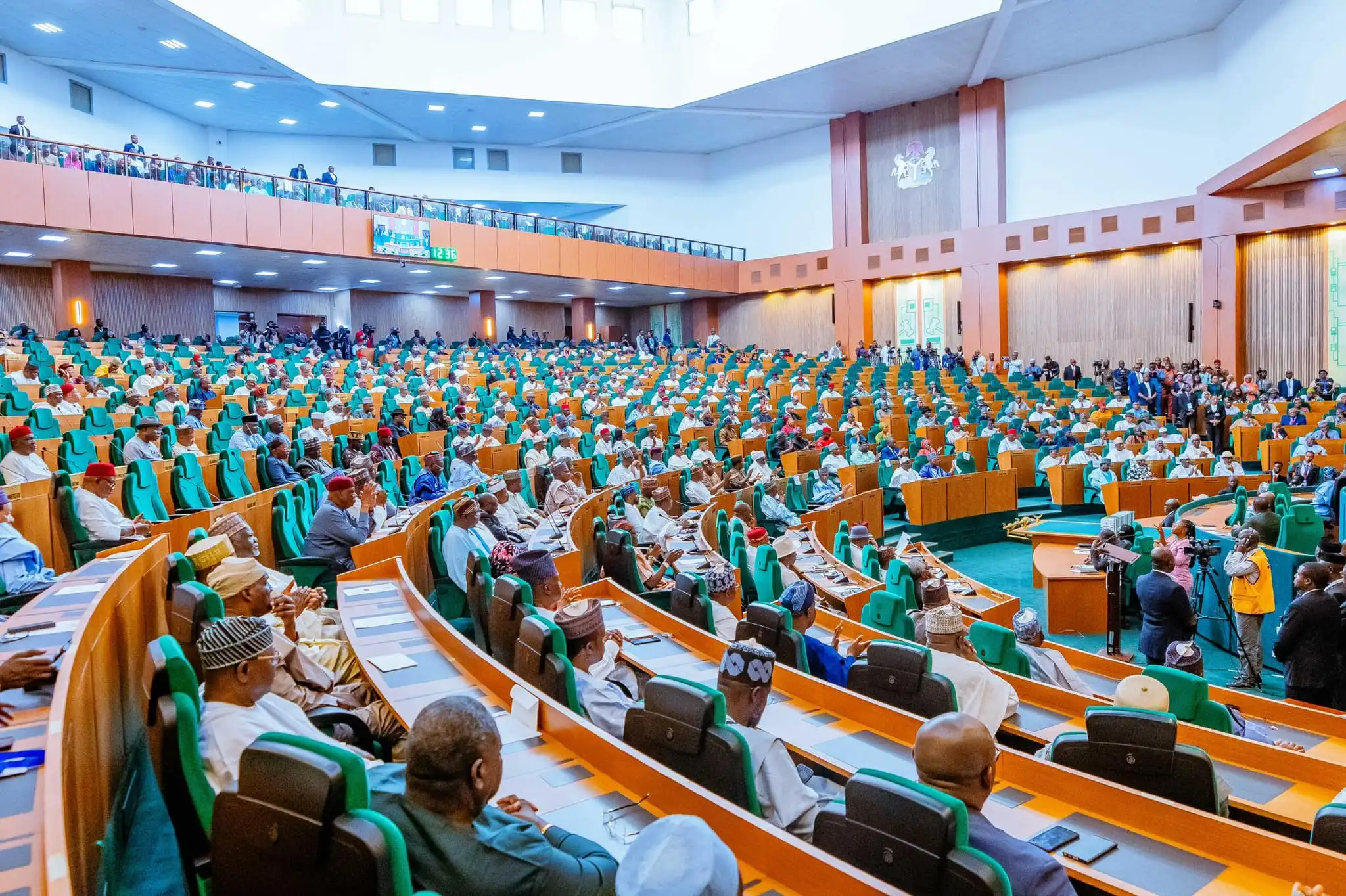
A fresh reckoning is brewing in Nigeria’s downstream petroleum sector, as the House of Reps Public Accounts Committee digs into more than ₦400 billion in unpaid dues owed to the industry’s chief regulator by the state oil company and dozens of private marketers.
The inquiry, formally opened this week, centers on debts owed to the Nigerian Midstream and Downstream Petroleum Regulatory Authority (NMDPRA) by the Nigerian National Petroleum Company Limited (NNPCL) and a wide swath of oil marketing firms. Lawmakers say the figures under scrutiny now stand at roughly ₦432.07 billion.
The probe traces its roots to the Auditor-General’s office, whose annual reviews have flagged the mounting arrears for several years running.
The 2023 audit report pegged combined liabilities at ₦392.73 billion, split between NNPCL’s ₦162.46 billion and roughly ₦230.27 billion owed collectively by marketers under three industry associations: the Depot and Petroleum Products Marketers Association of Nigeria (DAPPMAN), the Major Marketers Association of Nigeria (MOMAN), and the Major Energy Marketers Association of Nigeria (MEMAN).
By the time the 2024 audit was compiled, the figure attributed to marketers alone, excluding NNPCL, had climbed to ₦432.07 billion. Separate data supplied by the NMDPRA to the committee put the number even higher for 2025, showing 146 companies across the three associations owing a combined ₦327.53 billion.
The debts themselves span a patchwork of regulatory charges: balancing allowance payments, national transport Average fees, the one percent levy feeding the Midstream and Downstream Gas Infrastructure Fund, and older obligations tied to fuel importation, coastal supply operations, and credit-based transactions.
Some of these liabilities reportedly date as far back as 2017, a detail lawmakers say points to deeper, long-standing weaknesses in how the regulator tracks, bills, and recovers what it is owed.
Committee Chairman Bamidele Salam struck a tone that was pointed but careful to avoid the appearance of a witch hunt. He cautioned that any company summoned to appear before the committee is expected to send proper representation along with complete records, framing compliance as a matter of respect for the National Assembly’s oversight authority.
At the same time, he stressed that the committee’s goal is simply to get to the bottom of the numbers and make sure public funds owed to government are fully accounted for and recovered.
Lawmakers say their work will focus on how the debts were originally calculated, the time periods they cover, what payments, if any have already been made, what balances remain outstanding, and what recovery steps the NMDPRA has actually taken over the years.
The committee also wants answers on why obligations were allowed to pile up for so long without resolution and whether the regulator ever deployed real enforcement measures against companies that fell behind.
The investigation lands at a moment of intensifying scrutiny over how revenue is generated, collected, and remitted across Nigeria’s petroleum industry scrutiny that has sharpened since the Petroleum Industry Act reshaped the sector’s legal and regulatory architecture.
The NMDPRA itself was born out of that same law, tasked with overseeing everything from fuel processing and transportation to domestic gas operations and midstream-downstream infrastructure.
Committee officials have taken pains to describe the inquiry as a routine exercise of constitutional oversight rather than an effort to single out any one company or institution.
Still, with hundreds of billions of naira in unresolved liabilities and audit trails stretching back nearly a decade, the coming hearings are likely to put both NNPCL and Nigeria’s major fuel marketers under an uncomfortable spotlight and test just how far the National Assembly is willing to push to recover revenue it says rightfully belongs to the federation.
WHAT YOU SHOULD KNOW
At the heart of this story is a simple but troubling fact: over ₦432 billion in regulatory dues owed by NNPCL and dozens of oil marketers to the NMDPRA have gone uncollected for years, with some debts dating back to 2017.
The House Public Accounts Committee’s investigation isn’t just about the money itself but about what the delay reveals: a regulator that has struggled to enforce payment and a system where accountability for public revenue has lagged for nearly a decade.
The real takeaway for Nigerians is this public funds meant for the country’s benefit have sat unrecovered for years, and this probe is a test of whether lawmakers can finally force that money back into government coffers.