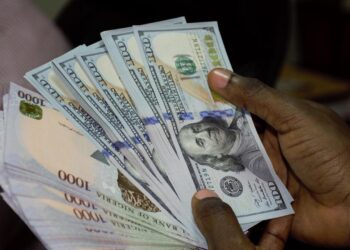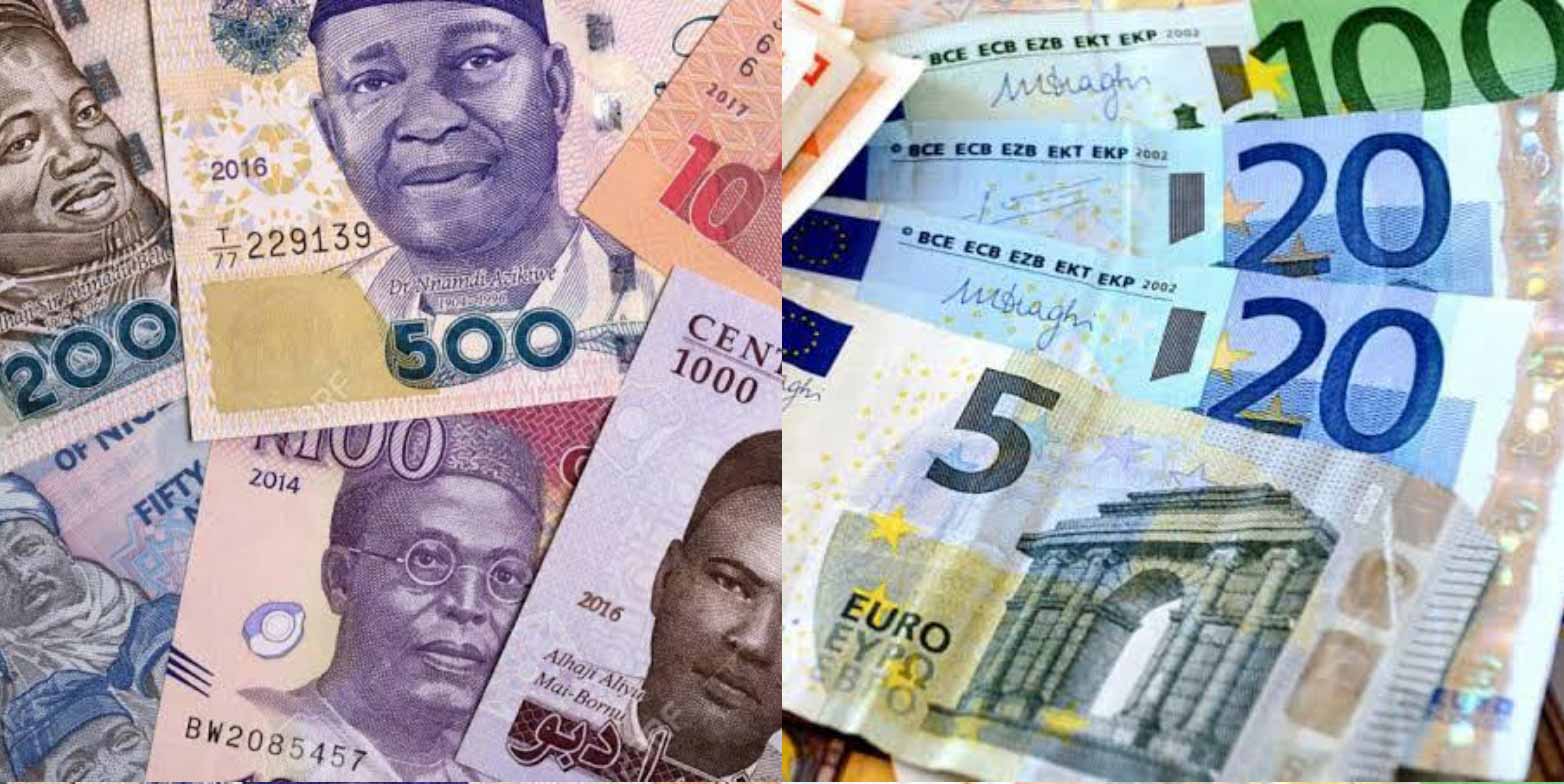
The naira closed out the week on a firmer footing against the euro, edging up to N1,557/€1 from N1,570/€1 in the previous session, according to the latest data from the Central Bank of Nigeria.
The modest gain extends a pattern of relative calm that has defined the currency pair for much of the past month, even as a volatile mix of geopolitical conflict, shifting central bank signals, and looming trade tariffs roils global markets.
The move caps a dramatic reversal for the EUR/NGN pair since the start of the year. The euro touched a high of roughly N1,774 against the naira in January 2026 before sliding to a multi-month low near N1,555, a level the pair is once again testing today.
Since the beginning of July, trading has been unusually contained, confined to a tight band between roughly N1,561 and N1,576.7 per euro.
That stability marks a sharp departure from the volatility seen in early January, when the naira was under considerably more pressure and support levels sat closer to N1,683–N1,684/€1.
Traders say the narrowing gap between official and parallel-market rates reflects both calmer sentiment and the effects of sustained central bank intervention aimed at smoothing out disruptions in the foreign exchange market.
At the heart of the naira’s resilience is the CBN’s continued commitment to a high-interest-rate regime. By keeping borrowing costs elevated, the apex bank has succeeded in drawing portfolio inflows into Nigerian assets, which helps underpin demand for the naira and cushions it against sharper depreciation.
Analysts note that this tight monetary stance, designed primarily to rein in inflation, has had the secondary effect of keeping the exchange rate on a more predictable, gradually managed downward path rather than the sharp swings seen in previous cycles.
On the other side of the pair, the euro itself has offered little in the way of dramatic momentum. The European Central Bank has signaled only minimal to moderate adjustments to its policy rate outlook, tempering the currency’s strength against emerging-market peers, including the naira.
The Governing Council used its latest policy communication to reaffirm its commitment to returning inflation to its 2% medium-term target, while cautioning that uncertainty remains elevated and that the full effect of the ongoing energy price shock has yet to show up in the inflation data.
Following June’s quarter-point increase, the ECB opted to hold rates steady this time around, leaving the deposit facility rate at 2.25%, the main refinancing rate at 2.40%, and the marginal lending facility rate at 2.65%.
Against the dollar, the euro traded narrowly lower in London on Friday, hovering around the $1.138 mark after a slight loss in the prior session a sign that the common currency is struggling to build sustained upward momentum even as it holds ground against riskier emerging-market currencies.
Beyond the numbers, traders are keeping a wary eye on escalating tensions in the Middle East, which threaten to reshape the calculus for both the dollar and oil-linked currencies. Yemen’s Iran-aligned Houthi movement reportedly struck two Saudi oil tankers in the Red Sea after they failed to comply with a blockade of Houthi-controlled territory.
The incident comes as the United States carried out a thirteenth consecutive night of airstrikes against Iran, with President Donald Trump warning that “major military punishment” awaits Tehran and the Houthis if the attacks do not cease.
Any further escalation could send crude oil prices climbing, a dynamic that has historically strengthened the dollar’s safe-haven appeal and could, by extension, cap the euro’s upside against the naira in the near term.
Trade policy is another wildcard weighing on sentiment. Washington is reportedly preparing to impose fresh tariffs of between 10% and 12.5% on imports from its largest trading partners, part of a renewed push by the Trump administration to reinstate trade barriers following a recent Supreme Court ruling.
European exporters to the US are expected to face a baseline 10% tariff, structured to remain consistent with existing EU-US trade arrangements.
Data from the CME FedWatch tool put the probability of a Federal Reserve rate move this month at 35.8%, while the odds of at least a quarter-point move by September have climbed to 82.1%, a shift that continues to shape dollar sentiment and, indirectly, the broader emerging-market currency landscape in which the naira trades.
For now, analysts see room for the euro to notch modest, short-term gains against the naira, but few expect a decisive breakout. The combination of the CBN’s tight liquidity policy, steady portfolio inflows, and a European Central Bank in wait-and-see mode has kept the pair anchored within its recent range.
Whether that holds may depend less on domestic policy than on how the Middle East conflict, the tariff rollout, and the Fed’s next moves play out in the weeks ahead.
WHAT YOU SHOULD KNOW
The naira’s stability against the euro isn’t really about the euro at all; it’s the CBN’s tight-money policy, holding interest rates high enough to keep pulling in portfolio inflows, that’s doing the heavy lifting.
That’s the one lever keeping the pair pinned in a narrow range despite Middle East tensions, looming US tariffs, and Fed uncertainty swirling around it. Watch that policy stance: if it loosens, the calm likely doesn’t hold.