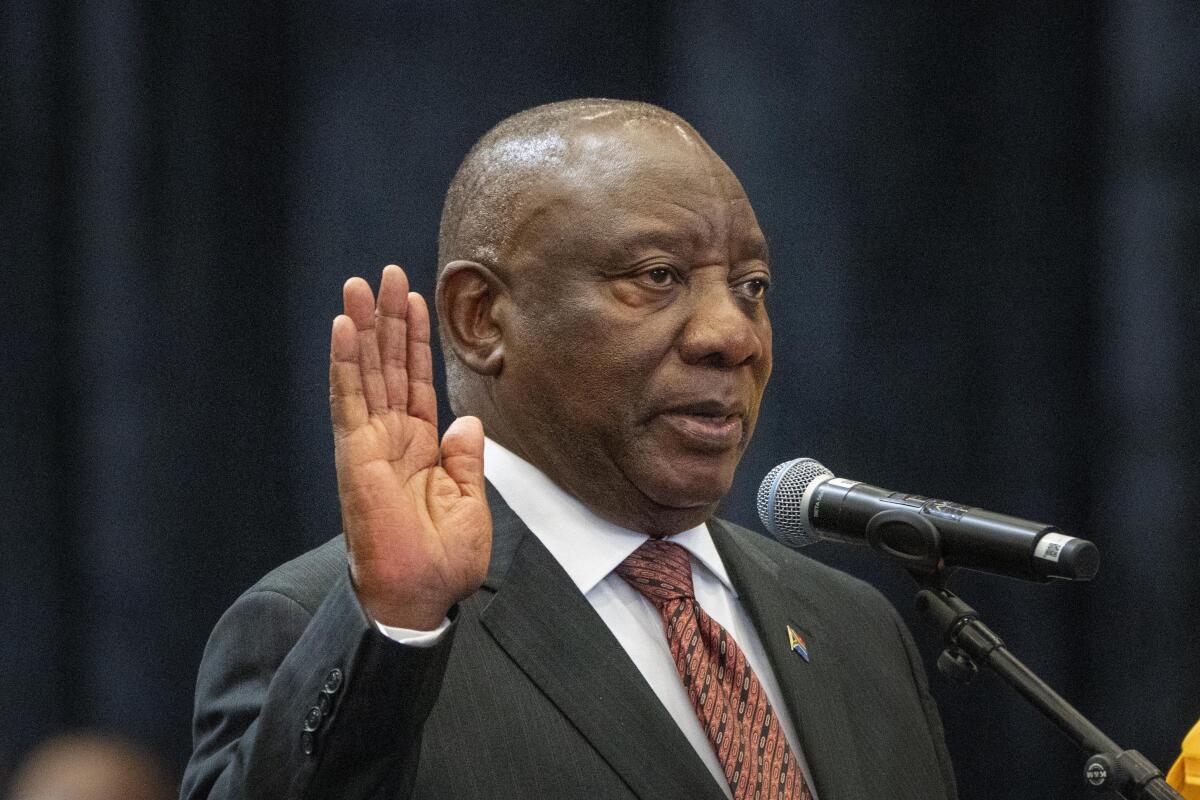
A South African court on Friday threw President Cyril Ramaphosa a legal lifeline, temporarily freezing the parliamentary process that could have made him the first sitting head of state in the country’s democratic history to face impeachment.
The Western Cape High Court, sitting as a full bench of three judges, ruled by a narrow margin that Parliament’s impeachment committee must down tools until Ramaphosa’s separate challenge to the findings against him has been resolved.
The ruling was delivered on Friday, 24 July 2026, following two days of argument heard the previous week before Judges André le Grange, Matthew Francis, and Diane Davis.
The split was tight. In the first of three judgments, the court found Ramaphosa had “not made out a case for an interim interdict” and proposed dismissal.
But the other two judges disagreed, and the majority carried the day: the second and third judgments granted an interim interdict for a limited duration, instructing National Assembly Speaker Thoko Didiza and the chairperson of the impeachment committee to halt proceedings pending the outcome of the review challenge.
Delivering the judgment, Le Grange struck a cautious tone about the speed at which the matter had to be decided, noting that the court had “carefully considered the weighty arguments advanced by the parties in the limited time available, given the urgency of the matter.”
His order was blunt: pending determination of the president’s review, Parliament is interdicted from proceeding with a public impeachment hearing.
The saga traces back to February 2020, when burglars broke into Ramaphosa’s Phala Phala game farm in Limpopo and made off with a stash of foreign currency the president says was proceeds from selling 20 buffaloes.
The Section 89 panel, led by former Chief Justice Sandile Ngcobo, found that Ramaphosa had a case to answer over the theft of $580,000 in cash that had been hidden in a sofa at the farmhouse.
The complaint that set the wheels in motion came from a former state security boss aligned with ex-president Jacob Zuma, who alleged the real sum stolen was closer to $4 million and that Ramaphosa concealed the break-in from police and tax authorities.
Ramaphosa has always maintained he did report the burglary and denies any wrongdoing. Prosecutors dropped criminal charges related to the matter in 2024, but the political and constitutional questions never went away.
When the Ngcobo panel’s damning report first landed in Parliament in late 2022, Ramaphosa’s African National Congress used its majority in the National Assembly to vote it down, sparing him an impeachment inquiry at the time.
Opposition parties cried foul, and the matter ended up before the Constitutional Court, which ruled in May 2026 that Parliament had acted irrationally in blocking the panel’s findings, sending the report back and clearing the way for impeachment proceedings to resume.
That triggered the formation of a 31-member impeachment committee, chaired by Rise Mzansi’s Makashule Gana, tasked with investigating the Phala Phala allegations afresh.
Ramaphosa, in turn, launched his own review bid, arguing the panel’s original findings should be set aside and asked the court for breathing room in the meantime. Friday’s ruling gives him exactly that, at least for now.
The reprieve is not the end of the road. Ramaphosa’s review of the panel’s report is set to be heard in the Western Cape High Court from 2 to 4 September, a hearing that will effectively determine whether the impeachment committee’s work resumes, is narrowed, or collapses altogether.
The question of legal costs from Friday’s application has also been held over until that review is finalized.
For his part, the president struck a conciliatory note in the aftermath, with his office saying he respects the ruling and reaffirms his commitment to judicial independence and the separation of powers enshrined in the Constitution, while pledging to continue cooperating with accountability processes.
Opposition parties, who have accused him of using litigation to run down the clock, are unlikely to be satisfied, and all eyes now turn to September, when the courtroom battle over Phala Phala resumes in earnest.
WHAT YOU SHOULD KNOW
Ramaphosa has bought himself time, not vindication. The Western Cape High Court’s interdict won by a slim 2-1 majority only pauses Parliament’s impeachment inquiry; it doesn’t clear him of the Phala Phala allegations.
Everything now hinges on the September 2–4 review hearing, where the court will decide whether the underlying panel findings against him stand or fall. Until then, South Africa’s first-ever presidential impeachment process remains frozen, not finished.