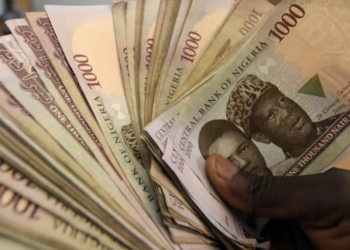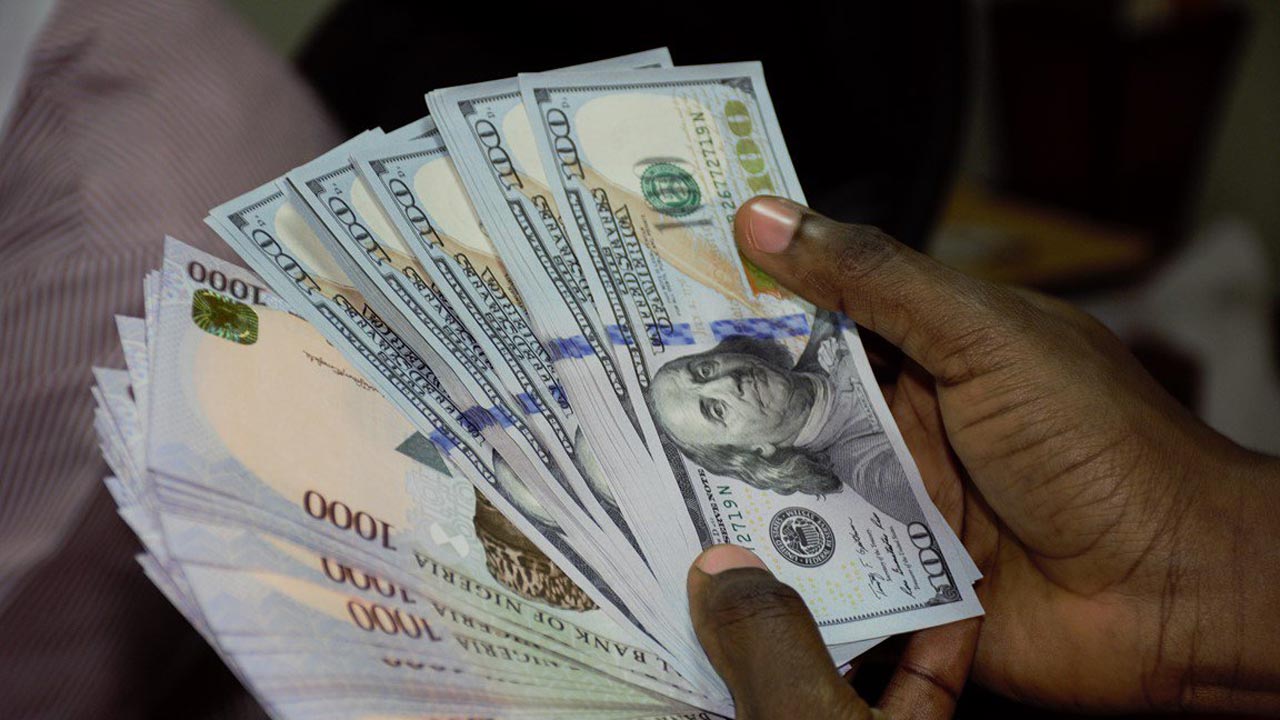
The naira opened stronger in the official market on Thursday, continuing its recent modest gains at the CBN’s regulated window, even as the gap with street-market rates stayed wide.
Data from the Nigerian Foreign Exchange Market (NFEM) pegged the official dollar rate at ₦1,322.72, unchanged from the previous session’s close on September 9. The rate was also recorded at the same level on September 9, indicating relative stability in the official market.
The reading builds on a week of incremental appreciation: the CBN had quoted the dollar at ₦1,329.43 at the start of September before easing to ₦1,320.25 by September 8, a shift of roughly 0.7 percent for the month so far.
Parallel-market dealers quoted the dollar at up to ₦1,390 on Thursday, with one tracker reporting a buying rate of ₦1,380 and a selling rate of ₦1,390 early in the session, and a second tracker converging on the same ₦1,390 figure. That leaves a spread of roughly ₦67 between the official and black-market rates, a gap market watchers describe as a premium of around 5 percent.
The divergence between Nigeria’s formal and informal currency markets has been a defining feature of the naira story for much of the past two years, but analysts tracking the spread say it has been closing gradually.
Just a week earlier, the gap between the NFEM and street rates ran as high as ₦85 to ₦100, a spread of 6 to 7 percent, which some traders interpreted as a sign that dollar demand outside the banking system was easing, either because official supply had improved or because more remitters and businesses were shifting toward traceable, formal channels.
That trend appears to be holding, if not accelerating: the roughly ₦67 gap recorded on Thursday is narrower still, suggesting the parallel market’s premium over the official rate continues to compress even as both markets trade within a fairly tight band.
The relative calm in the exchange rate has coincided with a steady-handed approach from the CBN’s rate-setting Monetary Policy Committee, which has held its benchmark interest rate at 26.50 percent in recent meetings, a stance seen as part of a broader effort to anchor inflation expectations and support currency stability without further tightening.
Central bank officials have repeatedly attributed the naira’s recent firmness at the official window to improved dollar liquidity, alongside continued interventions to narrow the gap with informal trading.
Market participants, for their part, say they are watching foreign exchange inflows, corporate dollar demand, and the CBN’s next moves for clues on whether the naira can sustain its gains through the rest of the month.
For consumers, importers, and businesses, the day-to-day reality of the exchange rate is rarely as clean as the headline NFEM figure suggests.
Rates offered by commercial banks and licensed Bureau de Change operators for travel, school fees, imports, or other transactions routinely differ from both the official and parallel benchmarks, reflecting transaction margins and local supply-and-demand conditions that can shift by the hour.
Foreign exchange traders caution that Thursday’s quoted figures, like those on any given day, are indicative rather than fixed.
Rates can move during the trading session in response to dollar supply, demand pressures, trading volumes, and any fresh CBN intervention, meaning the ₦67 gap recorded at the time of writing could widen or narrow before the close of business.
WHAT YOU SHOULD KNOW
The naira is holding steady in the official market at ₦1,322.72, while the parallel market trades noticeably higher at ₦1,390, a gap of about ₦67.
That gap has been narrowing in recent weeks, a sign of improving dollar liquidity and growing confidence in formal FX channels.
Still, anyone buying dollars outside the CBN’s official window should expect to pay a premium, and actual bank or BDC rates may vary further depending on location and transaction size.