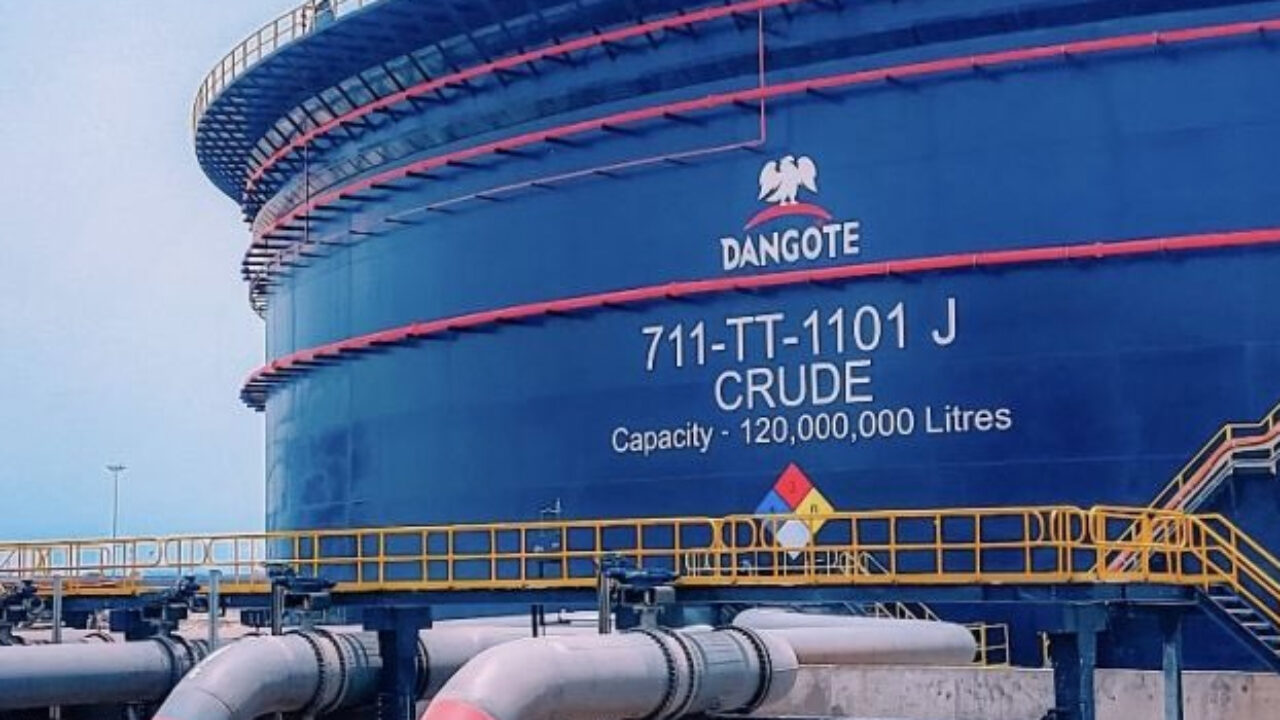
Dangote Petroleum Refinery and Petrochemicals has pushed its free product-delivery program into four new states, Kano, Imo, Anambra, and Nasarawa, in a move industry watchers say could tighten the squeeze on pump prices just as Nigeria’s downstream sector settles into a more competitive, refiner-driven era.
The scheme, which now covers ten states after launching in Lagos, Ogun, Rivers, Kaduna, Abuja, and Delta, does something unusual in Nigeria’s fuel trade: it puts the cost of haulage on the refinery’s own balance sheet rather than the marketer’s.
For independent operators who have long absorbed the price of getting product from depot to forecourt diesel for trucks, driver allowances, insurance, and the wear and tear of Nigeria’s roads, that is no small concession.
Speaking on the expansion, Fatima Aliko Dangote, the refinery’s Group Executive Director for Commercial Operations across Oil & Gas, WAEP, and Fertilizer, framed the move as an attempt to make sure domestic refining pays off beyond the plant gate.
In her telling, the company is not simply producing fuel at scale but actively re-engineering the cost structure of getting that fuel to Nigerians, calling it part of an effort to make fuel distribution more efficient and support more competitive pump prices across the country.
The implication is deliberate: this is not framed as charity but as an investment in the pricing dynamics the refinery itself will benefit from once cheaper, more reliable fuel reshapes the market it operates in.
For the Independent Petroleum Marketers Association of Nigeria (IPMAN), the appeal runs deeper than saved transport fees. National Publicity Secretary Chinedu Ukadike described a distribution system long plagued by a peculiar form of financial gridlock: marketers paying upfront for products only to wait days, sometimes weeks, before trucks are loaded and dispatched, leaving working capital frozen in limbo.
He said the arrangement effectively unlocks that working capital, since marketers’ money will no longer sit tied down waiting on loading and haulage.
That cash-flow relief, he argued, may matter as much to independent marketers’ survival as the delivery subsidy itself. Faster turnaround means capital can be redeployed into new stock more quickly, a meaningful advantage in a business where margins are thin, and volumes matter.
Ukadike’s central claim is a straightforward one: transportation is baked into what motorists pay at the pump, so stripping it out of the cost structure should, in theory, filter down to forecourt prices provided the savings are actually passed on rather than absorbed as extra margin.
He also pointed to reduced exposure to the risks of long-haul product movement accidents, spillage, and banditry along certain corridors as a secondary but real benefit of shortening the physical distance between refinery and retailer.
He urged Dangote to push the initiative further north, arguing that states furthest from the refinery’s Lekki complex have historically borne the heaviest transport costs and stand to gain the most from the scheme’s expansion.
He characterized the entire episode as evidence of what competition and deregulation can deliver in a sector once defined by subsidy dependence and supply bottlenecks.
The expansion lands as the 700,000-barrels-per-day Lekki refinery continues to grow its footprint both domestically and in export markets, a scale that gives it unusual leverage to absorb costs smaller players could not.
Whether the free-delivery model proves durable or whether it is eventually scaled back once market share targets are met will likely shape how much of the promised pump-price relief actually reaches consumers.
For now, the message from both the refinery and the marketers it supplies is aligned: cheaper logistics should mean cheaper fuel. Whether Nigerian motorists see that translate into sustained relief at the pump, rather than a temporary dip before prices creep back up, remains the question the market will be watching closest in the months ahead.
WHAT YOU SHOULD KNOW
Dangote Refinery is now absorbing delivery costs to Kano, Imo, Anambra and Nasarawa on top of its first six states, which frees up marketers’ cash and cuts transport risk. But the real test isn’t the logistics; it’s whether that savings gets passed down to the pump or quietly absorbed as extra margin along the way.
Until that shows up consistently in retail prices, the initiative is a promising input, not yet a guaranteed outcome for Nigerian motorists.