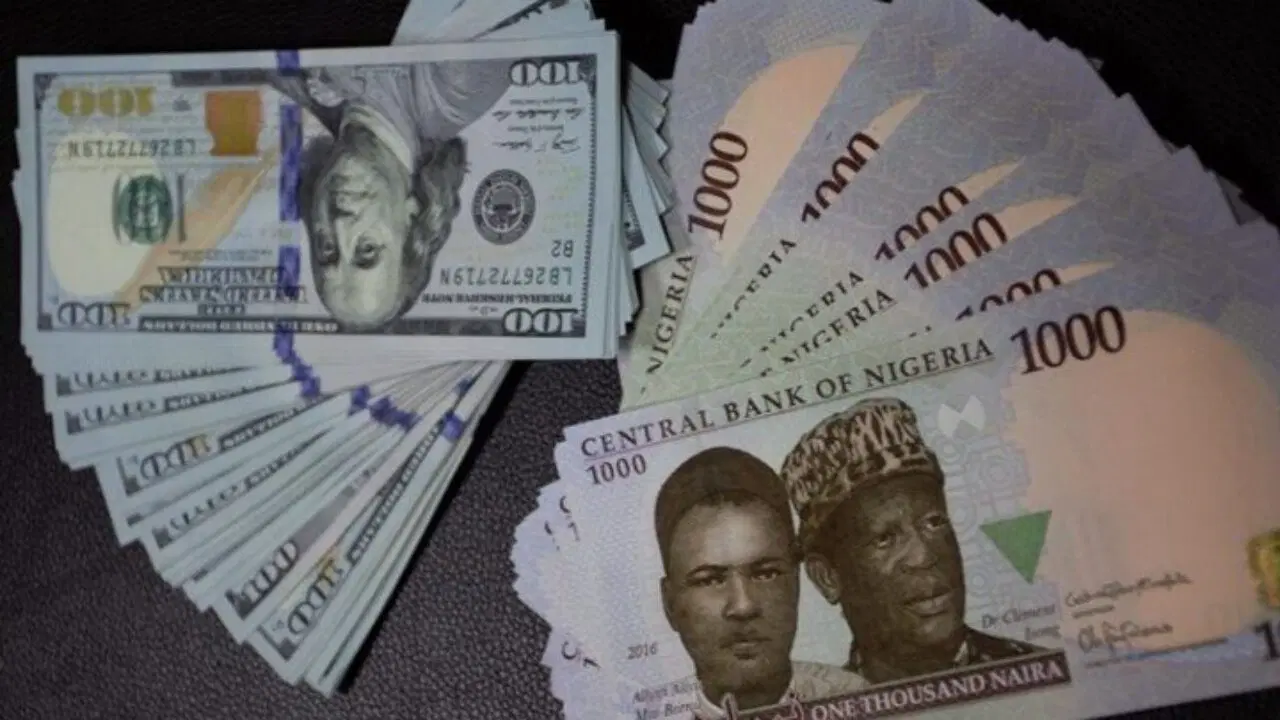
The naira opened the new trading week on largely stable footing, with the currency’s performance against the United States dollar continuing a pattern of cautious resilience that has defined the market through much of August.
As of Monday morning, the most recent official figures available from the Central Bank of Nigeria (CBN) still dated back to Friday’s close, leaving traders and analysts to work with slightly stale though broadly reliable benchmarks as the week began.
The CBN had yet to publish its Nigerian Foreign Exchange Market (NFEM) figure for Monday’s session at the time of reporting, a routine occurrence that nonetheless leaves a brief information gap for businesses and individuals planning transactions.
Without fresh data, Friday’s numbers remain the operative reference: the NFEM rate closed at ₦1,346.49 per dollar, with the dollar settling at ₦1,346.90, the volume-weighted average the CBN uses to reflect actual trading activity across the official window.
That Friday performance told a modestly encouraging story. It marked an improvement on Thursday’s ₦1,347.63, translating to a day-on-day gain of ₦1.14 for the naira.
Zoomed out to a weekly view, the currency’s strengthening was more pronounced, up ₦11.12 against the dollar compared with the previous week, a signal that whatever pressures have weighed on the naira through much of the year have eased, at least temporarily.
Intraday trading on Friday saw the dollar swing within a tight corridor, moving between ₦1,342 and ₦1,348 before settling near the top of that range.
The narrowness of the band itself is notable: wide intraday swings have historically been read as a sign of thin liquidity or nervous positioning, so a tighter range suggests calmer, more orderly trading conditions in the official market.
Away from the CBN-regulated window, the street rate tracked by platforms such as AbokiFX showed the dollar changing hands for approximately ₦1,405 on Friday, unchanged from Thursday’s quotation.
Some independent trackers put Saturday’s parallel rate marginally higher, near ₦1,410, underscoring how quickly informal-market quotes can shift even within a single weekend and how much they vary by source, location, and vendor.
Set against the official closing rate of ₦1,346.90, the spread between the two markets worked out to roughly ₦58.10 per dollar. That gap, while still economically meaningful, remains far narrower than the premiums of several hundred naira that characterized the market during periods of acute dollar scarcity in past years, a gap analysts often point to as a rough gauge of how well the official market is meeting real demand.
With the CBN’s own Monday figure still pending, a separate live foreign-exchange benchmark offered an early indication of where the currency stood as the week got underway, quoting the dollar at around ₦1,348.88, a level close enough to Friday’s official close to suggest no dramatic overnight shift.
Other independent trackers monitoring Monday activity showed a wider range of quotes, illustrating the patchwork nature of real-time forex data outside the CBN’s own reporting cycle.
Underpinning the naira’s recent composure has been an improvement in Nigeria’s external buffers. Data cited by AbokiFX put the country’s external reserves at $52.66 billion as of August 19, a figure that gives the central bank more firepower to intervene in the market and smooth out volatility when needed.
Alongside improved foreign-exchange liquidity more broadly, analysts point to the reserve position as a key factor supporting the naira’s stability in recent sessions.
For ordinary Nigerians and businesses converting currency, the published benchmarks are best treated as reference points rather than guarantees.
Actual rates offered by commercial banks and Bureau de Change operators can vary depending on transaction size, location, and prevailing conditions at the point of sale. Parallel-market quotes, in particular, should be read with caution, since they are known to shift over the course of a single trading day.
As Monday’s session unfolds, the most recent confirmed figures remain: ₦1,346.49/$ in the official NFEM window, ₦1,346.90/$ as Friday’s official closing rate, and roughly ₦1,405/$ in the parallel market.
Traders and households alike will be watching for the CBN’s Monday NFEM print later in the day to confirm whether the naira’s modest weekly gain carries into the new trading week.
WHAT YOU SHOULD KNOW
The naira remained broadly stable to start the week, trading at ₦1,346.49/$ officially (Friday’s last confirmed NFEM rate) and around ₦1,405/$ on the parallel market, a manageable ₦58 gap between the two.
This stability is being underpinned by stronger external reserves ($52.66 billion) and improved dollar liquidity, not just short-term calm. Still, anyone buying or selling forex should treat these figures as reference points only; actual rates from banks and BDC operators can vary by location, transaction size, and time of day.