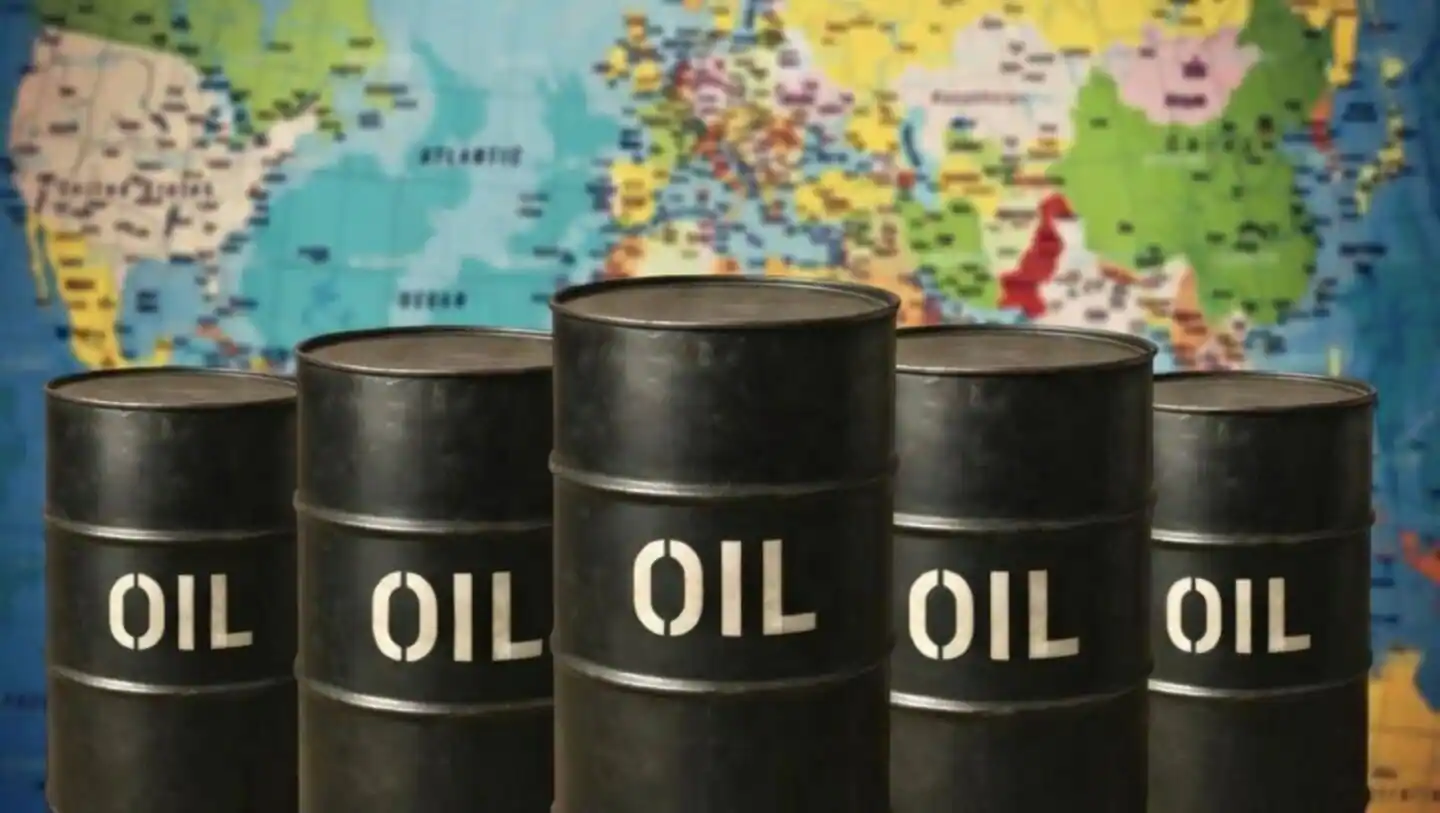
Oil prices pulled back sharply on Monday, with both benchmark contracts shedding more than a dollar a barrel, as traders locked in gains from a two-week rally ahead of an anticipated announcement from Washington on fresh sanctions targeting Iran, a move that could tighten Middle East supply even further.
By 06:49 GMT, Brent crude futures had fallen $1.49, or 1.6%, to $92.90 a barrel, while U.S. West Texas Intermediate crude dropped $1.74, or 2%, to $85.32.
The pullback marked a pause rather than a reversal: both contracts closed out last week with their second consecutive weekly gain, each climbing more than 5% as stalled U.S.-Iran peace talks kept a lid on shipping through the Strait of Hormuz, the narrow waterway through which roughly a fifth of the world’s oil once flowed freely.
The catalyst for Monday’s profit-taking is a press conference scheduled for 2 p.m. EDT (1800 GMT), where U.S. Treasury Secretary Scott Bessent is expected to unveil what he has previously described as the toughest sanctions regime ever imposed on Iran.
President Donald Trump has gone further still, threatening secondary sanctions against any nation or company caught trading with Tehran.
Analysts at Saxo Bank framed the market’s caution succinctly, noting that oil slipped after a two-week rally as traders awaited the US plan to economically isolate Iran due later Monday.
In practice, that means investors are less interested in fighting the tape than in seeing exactly how aggressive Washington intends to be and how Tehran responds.
Iran’s reaction has been anything but unified. The government has publicly condemned the looming sanctions, even as President Masoud Pezeshkian continues to press for a negotiated resolution, a split that market watchers say may prove decisive in the days ahead.
IG Markets analyst Tony Sycamore described the divide within Iran’s leadership as a tug-of-war between pragmatists who would rather de-escalate and hardliners prepared to dig in. His read on the coming days was blunt: the balance of power inside Tehran should become clear within the week.
That internal tension is already showing up in trade flows. Offers of Iranian crude to buyers in China have thinned out, and prices have climbed, as the U.S. blockade squeezes Tehran’s export channels, according to trade sources.
Yet Tehran has not closed the strait entirely; Iran granted passage through Hormuz to several Iraqi oil tankers over the weekend, state news agency IRNA reported Saturday, after repeated requests from Baghdad. It’s a reminder that even amid the standoff, Iran is calibrating rather than imposing a blanket blockade.
Beneath the day’s price swings, a more structural story is playing out. Morgan Stanley analysts pointed to one of the sharpest declines in oil-on-water in recent weeks, alongside falling onshore inventories, including in China, historically a buyer willing to absorb discounted, sanctioned barrels.
The bank’s analysts said the driver was a genuine reduction in supply, with aggregate exports from the Middle East slipping back toward March and April levels, a trend that led them to push back their timeline for when regional supply might recover.
Shipping data released Monday underscored just how constrained traffic through the chokepoint has become: fewer than 20 commodity vessels transited the Strait of Hormuz over the weekend, as parallel Iranian and U.S. restrictions choke off one of the world’s most critical energy arteries.
With Bessent’s announcement still hours away at the time of writing, Monday’s dip looks less like a shift in sentiment than a pause for breath.
The bigger questions are how far Washington is willing to go, whether Tehran’s pragmatists or hardliners gain the upper hand, and how long the Strait of Hormuz bottleneck persists—remain unresolved, and traders are unlikely to commit to a clear direction until they have answers.
WHAT YOU SHOULD KNOW
Oil’s Monday dip was profit-taking, not a change in direction. The real story is that Middle East supply is tightening fast, and today’s expected U.S. sanctions announcement on Iran, plus whether Tehran’s pragmatists or hardliners come out on top, will determine whether that squeeze gets a lot worse before it gets better.