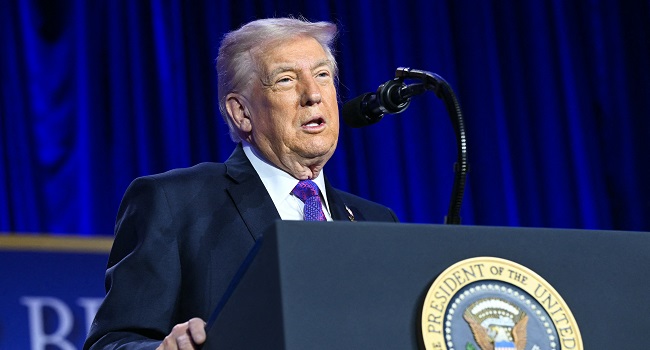
United States President Donald Trump has postponed his deadline for potential strikes on Iran’s energy infrastructure, signaling optimism that diplomatic efforts to end the ongoing war are making progress.
The announcement came as Israel confirmed fresh airstrikes on Tehran early Friday, underscoring the fragile and volatile state of the conflict.
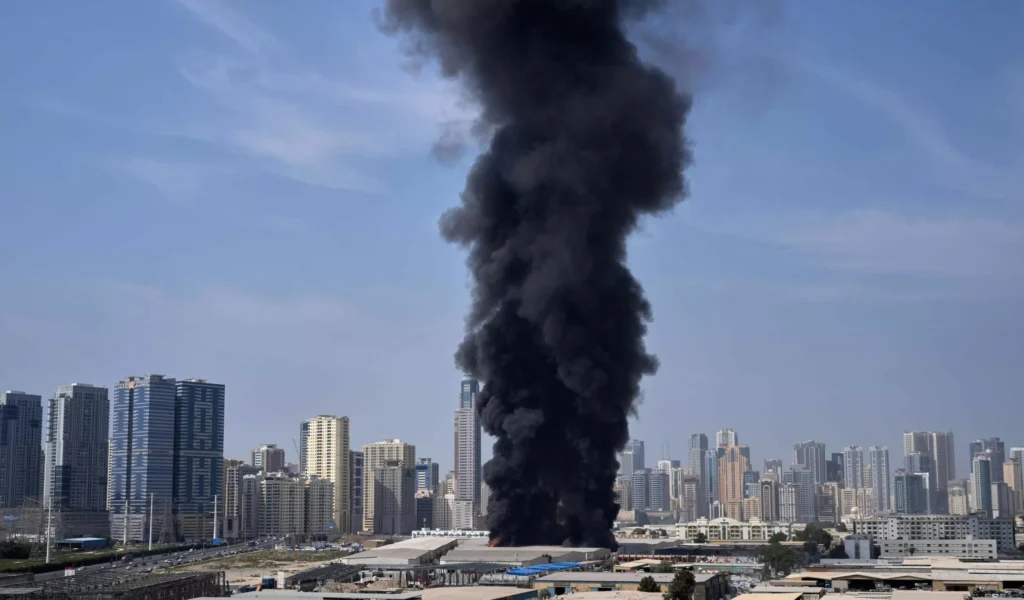
The war, which has significantly disrupted global energy markets, is approaching its second month. Speaking ahead of a G7 foreign ministers’ meeting in France, US Secretary of State Marco Rubio urged member nations to support efforts to reopen the strategically vital Strait of Hormuz, a key route for global oil and gas shipments.
Trump had initially issued a 48-hour ultimatum to Iran last Saturday, demanding the reopening of the strait to oil tankers or face the destruction of its power infrastructure. However, he has now extended the deadline twice. In a statement, he said, “As per Iranian Government request… I am pausing the period of Energy Plant destruction by 10 Days to Monday, April 6, 2026, at 8 P.M., Eastern Time.”
Roughly 20 percent of the world’s crude oil and liquefied natural gas flows through the Strait of Hormuz under normal conditions, making the standoff a major concern for global economies.
Despite earlier dismissing suggestions that he was eager for a peace deal, Trump maintained that negotiations were progressing positively. “Talks are ongoing and, despite erroneous statements to the contrary by the Fake News Media, and others, they are going very well,” he said via his Truth Social platform.
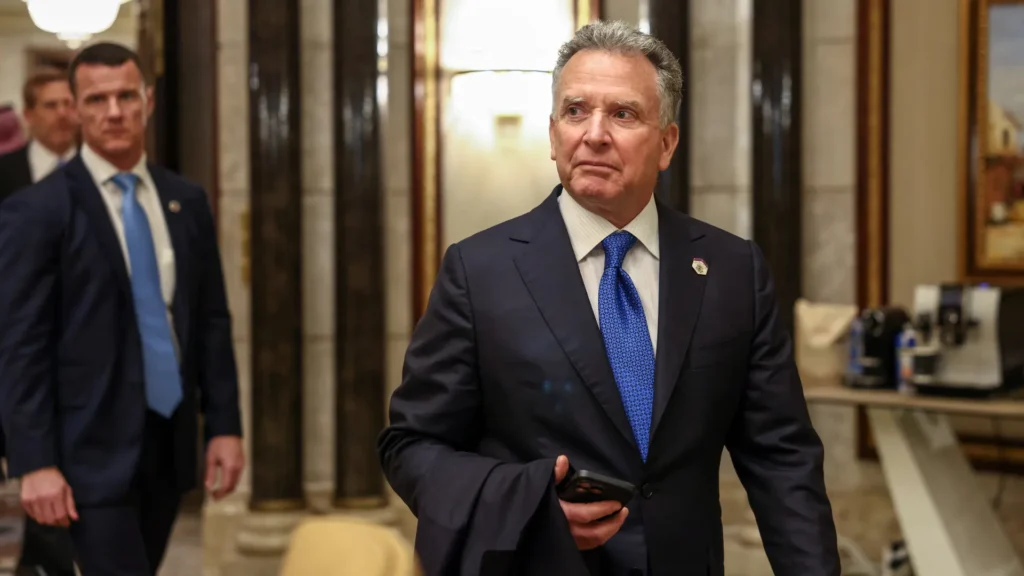
Trump’s envoy, Steve Witkoff, revealed during a cabinet meeting that there were “strong signs” Iran was open to negotiations. He confirmed that Washington had transmitted a 15-point “action list” to Tehran through Pakistani intermediaries, marking the first public acknowledgment of the proposal.
According to Witkoff, the United States hopes to convince Iran that continuing the conflict would only lead to further devastation, adding that diplomacy remains the best available path forward.
Iranian state-affiliated media reported that Tehran had responded to the US proposal and was awaiting further communication. The response reportedly included demands for war reparations and recognition of Iran’s sovereignty over the Strait of Hormuz. Iran also called for an end to US and Israeli military actions, including operations targeting allied groups such as Hezbollah.
Meanwhile, Israel intensified its military campaign. The Israeli military announced “a wide-scale wave of strikes targeting infrastructure of the Iranian terror regime in the heart of Tehran.” In Lebanon, explosions were reported in Beirut’s southern suburbs, a known Hezbollah stronghold.
Iran’s Islamic Revolutionary Guard Corps claimed responsibility for missile and drone attacks targeting Israeli locations and US-linked military facilities in the Gulf, further escalating tensions.
The conflict began on February 28 with coordinated US-Israeli airstrikes on Iran. Since then, Tehran has retaliated while effectively restricting access to the Strait of Hormuz, sending oil prices sharply higher and rattling financial markets.
Countries around the world are already responding to the energy fallout. Japan is reportedly considering temporarily easing restrictions on coal-fired power plants, while Vietnam has lifted certain fuel taxes to cushion rising petrol costs. The World Bank has also indicated readiness to intervene, warning that prolonged damage to critical infrastructure could worsen the crisis.
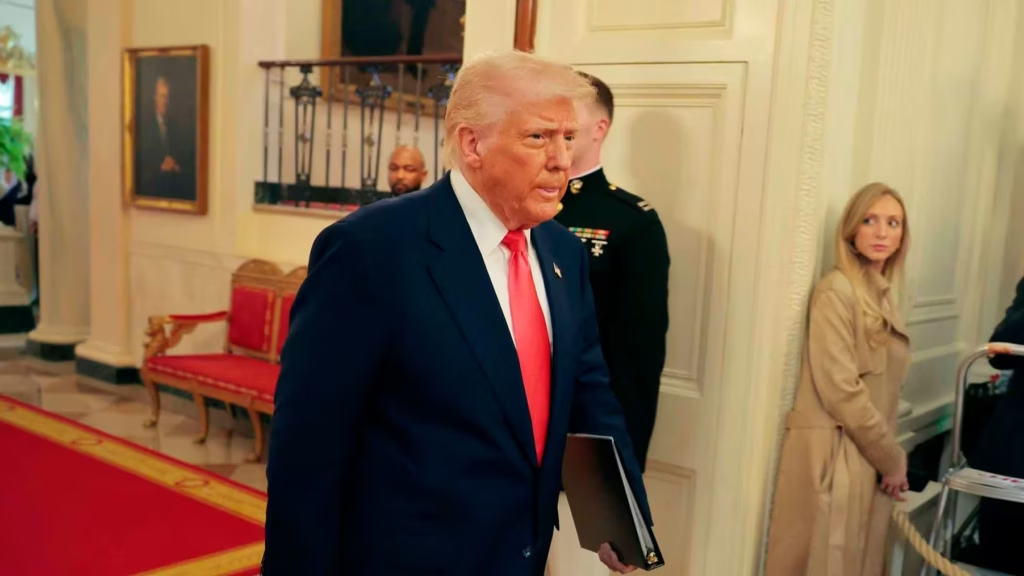
At the White House, Trump alternated between threatening severe military action and suggesting Iran was close to conceding. “They want to make a deal. The reason they want to make a deal is they have been just beat to shit,” he said during a televised meeting.
He also floated the possibility of the United States taking control of Iran’s oil resources, drawing comparisons to previous US actions in Venezuela.
In Israel, opposition leader Yair Lapid voiced growing concern about the toll of the war, warning that the military is overstretched. Reports suggest similar concerns were raised internally by senior military officials, including Lieutenant General Eyal Zamir.
Military spokesperson Effie Defrin stated that additional combat forces are required to secure a defensive buffer zone in Lebanon. Israel has indicated plans to extend control up to the Litani River, about 30 kilometers from its northern border.
Lebanon, which entered the conflict after Hezbollah launched rockets into Israel on March 2, has said it will lodge a complaint with the UN Security Council, describing Israeli strikes as a violation of its sovereignty.
Hezbollah confirmed that its fighters launched rockets into northern Israel on Friday, triggering air raid sirens and sending residents into shelters.
What you should know
The United States has delayed potential strikes on Iran’s energy facilities as diplomatic negotiations show signs of progress.
The conflict, which began in late February, has escalated across multiple fronts involving Israel, Iran, and allied groups like Hezbollah. The Strait of Hormuz remains a critical flashpoint due to its importance in global energy supply.
While talks continue, military actions persist, raising concerns about prolonged instability, economic disruption, and the risk of a broader regional war.