US President Donald Trump has issued a 48-hour ultimatum to Iran, demanding the reopening of the Strait of Hormuz or risking the destruction of its energy infrastructure.
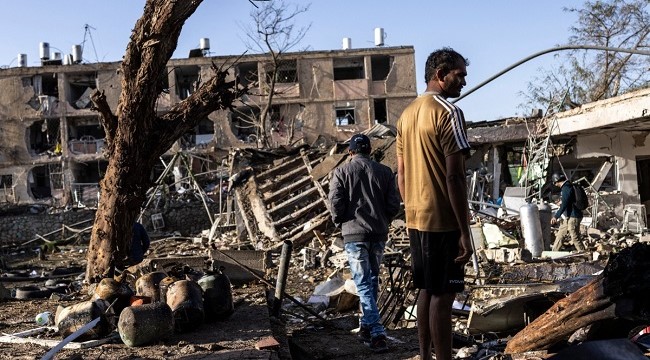
The warning came as tensions escalated following Iran’s most destructive missile strikes yet on Israel, which left more than 100 people injured in southern cities.
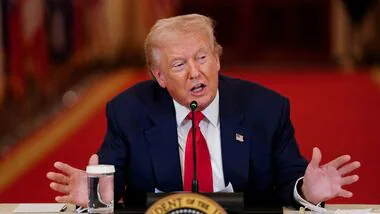
Trump, writing on Truth Social, said the United States would “hit and obliterate” Iranian power plants—”starting with the biggest one first”—if Tehran failed to fully reopen the vital shipping route within 48 hours.
Iran’s Foreign Minister, Abbas Araghchi, responded by stating that restrictions were only placed on vessels from countries involved in attacks against Iran, adding that other nations would be allowed safe passage.
In a counter-warning, Iran’s military threatened to target energy and desalination facilities linked to the United States and its regional allies, further heightening fears of a broader conflict.
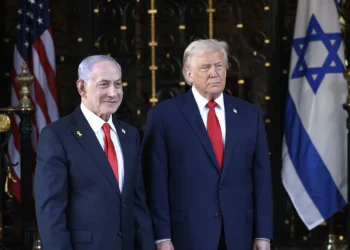
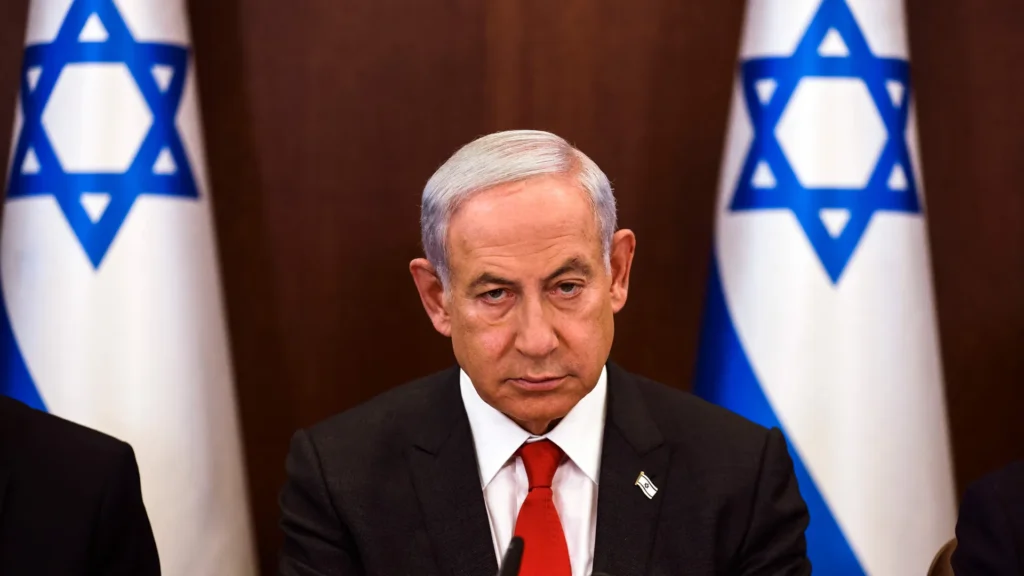
The ultimatum followed missile strikes that hit southern Israel, with casualties reported in Arad and Dimona. Israeli Prime Minister Benjamin Netanyahu vowed retaliation “on all fronts” after what he described as a “very difficult evening.”
The conflict has also drawn global concern due to its proximity to sensitive nuclear facilities. Iran said its strike on Dimona was retaliation for attacks on its nuclear site in Natanz, which houses uranium enrichment infrastructure.
Meanwhile, international bodies have urged restraint. Rafael Grossi, head of the International Atomic Energy Agency, called for “military restraint to avoid any risk of a nuclear accident.”
The Strait of Hormuz, a critical global oil route, remains effectively restricted, raising alarm across international markets. The disruption has pushed global oil prices above $105 per barrel, reflecting growing fears about long-term economic consequences.
A joint statement from several countries, including the United Kingdom, France, Germany, and others, condemned what they described as the “de facto closure” of the strait and pledged readiness to ensure safe maritime passage.
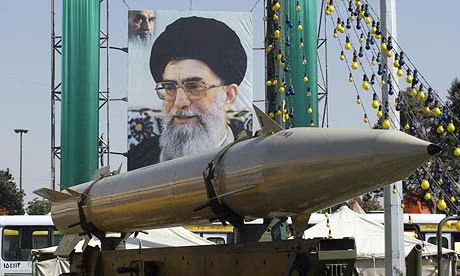
Analysts note that despite sustained US-Israeli military pressure, Iran has continued to demonstrate resilience and maintain its strike capabilities.
As the conflict enters its fourth week, tensions remain high, with both sides exchanging threats and expanding military actions across the region.
What you should know
The Strait of Hormuz is one of the world’s most critical oil shipping routes, carrying about 20% of global oil supply.
Any disruption has immediate global economic implications. Trump’s ultimatum signals a potential escalation from indirect confrontation to direct infrastructure attacks, which could widen the conflict across the Middle East.
With Iran warning of retaliatory strikes and global powers calling for restraint, the situation remains volatile and could significantly impact global energy markets and regional stability.