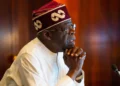
Osun State Governor Ademola Adeleke has formally deposed Oba Joseph Oloyede as the Apetumodu of Ipetumodu, following the monarch‘s conviction and sentencing by a United States federal court on charges of wire fraud, tax fraud, and money laundering.
The deposition order, signed by Governor Adeleke on May 7, 2026, marks one of the most significant actions taken against a sitting traditional ruler in Osun State in recent memory, and it was triggered not by events on Nigerian soil but by a courtroom in the American Midwest.
On August 26, 2025, the United States District Court for the Northern District of Ohio handed down a sentence of 56 months’ imprisonment against Oba Oloyede on three counts: wire fraud, making false tax returns, and engaging in transactions involving criminally derived property.

The monarch had entered a guilty plea, was tried publicly, and was ultimately convicted in proceedings that left little room for ambiguity about the court’s findings.
For months, news of the conviction circulated through social media channels and online forums, sparking public outrage and calls for accountability from citizens of Ipetumodu and across Osun State. But the Adeleke administration was careful, perhaps deliberately so, not to act on social media reports alone.
According to a statement issued by the governor’s spokesperson, Olawale Rasheed, the Osun State Executive Council had resolved as far back as last year that the Ministry of Local Government and Chieftaincy Affairs should formally write to the Ohio court, requesting a Certified True Copy (CTC) of the judgment.
It was only upon receiving that certified legal document that the government felt it had the evidentiary foundation to act.
That methodical approach speaks to a government acutely aware of the legal and political sensitivities involved in deposing a traditional ruler, a figure who, in Yoruba society, occupies not merely a ceremonial but a deeply spiritual and communal role.
By grounding its decision in a certified court document rather than online speculation, the Adeleke administration has sought to insulate the deposition from legal challenge.
“The government’s action was not based on social media reports,” Rasheed was emphatic in clarifying. “We waited for the certified true copy of the judgment.”
The deposition order is unsparing in its language. The government stated that the conduct established by the U.S. court, including the fact that Oba Oloyede pleaded guilty, was publicly tried, and was convicted and imprisoned, had brought the institution of Obaship and, specifically, the Apetumodu stool into disrepute.
In Nigerian traditional governance, the throne of an oba is regarded as sacred. It is not merely the seat of an individual but the embodiment of ancestral authority, community identity, and cultural continuity.
The notion that a man serving a nearly five-year prison sentence in a foreign country for financial crimes could continue to occupy such a stool was, in the government’s view, untenable.
The order stated that the move was necessary “to maintain peace, order, and good government, and to preserve the honor and integrity of the royal stool.”
With those words, Oba Joseph Oloyede’s reign as the Apetumodu of Ipetumodu was formally brought to an end.
The government has declared the stool of the Apetumodu of Ipetumodu vacant and has indicated that the necessary processes will be set in motion to appoint a successor.
The selection process for traditional rulers in Yorubaland is typically governed by established kingship laws, with ruling houses nominating candidates who must then receive the approval of the state government.
Governor Adeleke, evidently mindful of the tensions that can accompany such transitions, used the occasion to appeal directly to the people of Ipetumodu.
He urged the community’s sons and daughters to remain “peaceful and law-abiding” throughout the selection process, a call that reflects both the reverence Ipetumodu holds for its royal institution and the potential for disagreement that succession disputes can ignite.
The deposition of Oba Oloyede raises broader questions that will be debated well beyond the borders of Osun State. Can and should a Nigerian traditional ruler be held accountable for criminal acts committed on foreign soil? What obligations does a monarch owe not just to his community but to the moral authority his title represents?
For the Adeleke administration, the answers appear clear. The sanctity of the throne, it has been argued, demands more of its occupant than a crown and a staff; it demands integrity. And when that integrity is shattered in a federal courtroom in Ohio, the consequences must follow, no matter where in the world they land.
The stool of the Apetumodu of Ipetumodu now awaits a new occupant. The community of Ipetumodu, and indeed all of Osun State, will be watching closely.
WHAT YOU SHOULD KNOW
Osun State Governor Ademola Adeleke has deposed Oba Joseph Oloyede as the Apetumodu of Ipetumodu after the monarch was sentenced to 56 months in a U.S. federal prison for wire fraud, tax fraud, and money laundering.