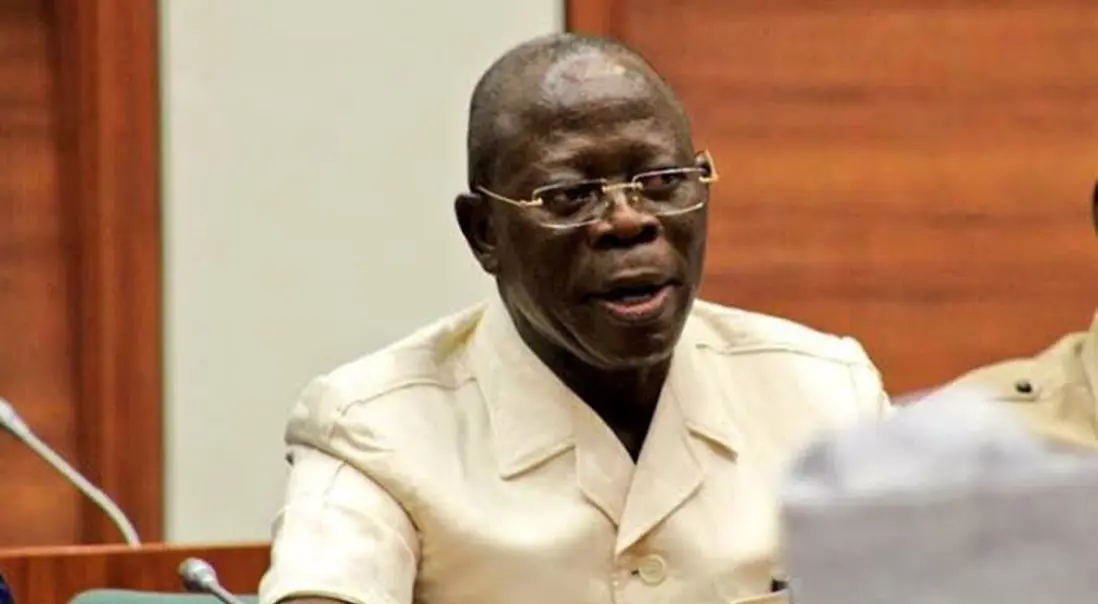
Senator representing Edo North, Adams Oshiomhole, has defended his controversial call for the nationalisation of MTN and other South African-owned companies operating in Nigeria, insisting that the country must place the safety and lives of its citizens above foreign investment interests.
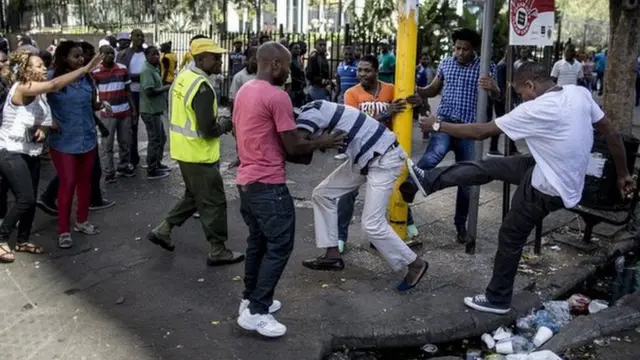
Speaking during an interview on Arise News on Tuesday, Oshiomhole reacted to renewed xenophobic attacks against Nigerians in South Africa, arguing that Nigeria must adopt stronger retaliatory measures to protect its people.
The senator had earlier made the proposal on the floor of the Senate, urging the Federal Government to respond firmly through what he described as reciprocal action against South African business interests in Nigeria.
“I am aware that MTN is quoted, and therefore Nigerian shareholders can hold on, but we take away the South African rights,” he said.
He further suggested that the Federal Government could temporarily nationalise affected companies, including financial institutions, before transferring ownership to Nigerian investors.
“And because of the issue… you nationalise, and then you re-privatise it so that Nigerians can take it over, and the profit they are taking out of Nigeria will be retained here. There will be no South African share in it,” he added.
Oshiomhole also claimed that South African authorities only reacted meaningfully after diplomatic pressure from Nigeria, referencing comments by South African President Cyril Ramaphosa.
“Thereafter, President Ramaphosa came out clearly to condemn the attack on Black people. He didn’t do that until I attacked his interests,” he stated.
The former Edo State governor stressed that economic gains should never outweigh human lives, insisting that Nigeria must not prioritise foreign direct investment over the safety of its citizens.
“If anything leads to the death of Nigeria, what is the value of wealth to the dead? We don’t want investors who invest at the expense of human blood. Even in my poverty, I value my life,” he said.
“Life is more important; we don’t want investors who invest at the expense of human blood. If you need Nigerian blood to service and you don’t care about Nigerian human blood because you want to attract investors, even in my poverty, I value my life.”
Oshiomhole linked his position to what he described as repeated attacks on Nigerians living in South Africa, alleging that perpetrators of past incidents had escaped justice.
“When a country, for the first time, killed Nigerians, they got away with it. The second time, they killed Nigerians; they got away with it. Third time, they killed Nigerians; they got away with it,” he said.
He further recalled an agreement reached during the administration of former President Muhammadu Buhari, alleging that it was not honoured.
“Under Buhari, there was an agreement. They broke it. They are killing Nigerians. Nobody is in prison for murder, or extrajudicial murder.
“You are talking about law. Is there no law protecting the life of foreigners who live in your country? Even if they were there illegally, there are legal ways to repatriate them, to deport them,” he added.
What You Should Know
The renewed debate over Nigeria’s diplomatic response to xenophobic attacks in South Africa has once again brought attention to the complex economic ties between both countries.
While South African firms like MTN maintain major investments in Nigeria, calls for retaliatory action often emerge whenever Nigerians are targeted abroad. Oshiomhole’s proposal reflects growing frustration among some political leaders over what they perceive as inadequate accountability for attacks on Nigerians.
However, any move toward nationalisation would likely trigger serious legal, economic, and diplomatic consequences, including investor concerns and potential tensions between both countries, making the issue a highly sensitive test of Nigeria’s foreign policy and economic priorities.