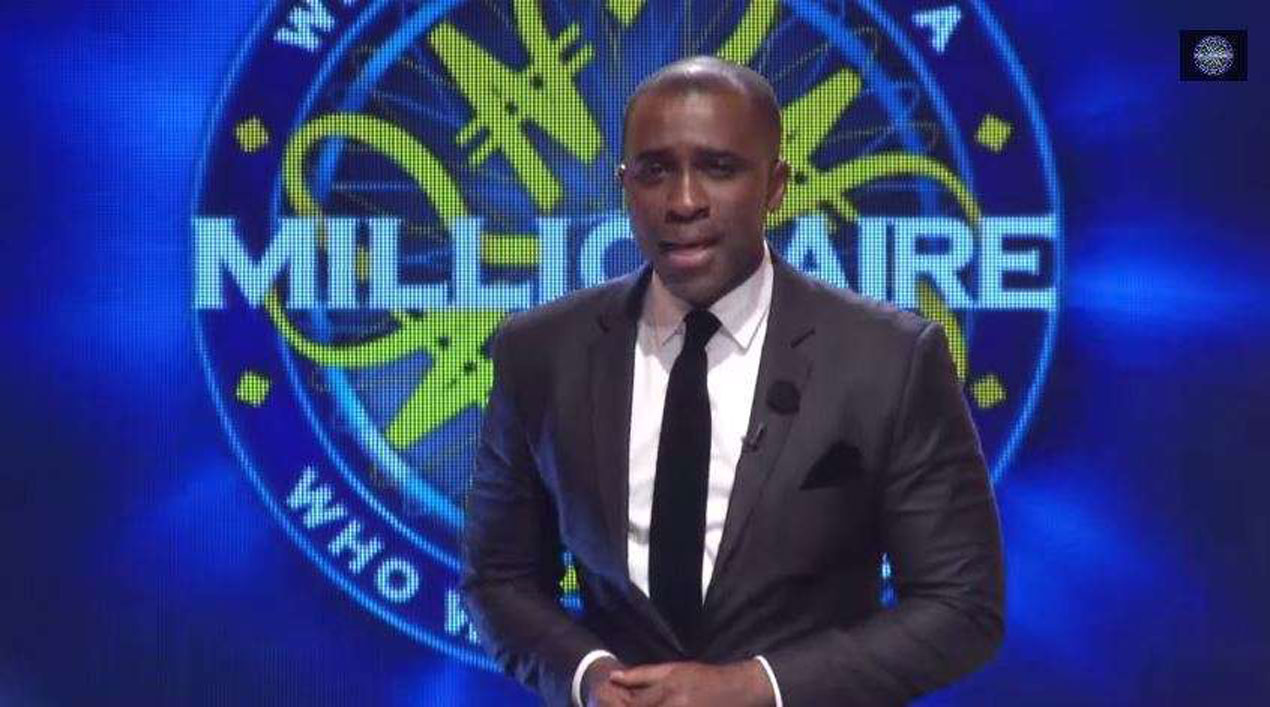
The veteran broadcaster’s candid confession about earning ₦100,000 a month while hosting one of Africa’s most-watched television programs has sparked widespread conversation about the realities of life in the Nigerian entertainment industry.
For millions of Nigerian viewers tuning in every week, Frank Edoho was the picture of success, impeccably suited, confidently commanding, and presiding over life-changing sums of money on national television.
What they did not know was that behind that polished exterior was a man quietly wrestling with a salary that barely matched the image he was required to project.
In a candid and revealing appearance at a seminar, footage of which he shared on his Instagram page, Edoho pulled back the curtain on the early financial realities of his tenure as host of “Who Wants to Be a Millionaire?” Nigeria’s most iconic game show, admitting that for the first two years, his monthly earnings sat just above ₦100,000.
“On ‘Who Wants to Be a Millionaire?’ the first two years of my salary per month were a hundred and something thousand naira,” he told the audience. “But I had to wear a suit as if I owned all the money.”
It is the kind of confession that resonates deeply in an industry where appearances are everything and vulnerability is rarely admitted publicly, and it has struck a chord.
Edoho’s admission lays bare a tension that is well known but seldom discussed openly in Nigeria’s media and entertainment circles: the significant disconnect between the image demanded of on-screen talent and the compensation actually offered behind closed doors.
As the face of a show that was giving away millions of naira to contestants, Edoho was expected to embody wealth, authority, and gravitas every time the cameras rolled. Wardrobe, diction, bearing, all of it had to signal prestige. Yet the man delivering that performance was, by his own account, earning a salary that many mid-level office workers might recognize.
It is a paradox not unique to Nigeria. Television personalities across the world have long spoken of the pressure to maintain a lifestyle commensurate with their public profile, often at personal financial cost.
But in Nigeria, where the naira’s purchasing power has been steadily eroded by decades of inflation, the figure Edoho cited carries an especially poignant weight.
The breakthrough, Edoho revealed, came with the arrival of telecommunications giant MTN Nigeria as a sponsor of the program. The corporate injection did not just change the show’s financial standing; it changed Edoho’s leverage.
Armed with the knowledge that the program now had a major backer, he made a move that many in his position might have hesitated to make: he walked into his boss’s office with a new salary figure.
“When MTN came on, I just said, ‘Let me just give a figure to my boss,'” he recalled, adding with characteristic frankness that he was not entirely sure it would be accepted. It was and then some.
“Once I mentioned the figure, okay, we’ll give you three months’ back pay,” he said.
It was not merely a pay rise; it was a validation. A signal to Edoho and, in retrospect, to everyone listening to him recount the story that knowing your worth, and being willing to state it plainly, can be the difference between years of undervaluation and a career-defining shift in fortune.
The improved deal, Edoho says, acted as a catalyst for broader career opportunities. The entertainment industry, much like many others, tends to reward confidence with access, and suddenly, he was in demand beyond the studio floor.
“The rewards came in. I was hosting events all over the place. I was flying and doing all kinds of things,” he said.
Event hosting, once perhaps an occasional supplement to his television work, became a significant pillar of his professional life. He was travelling the country, becoming not just a face on a screen but a presence at the most prominent gatherings on Nigeria’s social and corporate calendar. The renegotiation, it seems, had opened more than just his bank account; it had opened rooms.
True to the setting of a seminar, presumably attended by young professionals and aspiring talents, Edoho did not let the moment pass without drawing a lesson from his own journey.
His advice was measured and hard-won: stay focused, compartmentalize your struggles, and keep your eyes on the prize, regardless of the turbulence unfolding in your personal life.
“Although my life had some ups and downs and everything, but like they said, you know, it’s just the same microcosm of you facing trouble in your business… learn how to compartmentalize and just push it aside; concentrate your eyes on the prize,” he said.
It is counsel that reads less like a motivational platitude and more like a field report from a man who has genuinely lived it.
The reaction online has been swift and layered. Many Nigerians were quick to contextualize the ₦100,000 figure against the economic realities of the mid-2000s when Edoho began hosting the show.
While ₦100,000 today struggles to cover basic living expenses in Lagos or Abuja, the same sum in that era held considerably more purchasing power, a point numerous commenters were eager to make as they debated just how modest, or otherwise, his early earnings truly were.
Others set aside the arithmetic altogether, choosing instead to focus on the broader narrative: a young broadcaster, undervalued and under pressure, who held his composure, dressed the part, delivered the performance, waited for the right moment, and then negotiated his way to a better life.
In a country where hustle culture is both celebrated and necessary, it is the kind of story that lands.
Frank Edoho has hosted “Who Wants to Be a Millionaire?” In Nigeria, across multiple seasons, he remains one of the most recognizable faces in Nigerian broadcasting.
His candid remarks are a rare and welcome reminder that even the most assured figures on our screens have had to fight, quietly and often invisibly, to be paid what they are worth.
WHAT YOU SHOULD KNOW
Frank Edoho’s story is ultimately one of patience, perception, and the power of knowing your moment.
For two years, he fronted one of Nigeria’s biggest television programs while earning a modest ₦100,000 monthly, smiling through the cameras, wearing the suits, and betraying nothing.
The moment corporate sponsorship shifted the show’s financial landscape, he moved decisively, named his figure, and walked away with back pay.