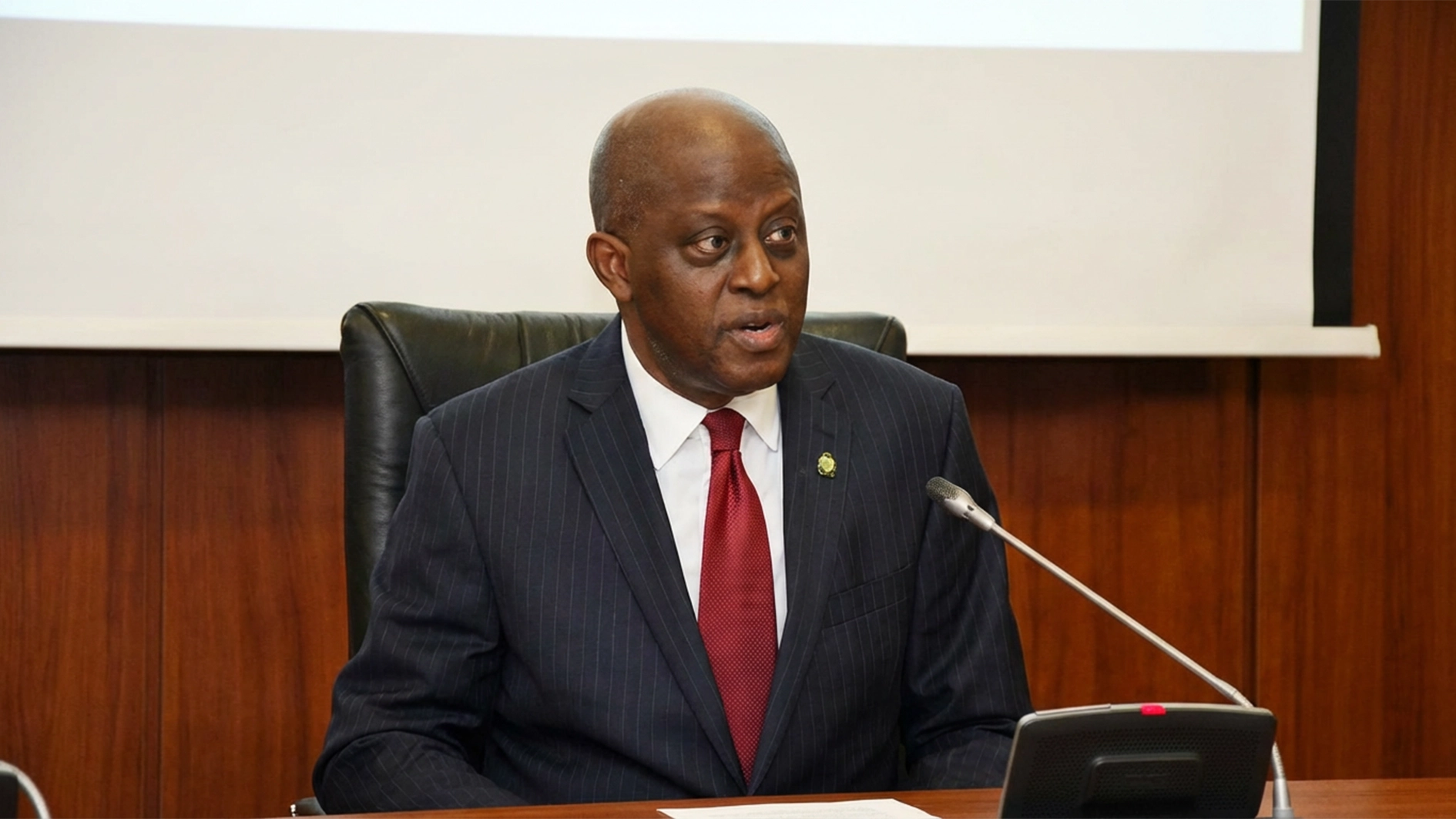
Central Bank of Nigeria (CBN) Governor Olayemi Cardoso announced on Thursday that 32 banks have already satisfied the revised minimum capital requirements under the ongoing recapitalisation programme, well ahead of the deadline.
Speaking at the 2026 Monetary Policy Forum in Abuja, Cardoso described the milestone as “commendable” industry compliance that has markedly strengthened the resilience of the Nigerian financial system.
The achievement, he said, equips banks to mobilize long-term capital, finance productive investments, and support the country’s ambition of becoming a $1 trillion economy.
“The banking sector recapitalization program has recorded commendable progress, with 32 banks having already met the revised capital requirements,” Cardoso stated. “This achievement has significantly strengthened the resilience and capacity of the Nigerian banking system, positioning it to effectively mobilize long-term capital, support productive investment, and play its critical role in enabling the transition towards a $1.0 trillion economy.”
The recapitalization drive forms the cornerstone of a wider package of reforms aimed at overhauling governance, risk management, and supervisory oversight in the banking industry. Among the key measures highlighted by the governor are the introduction of a risk-based capital framework, a phased exit from regulatory forbearance, stricter enforcement of insider lending rules, and tighter restrictions on credit to major non-performing obligors.
Supervisory capabilities have also been enhanced through digital tools, including improved early warning systems, off-site surveillance, and stronger cross-border oversight of Nigerian banks with international operations.
Cardoso credited disciplined monetary policy with reversing a punishing inflation trajectory. Headline inflation, which peaked at 34.8% in December 2024, fell sharply to 15.06% by February 2026.
The Monetary Policy Committee (MPC) responded with aggressive rate hikes—totaling 875 basis points in 2024—before shifting to gradual easing, cutting the policy rate to 26.5% in February 2026.
Internal simulations, the governor noted, indicated that inflation would have deteriorated further without these measures. He emphasized the need for continued coordination between monetary and fiscal authorities to lock in the gains.
On the foreign exchange front, the CBN has cleared over $7 billion in verified FX backlogs, a move that helped restore market confidence. The introduction of a rule-based willing-buyer, willing-seller system, coupled with tighter reporting standards and improved interbank trading surveillance, has narrowed the parallel market premium to below 2%.
Diaspora remittances have emerged as a reliable pillar of external financing. Monthly inflows have surged from around $200 million to $600 million following reforms in settlement systems and regulatory controls. The CBN is now targeting $1 billion per month by the end of 2026, describing the increase as a structural shift rather than a temporary phenomenon.
Gross external reserves rose to $50.12 billion in February 2026, up from $38.34 billion a year earlier (with some reports citing even higher figures around $50.45 billion mid-February). Net reserves climbed dramatically from $3.99 billion at the end of 2023 to $34.80 billion by the end of 2025. Cardoso attributed the improvement to better reserve management, diversification—including gold integration—and enhanced external asset frameworks.
One of the earliest and most impactful reforms, he said, was the sharp curtailment of Ways and Means financing to the federal government. The facility dropped from a peak of N26.95 trillion in May 2023 to N2.84 trillion by January 2026, restoring statutory compliance and signaling the end of fiscal dominance over the central bank.
Nigeria’s reform efforts have earned global plaudits. Sovereign credit ratings were upgraded by Fitch and Moody’s, while the country exited the FATF grey list in October 2025. The International Monetary Fund (IMF) also acknowledged progress in transparency and policy discipline during its 2025 Article IV consultation.
Additional reforms have modernized the payments system through the adoption of ISO 20022 standards, strengthened fraud management, and expanded financial inclusion initiatives, including the Women’s Financial Inclusion Dashboard and improved consumer protection.
Looking ahead, Cardoso said the CBN will focus on consolidating gains by driving inflation into single digits, sustaining exchange rate stability, and further bolstering reserves. Domestic growth is projected at 4.49% for 2026, though he cautioned against global headwinds such as geopolitical tensions and oil price volatility.
“The most challenging phase of macroeconomic adjustment is now behind us,” the governor declared. He stressed that sustained collaboration among fiscal authorities, banks, the private sector, and other stakeholders remains essential to preserving the hard-won stability and laying the foundation for stronger, more inclusive growth.
As Nigeria approaches the final stretch of its banking recapitalization exercise and broader reform agenda, Thursday’s disclosures from the Monetary Policy Forum suggest a financial system that is not only more robust but increasingly aligned with the country’s long-term economic aspirations.
The coming months will test whether this momentum can be maintained amid lingering domestic and external risks.
WHAT YOU SHOULD KNOW
Nigeria’s banking sector has achieved a major milestone, with 32 banks already meeting the revised minimum capital requirements under the CBN’s recapitalization program.
This progress, combined with aggressive monetary tightening, FX market reforms, surging diaspora remittances, and strengthened external reserves, signals that the most difficult phase of macroeconomic adjustment is now behind us.
These reforms have significantly bolstered the resilience of the financial system and positioned Nigeria better to pursue its ambition of becoming a $1 trillion economy in the coming years.