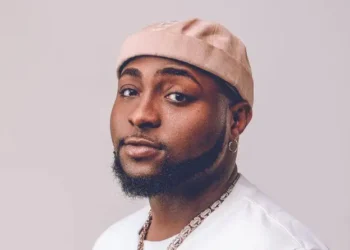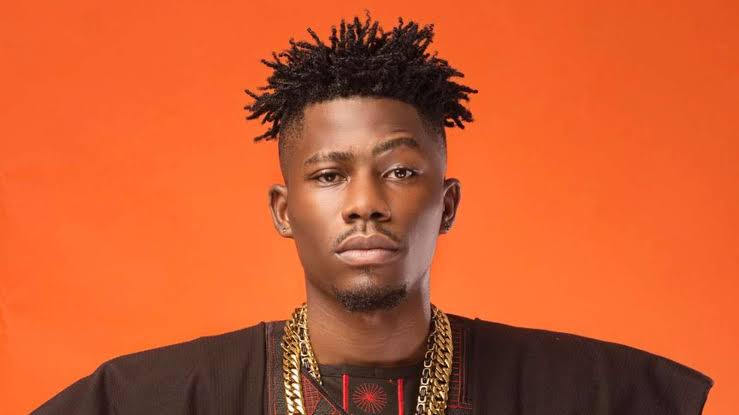
YCee once owned Nigerian airwaves with the street-hop swagger that turned “Jagaban” into a generational anthem, which made his recent fade from the spotlight one of Afrobeats’ quieter puzzles.
On Thursday, the mystery got an answer delivered not in a press conference or a glossy magazine sit-down but in the freewheeling, unfiltered theater of a livestream.
Nigerian rapper and singer Oludemilade Martin Alejo, known to millions simply as YCee, sat down virtually with comedian-turned-streamer Carter Efe, whose own meteoric rise from skit-making to chart-adjacent stardom has made his livestreams a magnet for the industry’s biggest names.
It was there, in that casual, conversational setting, that YCee finally addressed the years of relative silence that had followed one of the most dominant streaks in Nigerian pop music.
His explanation was disarmingly simple. He had not vanished, he said he had gone inward. He took a break from music to concentrate on personal development, choosing a season of introspection over the relentless release cycle that defines the streaming era. He described it as a journey of self-discovery, one that has now run its course.
“I have been on the mountain,” he told Carter Efe before declaring that the wait was over: he is back.
The conversation also gave YCee room to revisit a piece of his own mythology that fans have long wondered about the origin of his 2015 breakout hit and informal nickname, “Omo Alhaji.”
He explained that his father is Muslim, even though he himself does not practice the faith, a detail that recontextualizes a title many assumed was pure street branding rather than autobiography. Pressed further on where he stands these days spiritually, he distilled his personal philosophy down to a single word: love.
YCee’s journey began in 2012 as a largely unknown act signed to Tinny Entertainment, juggling studio sessions with a marine biology degree at the University of Lagos that briefly pulled him away from music altogether, an early, smaller-scale rehearsal, perhaps, for the longer hiatus he has just emerged from.
His 2015 single “Condo,” featuring Patoranking, first pulled him into the national conversation, and he followed it with “Jagaban,” a song so ubiquitous it effectively became his second name.
Those records anchored his 2017 debut album “The First Wave,” which also housed “Juice,” “Omo Alhaji,” and other singles that turned YCee into one of the defining voices of Nigeria’s mid-2010s street-pop wave.
A Sony Music deal and, later, the launch of his own imprint, ANBT (“Ain’t Nobody Badder Than”), after parting ways with Tinny Entertainment, further cemented his standing as both a hitmaker and an industry player in his own right.
That résumé is precisely why his extended absence registered so loudly in a famously fast-moving industry and why his low-key reappearance, on a streamer’s couch rather than a stage, has carried weight.
Carter Efe, for his part, has increasingly positioned his livestreams as a kind of informal town square for Nigerian entertainment, having previously hosted major industry figures for freewheeling, headline-generating conversations.
WHAT YOU SHOULD KNOW
YCee isn’t retired, he’s back. After stepping away to focus on personal growth and self-discovery, the “Jagaban” hitmaker confirmed on Carter Efe’s livestream that his hiatus is over, while also opening up on the family roots behind his “Omo Alhaji” name and a personal philosophy centered on love.
For an artist whose catalog once dominated Nigerian airwaves, the headline isn’t why he left it’s that he’s ready to make music again.