Nigeria’s external reserves have crossed the $51 billion mark for the first time since the global financial crisis era, a milestone the Central Bank of Nigeria (CBN) had not expected to reach until the close of the year.
Central bank data showed gross reserves stood at $51,035,544,733.65 as of June 18, the highest level since January 20, 2009, when the buffer touched roughly $51.07 billion.
The figure caps a month of uninterrupted gains and effectively fulfills, six months early, the $51.04 billion target the CBN had set for year-end 2026 in its macroeconomic outlook released last December.
The reserve build-up this month has been remarkably linear. Reserves opened in June at $49.80 billion, pushed past the $50 billion threshold by June 5 to hit $50.12 billion, advanced to $50.81 billion by June 15, and gained a further $230 million over the following three days to close at $51.04 billion on June 18. That amounts to a gain of more than $1.2 billion, or roughly 2.5 percent, in just over two weeks on top of an estimated $1.22 billion added in May alone.
Reserves are up by more than $13 billion, or over 34 percent, from the roughly $37.8–38 billion level recorded in mid-June last year, a pace of accumulation officials and analysts attribute to a confluence of stronger oil earnings, sovereign bond issuance, steady diaspora remittance inflows, and the continuing effects of foreign exchange market reforms first introduced in mid-2023.
The build-up traces back to the Tinubu administration’s overhaul of the FX market, which unified previously fragmented exchange windows and introduced greater flexibility, a shift that triggered sharp naira depreciation initially but has gradually improved transparency and liquidity.
The naira has firmed alongside the reserve gains: it closed May 2026 around ₦1,372 to the dollar, a marked improvement on the roughly ₦1,585 it traded at a year earlier, and has held broadly steady near ₦1,360 in the official market through mid-June.
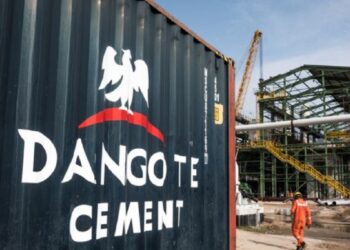
Expanding domestic refining capacity, notably at the Dangote Refinery, has also been credited with easing the country’s historic dependence on imported petroleum products, reducing one of the biggest sources of dollar demand and, by extension, pressure on the reserve position.
CBN Governor Olayemi Cardoso, addressing the reserve trajectory in May, said the growing buffer “continues to reinforce investor confidence in the Nigerian economy and support exchange rate stability.”
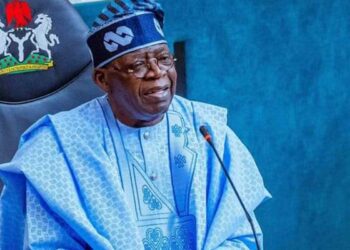
Dr. Muda Yusuf, chief executive officer of the Centre for the Promotion of Private Enterprise (CPPE), told reporters the figures were evidence that the federal government’s reform agenda was bearing fruit. “That shows we are making progress,” he said. “It shows that the [President Bola Tinubu’s] reforms are yielding results.”
Yusuf cautioned, however, that the composition of the reserves matters as much as their size. He urged the CBN to diversify its sources of inflows rather than lean too heavily on portfolio investment, which can reverse quickly in response to global sentiment shifts. “This is important so that it is not too concentrated in terms of the sources on portfolio flow,” he said. “It has to be properly diversified, non-oil exports, oil exports, FDI, etc. That will ensure more resilience.”
That concern echoes a note of caution sounded by the International Monetary Fund. In its latest Article IV review of the Nigerian economy, the Fund suggested that the speed of reserve accumulation may be slowing the naira’s adjustment toward its estimated fair value, with the IMF’s Real Effective Exchange Rate assessment pointing to continued undervaluation.
The advice underscores a delicate balancing act facing the CBN: maintaining a robust buffer against external shocks while allowing market forces room to correct currency misalignments.
For now, the bigger reserve cushion gives the central bank more room to maneuver both in defending the naira against volatility and in meeting the country’s external obligations, from debt service to import financing.
Analysts say that with the 2026 target already reached, attention will shift to whether the CBN tempers its pace of dollar accumulation in the second half of the year, particularly with elections on the horizon and the historical tendency of election cycles to introduce policy uncertainty and capital flow pressures.
Whether Nigeria can sustain, let alone build on, this 17-year high may depend less on the headline number than on the diversification Yusuf and others are calling for: broadening the base of inflows beyond oil and portfolio capital toward more durable sources like non-oil exports and foreign direct investment.
WHAT YOU SHOULD KNOW
Nigeria’s external reserves hit $51.04 billion on June 18, 2026, a 17-year high driven mainly by FX reforms, stronger oil earnings, and steady diaspora remittances.
While the milestone signals real economic progress and gives the CBN stronger firepower to defend the naira, its durability depends on diversifying inflow sources beyond oil and portfolio capital toward non-oil exports and FDI, since over-reliance on volatile portfolio flows leaves the buffer vulnerable to reversal.