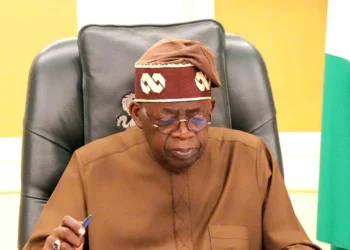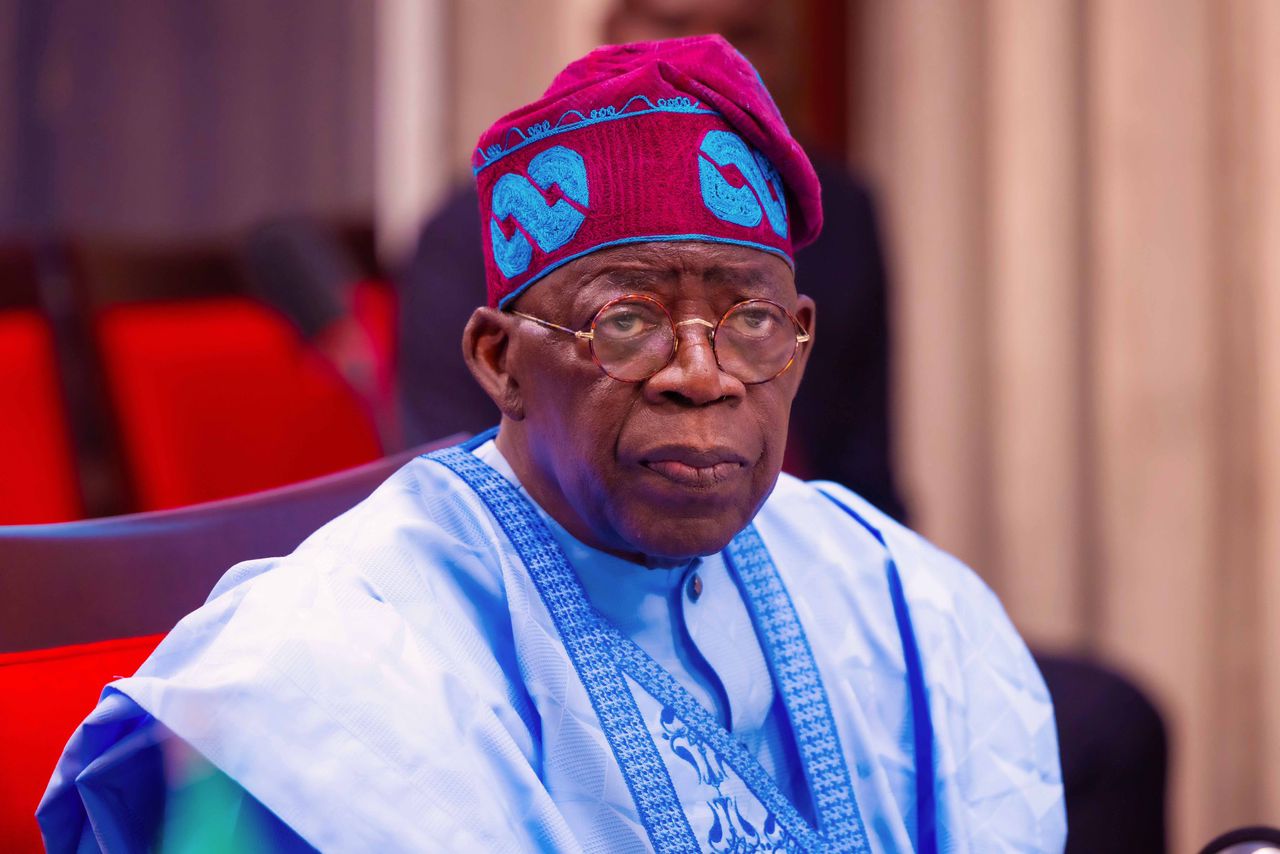
President Bola Tinubu has congratulated Governor Biodun Oyebanji on his re-election as governor of Ekiti State, describing his victory as a “resounding” endorsement of his first-term record and calling on the opposition to set aside their rivalry and support the governor’s second-term agenda.
The President’s message, relayed in a statement by his spokesman, Bayo Onanuga, came hours after the Independent National Electoral Commission (INEC) declared Oyebanji the winner of Saturday’s poll, making him the first governor in Ekiti’s history to win a back-to-back re-election, a feat that had eluded his predecessors in a state long regarded as one of Nigeria’s most politically volatile battlegrounds.
According to results announced early Sunday by INEC’s Chief Returning Officer, Professor Adenike Oladiji, Vice-Chancellor of the Federal University of Technology, Akure, Oyebanji of the All Progressives Congress (APC) polled 319,224 votes, comfortably outpacing the Peoples Democratic Party’s Wole Oluyede, who managed roughly 40,500 votes, and the African Democratic Congress’s Dare Bejide, who trailed in third place. Thirteen other challengers were also on the ballot, underscoring the scale of the governor’s dominance.
The governor’s strength was not confined to his usual strongholds. The APC carried all 16 local government areas, including Efon, the home turf of the PDP’s candidate, though the PDP did manage a narrow second-place finish there.
The closest contest of the night came in Ikere, where the margin between the leading parties narrowed to just over a thousand votes, still comfortably enough for an APC win.
Turnout, however, remained modest, with fewer than four in ten registered voters accredited on election day, a pattern that has become familiar in Nigerian off-cycle state elections.
Speaking after the declaration, the APC’s collation agent, Senator Cyril Fasuyi, called for unity among the contestants, urging that “everybody come on board to support the governor in his developmental drive,” a sentiment that echoed the president’s own appeal hours later.
In his statement, Onanuga said the president viewed the outcome as more than a routine electoral win. He described the result as a clear vote of confidence in continuity, stability, and people-centered governance, pointing to what he characterized as significant strides recorded during Oyebanji’s first term in infrastructure, agriculture, youth employment, education, healthcare, and rural development carried out under the governor’s self-styled BAO agenda.
The president urged Oyebanji to remain magnanimous in victory and to carry all Ekiti people along as he consolidates those gains over the next four years.
He also commended the governor’s rivals for testing their popularity at the polls but made clear that the moment had now passed for contestation: it was time, he said, for the opposition to rally around Oyebanji as the state moved into its next phase of governance.
Tinubu went further, reaffirming the federal government’s commitment to deepening its partnership with the Ekiti State Government to deliver the dividends of democracy and to accelerate his administration’s Renewed Hope Agenda nationwide. He closed his message with a prayer for wisdom, strength, and good health for the governor as he continues to lead the South-West state.
Beyond the congratulatory note, the president used the moment to credit Ekiti voters for what he described as an orderly and largely peaceful exercise, praising them for the trust they reposed in Oyebanji at the polls.
He also commended security agencies for maintaining law and order throughout the process, though the election was not entirely without incident, with observers flagging isolated cases of vote-buying and at least one attack on journalists covering the exercise in Iyin-Ekiti.
Tinubu charged INEC to sustain the momentum, urging the commission to keep investing in the conduct of peaceful, free, fair, and credible elections as attention now turns to the Osun State governorship election scheduled for August and, beyond that, next year’s general election, a contest in which Saturday’s result will likely be read by APC strategists as an early marker of the party’s standing in the South-West.
With the results now official, attention is expected to shift to how the opposition parties respond to Tinubu’s call for unity and to preparations for Oyebanji’s second-term inauguration.
For the governor and his party, however, Saturday’s outcome stands as both a personal political milestone and a statement of organizational strength in a state where holding onto power has historically proved difficult for Nigerian governors.
WHAT YOU SHOULD KNOW
Tinubu’s message to Oyebanji isn’t just a congratulatory note; it’s a signal. By pairing praise for the governor’s “resounding victory” with a direct call for the opposition to “rally round” him, the president is moving Ekiti from contest mode to consolidation mode fast.
Oyebanji is now the first governor in Ekiti’s history to win back-to-back terms, sweeping all 16 LGAs with 319,224 votes over seven times his closest rival’s tally.
In a state notorious for unseating incumbents, that’s the real headline. Everything else, the praise, the prayers, and the Osun warning shot, flows from that single, historic fact.