The World Health Organization (WHO) on Thursday formally closed the book on one of the most closely watched infectious disease scares of the year, declaring an end to the hantavirus outbreak that swept through the passengers and crew of the Dutch-flagged expedition cruise ship MV Hondius.
The announcement came after the final identified contact of an infected person completed a lengthy quarantine period, tested negative for the virus, and returned home, the last loose thread in a contact-tracing operation that had, at its peak, stretched across 33 countries and territories.
“Today, the final contact of a person exposed to hantavirus on the cruise ship MV Hondius completed their quarantine period, tested negative, and returned home,” WHO Director-General Tedros Adhanom Ghebreyesus told reporters at a briefing on Thursday. “No further cases have been reported since the 25th of May. Therefore, WHO considers the hantavirus outbreak over.”
The outbreak’s origins trace back to April 1, when the MV Hondius set sail from Ushuaia, Argentina, bound for remote islands in the South Atlantic, including Tristan da Cunha, before turning north toward Tenerife in Spain’s Canary Islands.
It was during this voyage that passengers began falling ill with what would later be confirmed as the Andes strain of hantavirus, a variant found in the Andes mountain region of Argentina and Chile.
What made the outbreak unusual and drew the attention of global health authorities was the strain involved. The Andes virus is the only known hantavirus capable of spreading through close, prolonged contact between humans, a marked departure from the typical transmission route for hantaviruses, which almost always pass from rodents to people through contact with urine, droppings,, or saliva, rather than person to person.
By the time the outbreak was contained, the WHO recorded 13 confirmed cases and three deaths, a case fatality ratio authorities had flagged early on as alarmingly high. Symptoms typically begin with fever, headache, muscle aches, and gastrointestinal distress before, in severe cases, progressing rapidly to respiratory failure and fluid build-up in the lungs.
The scale of the contact-tracing effort was extraordinary for a single-vessel outbreak. Tedros said health authorities ultimately identified and monitored more than 650 contacts, following up with them through national health systems in 33 countries and territories.
High-risk contacts were placed under quarantine and observation for up to 42 days, reflecting the extended incubation period hantavirus infections can have.
The logistics were complicated by the ship’s itinerary. Passengers had already disembarked at several stops, including Saint Helena, Cabo Verde, and Tenerife, before the cluster was fully recognized, forcing investigators to track down travelers who had already scattered to their home countries.
In the United States, evacuated passengers were flown to specialized biocontainment facilities, including the National Quarantine Unit at the University of Nebraska Medical Center, for close monitoring.
Tedros singled out the country for praise, crediting Spanish authorities with establishing a safe zone in Tenerife where the ship’s remaining passengers and crew could disembark before being repatriated under quarantine, an operation that required close coordination between the the WHO, Spanish health ministries, and multiple national governments receiving returning citizens.
The MV Hondius itself eventually completed its journey to Rotterdam, arriving on May 18 carrying its remaining crew, before undergoing a thorough disinfection process. The ship was cleared to return to service by the end of May.
Even as he declared the immediate crisis over, Tedros made clear that WHO’s engagement with hantavirus research is far from finished. The organization is now coordinating a study spanning 21 countries aimed at deepening scientific understanding of how the disease progresses in the body, research that officials hope will eventually yield better diagnostic tools, treatments, and vaccines for future outbreaks.
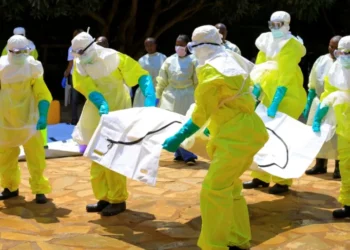
Tedros also used the moment to draw a broader point about the value of international cooperation in an especially strained period for global health, noting parallel outbreaks of Ebola in the Democratic Republic of Congo and the Marburg virus in Uganda that continue to test WHO’s response capacity.
“No country alone can fight,” he said, arguing that all three outbreaks underscored the necessity of coordinated, cross-border public health action under the International Health Regulations.
The declaration also closes a loop for countries far removed from the outbreak’s immediate geography. Nigeria’s Center for Disease Control and Prevention had issued a public advisory in May reassuring citizens that no hantavirus cases had been detected domestically, even as it intensified surveillance and urged healthcare workers to remain alert for suspected cases.
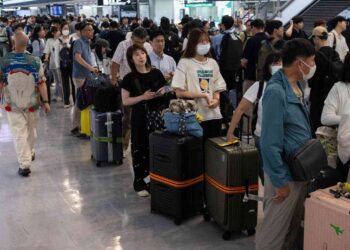
The NCDC’s advisory reflected a pattern seen globally: countries with no direct link to the ship nonetheless moved to strengthen monitoring, wary of both the virus’s unusual transmissibility and the reach of international travel.
With the outbreak now formally closed, attention shifts to the research phase and to whether lessons from the MV Hondius cluster will translate into stronger defences against the next unexpected outbreak at sea.
WHAT YOU SHOULD KNOW
The WHO has officially declared the MV Hondius hantavirus outbreak over, 66 days after it began, following the last contact’s clean quarantine release. In total, 13 people were infected, and 3 died from the Andes virus, the only hantavirus strain known to spread between humans.
Rapid, coordinated international contact tracing across 33 countries, involving over 650 people, successfully contained a rare and unusually transmissible virus before it could spread further, a reminder that swift multinational cooperation remains the most effective defense against emerging outbreaks.